Dark academia brings the atmosphere of old libraries, historic studies, and traditional university interiors into the home. Deep colors, substantial wood furniture, vintage books, classical artwork, aged metals, and warm pools of light give this aesthetic its recognizable character.
These Dark Academia Living Room Ideas approach the style from different directions, ranging from book-filled library walls and dramatic fireplaces to botanical collections and intimate reading spaces.

1. Build the Living Room Around a Library Wall
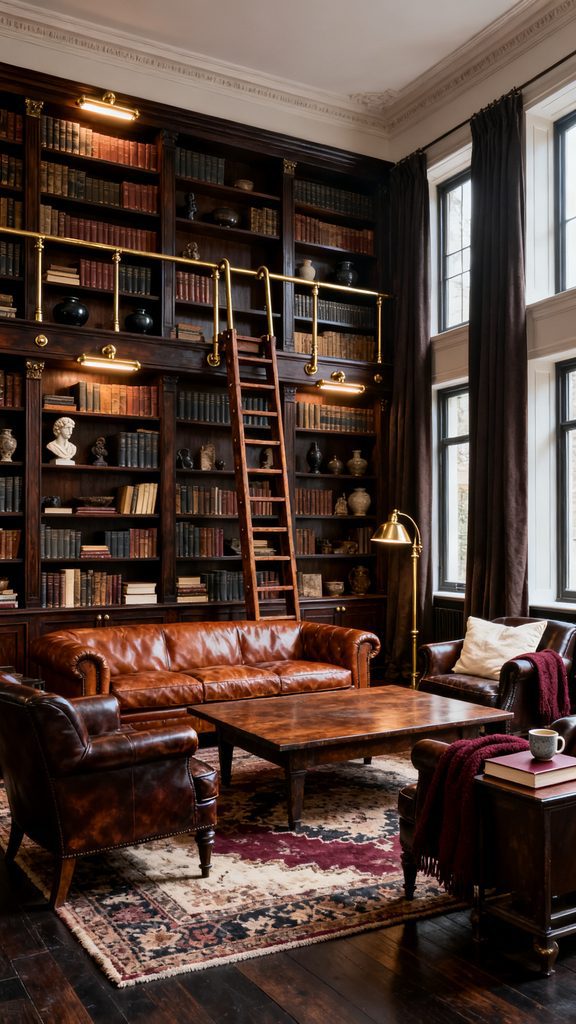
Turn an entire wall into the intellectual focal point of the living room with floor-to-ceiling dark wood bookcases. Walnut or espresso-stained shelving filled with hardcovers immediately establishes the scholarly atmosphere.
Position a cognac leather sofa facing the library and add two traditional armchairs to create a comfortable conversation area. A rolling library ladder, brass picture lights, and a faded Persian-style rug reinforce the old-world character without making the room feel like a themed set.
2. Use Deep Forest Green Walls
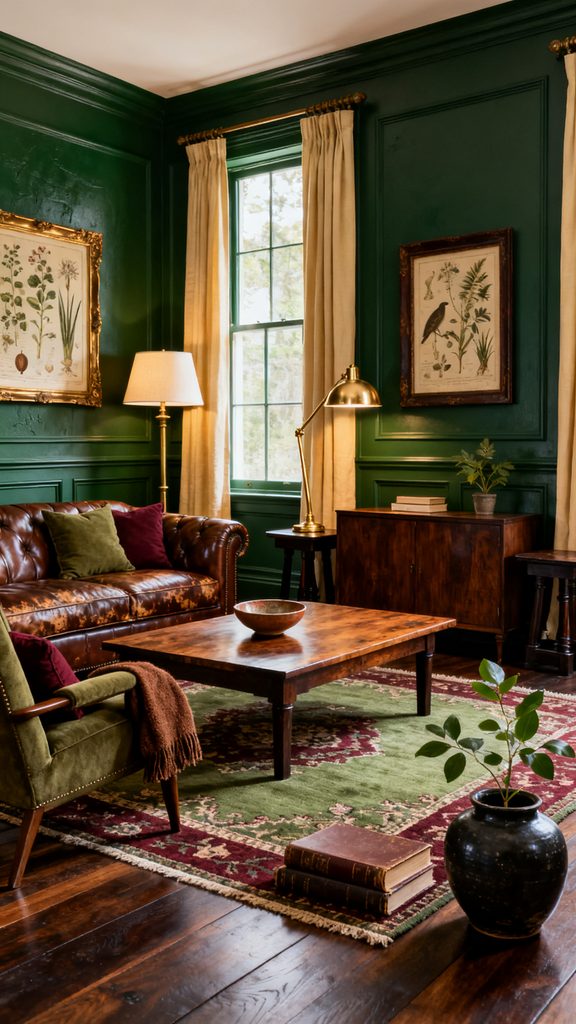
Deep forest green creates a rich backdrop that works especially well with dark academia’s brown woods and warm metals. Paint the walls and traditional molding in the same saturated green for a cocooning effect.
Balance the color with a chocolate-brown leather sofa, walnut coffee table, antique brass lamps, and cream linen curtains. Botanical artwork and an olive-and-burgundy patterned rug repeat the earthy palette across the room.
3. Make a Burgundy Velvet Sofa the Focal Point
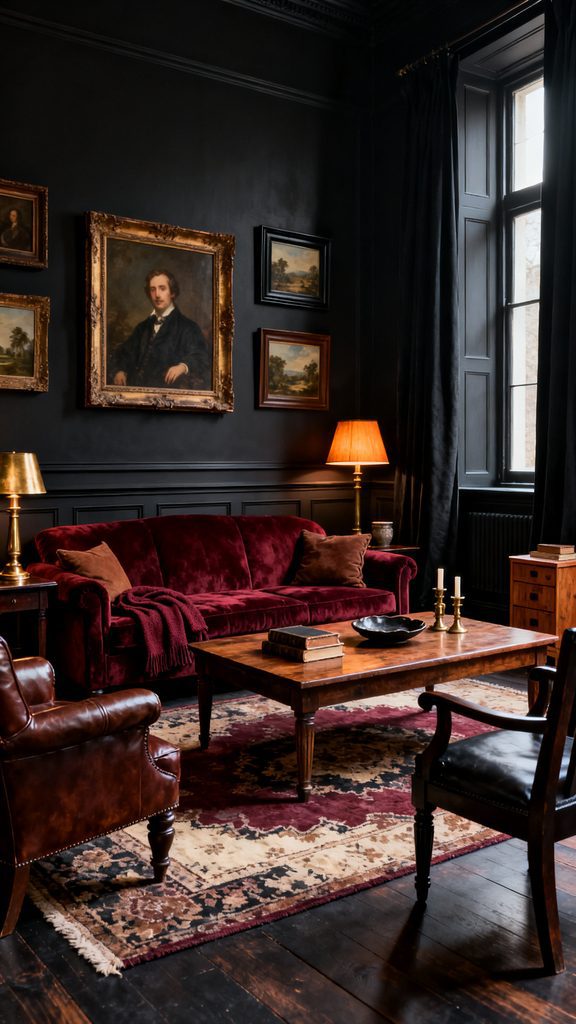
Introduce a more dramatic interpretation of dark academia with a substantial burgundy velvet sofa. Its saturated color and tactile surface create a strong centerpiece against charcoal or warm black walls.
Repeat burgundy in patterned rug details, cushions, and a folded throw while grounding the space with walnut side tables and a dark wood coffee table. Antique gold frames, traditional portraits, and warm brass lamps add depth without competing with the sofa.
4. Create a Fireplace-Centered Scholar’s Lounge
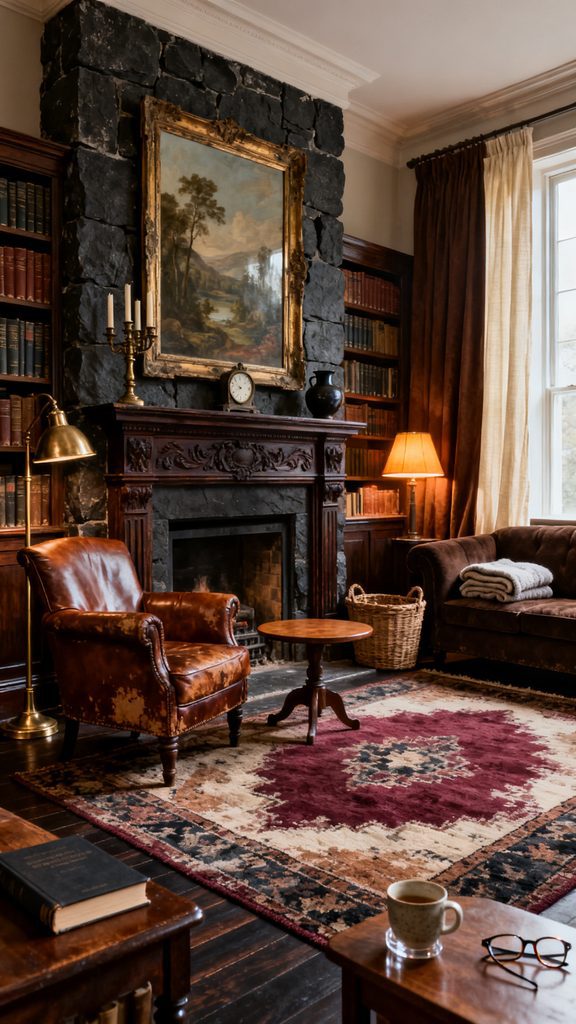
Arrange the living room around a dark stone fireplace or carved wooden mantel to evoke a historic university common room. Hang a large classical painting or aged mirror above it and keep the mantel styling restrained.
Place two worn leather armchairs near the hearth with a small round table between them. Add a dark sofa farther back, a wool rug, brass candlesticks, books, and shaded lamps to create an inviting space for reading and conversation.
5. Design a Cozy Window Reading Zone
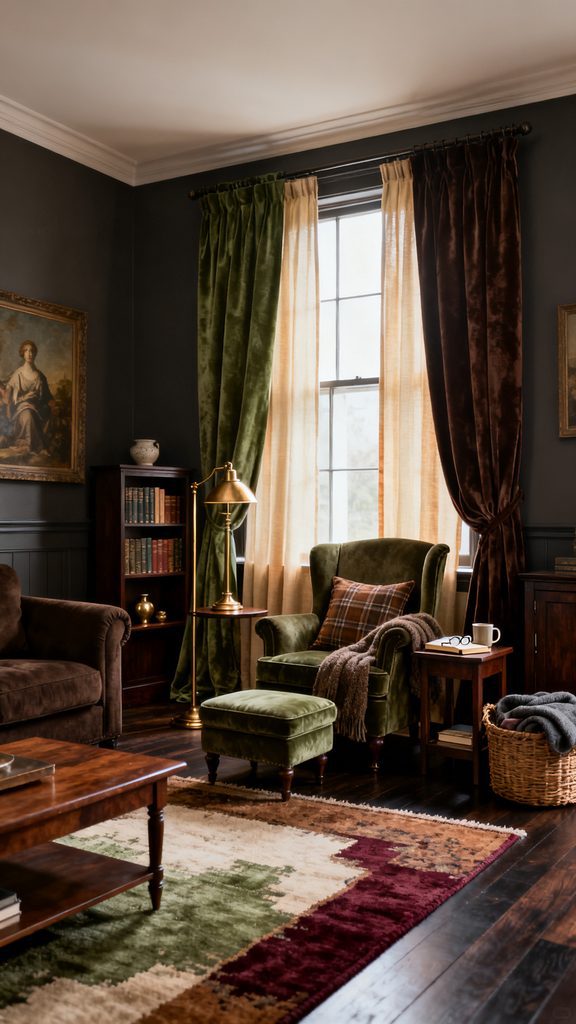
Use a bright window to create contrast within a dark academia living room. Place a deep upholstered reading chair or compact chaise beside the window and surround it with dark wood, books, and rich textiles.
Frame the window with heavy olive or chocolate velvet curtains layered over light linen sheers. Add a small bookcase, brass floor lamp, plaid cushion, wool throw, and compact side table to make the area practical for everyday reading.
6. Cover One Wall With a Classical Gallery
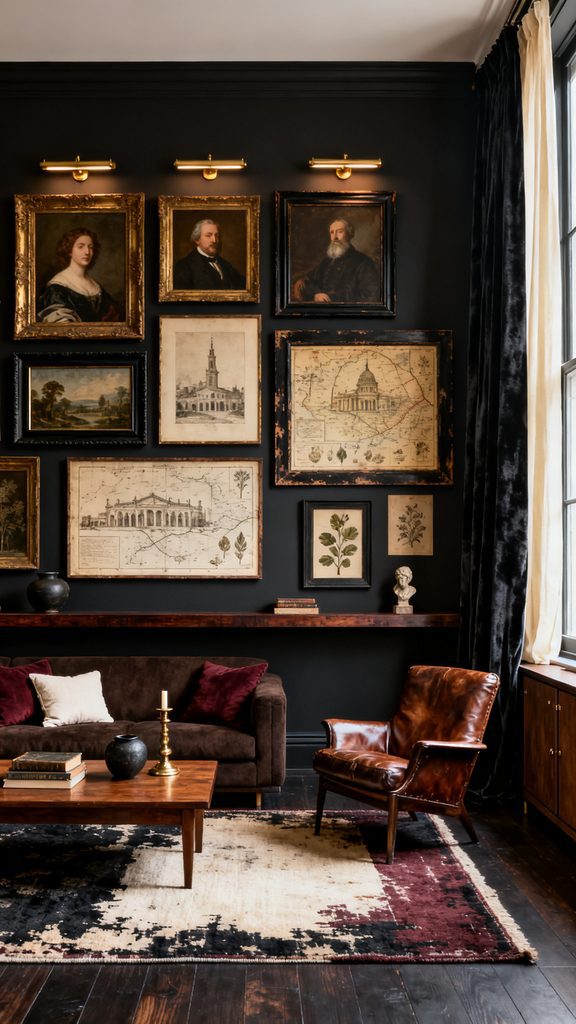
Turn a charcoal living room wall into a salon-style display of classical art. Mix portraits, landscapes, architectural drawings, botanical studies, and old map imagery in antique gold, black, and dark wooden frames.
Keep the furniture beneath the gallery relatively simple so the artwork remains dominant. A dark brown sofa, narrow console, aged rug, and brass picture lights provide enough visual weight to connect the gallery with the rest of the room.
7. Add an Antique-Inspired Writing Area
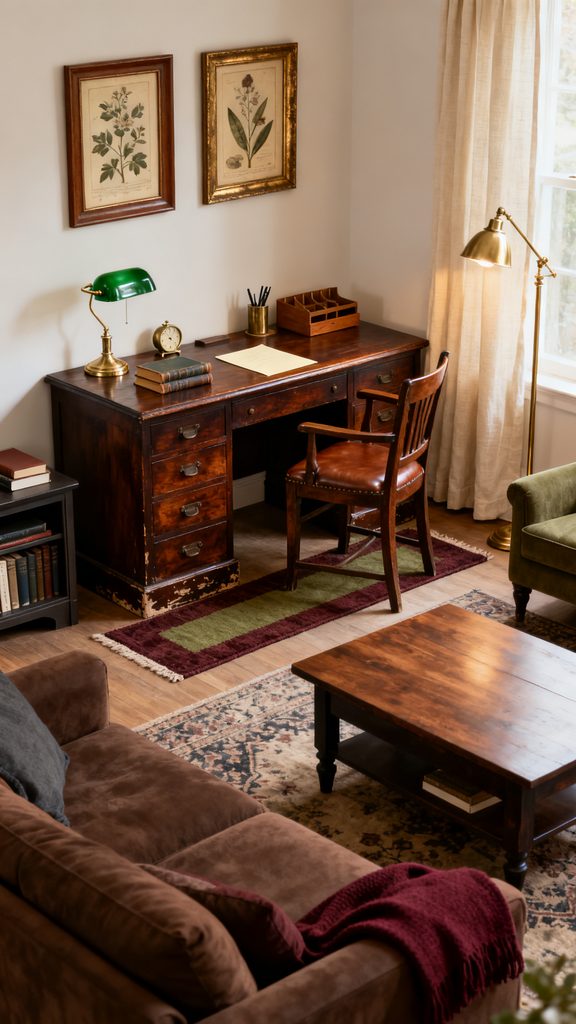
Give the living room a second function by placing a compact writing desk along an unused wall or behind the sofa. Choose dark walnut or mahogany with visible grain and traditional detailing.
Style the desk with a green glass banker’s lamp, closed books, stationery, and a small brass clock. Pair it with a wooden chair, framed botanical studies, and a narrow rug so the writing zone feels integrated into the living room rather than like a separate office.
8. Bring in a Natural History Influence
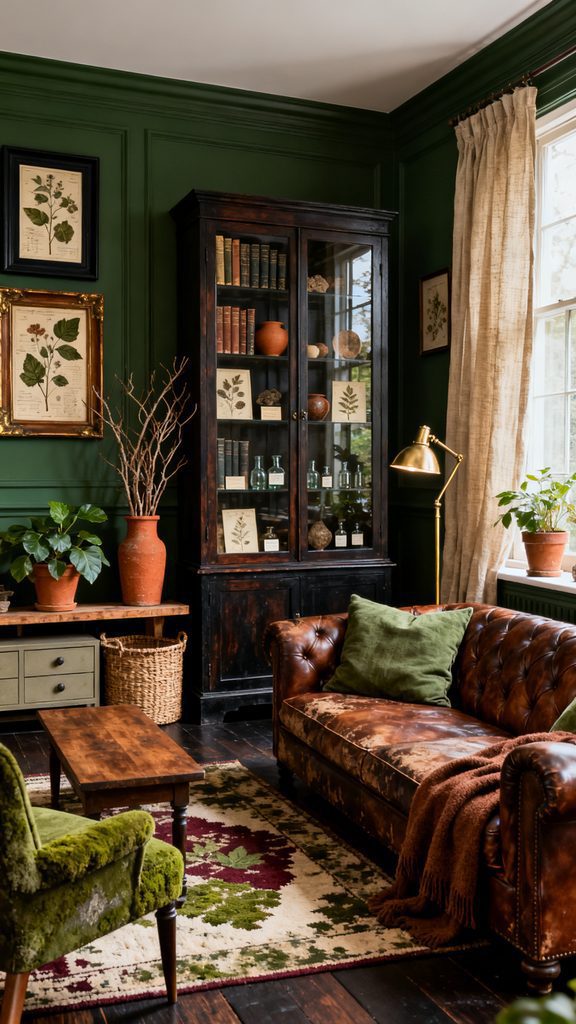
Give dark academia a botanical and scientific direction with deep moss walls, vintage botanical imagery, glass-front storage, and earthy materials.
Use a dark wood cabinet to display books, ceramics, specimen-inspired objects, and natural curiosities. Add a brown leather sofa, terracotta pots, dried branches, muted green textiles, and an aged patterned rug to create a scholarly room with a strong connection to nature.
9. Layer Plaid, Leather, and Aged Textiles
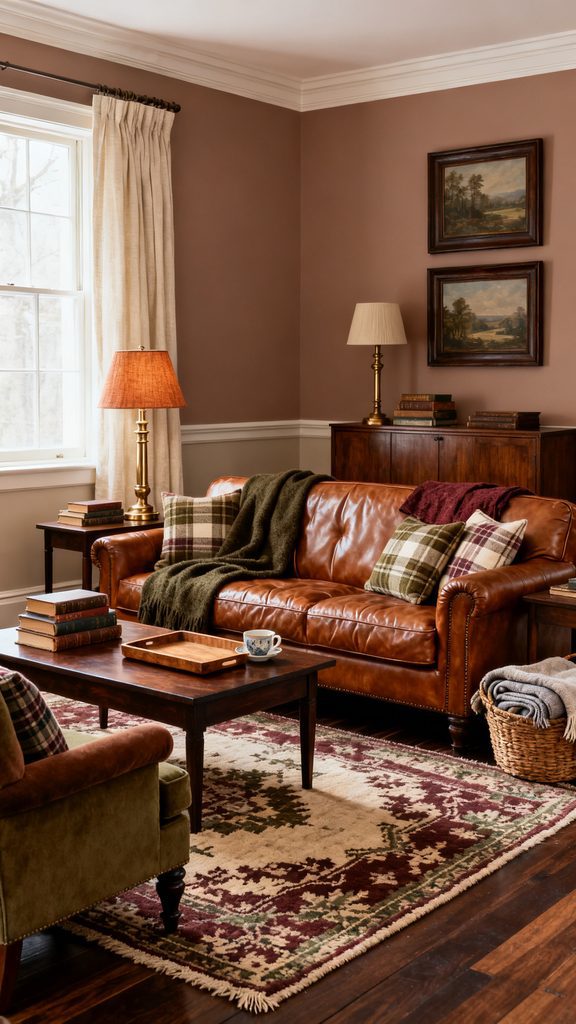
Build the dark academia character through texture rather than relying on an extremely dark wall color. Start with warm taupe or muted brown walls, then introduce a worn cognac leather sofa as the anchor.
Layer wool plaid cushions, a dark olive throw, faded burgundy textiles, and an antique-style rug. Dark wood tables, linen curtains, vintage books, and brass lighting complete a softer living room that still feels unmistakably academic.
10. Create a Piano and Reading Room
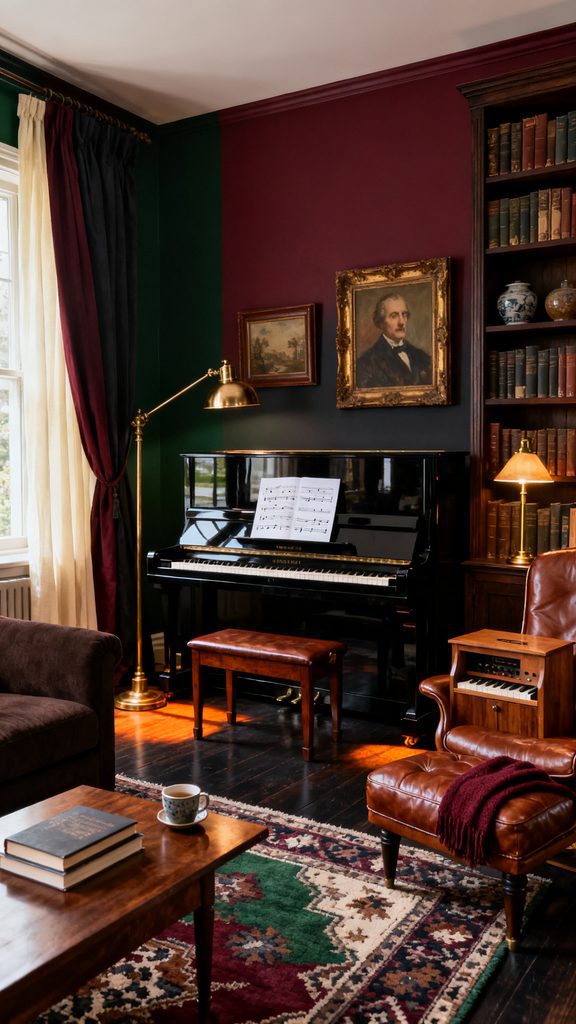
Combine music and literature by incorporating an upright piano into the living room. Choose a black or dark walnut piano and place it against oxblood, deep green, or charcoal walls.
Balance the piano with a compact bookcase and a comfortable leather reading chair on the opposite side of the room. Framed music imagery, traditional artwork, a patterned rug, brass lighting, and stacks of books connect both functions into one cohesive dark academia space.
11. Try a Lighter Dark Academia Living Room
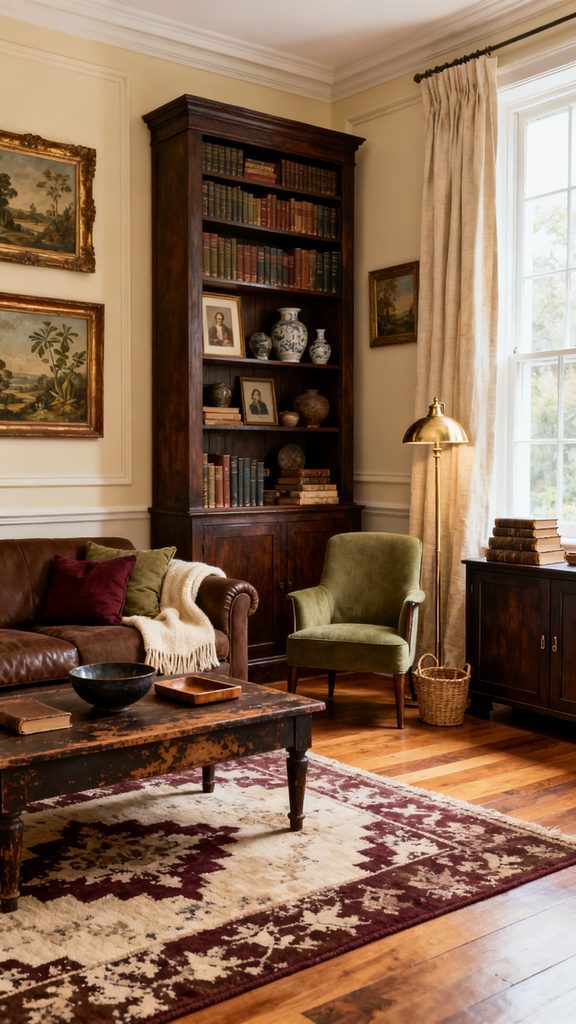
Dark academia can still feel convincing without covering every surface in near-black colors. Use warm cream or aged parchment walls as the backdrop while concentrating darker tones in the furniture and decor.
Anchor the room with a dark walnut bookcase, chocolate sofa, antique wooden coffee table, and brown-and-burgundy rug. Add vintage-style artwork, brass lamps, old books, cream linen curtains, and a few olive accents for a brighter interpretation that retains the scholarly, collected character.
Creating a Cohesive Dark Academia Living Room
The most convincing dark academia rooms combine intellectual references with materials that appear to improve with age. Wood grain, worn leather, wool, velvet, aged brass, books, traditional artwork, and subdued colors can establish the look without requiring excessive decoration.
Choose one strong feature—such as a library wall, fireplace, gallery, dramatic sofa, or piano—as the room’s visual anchor. Supporting colors and materials can then repeat around the living room in smaller doses, creating a space that feels cohesive, comfortable, and naturally collected.