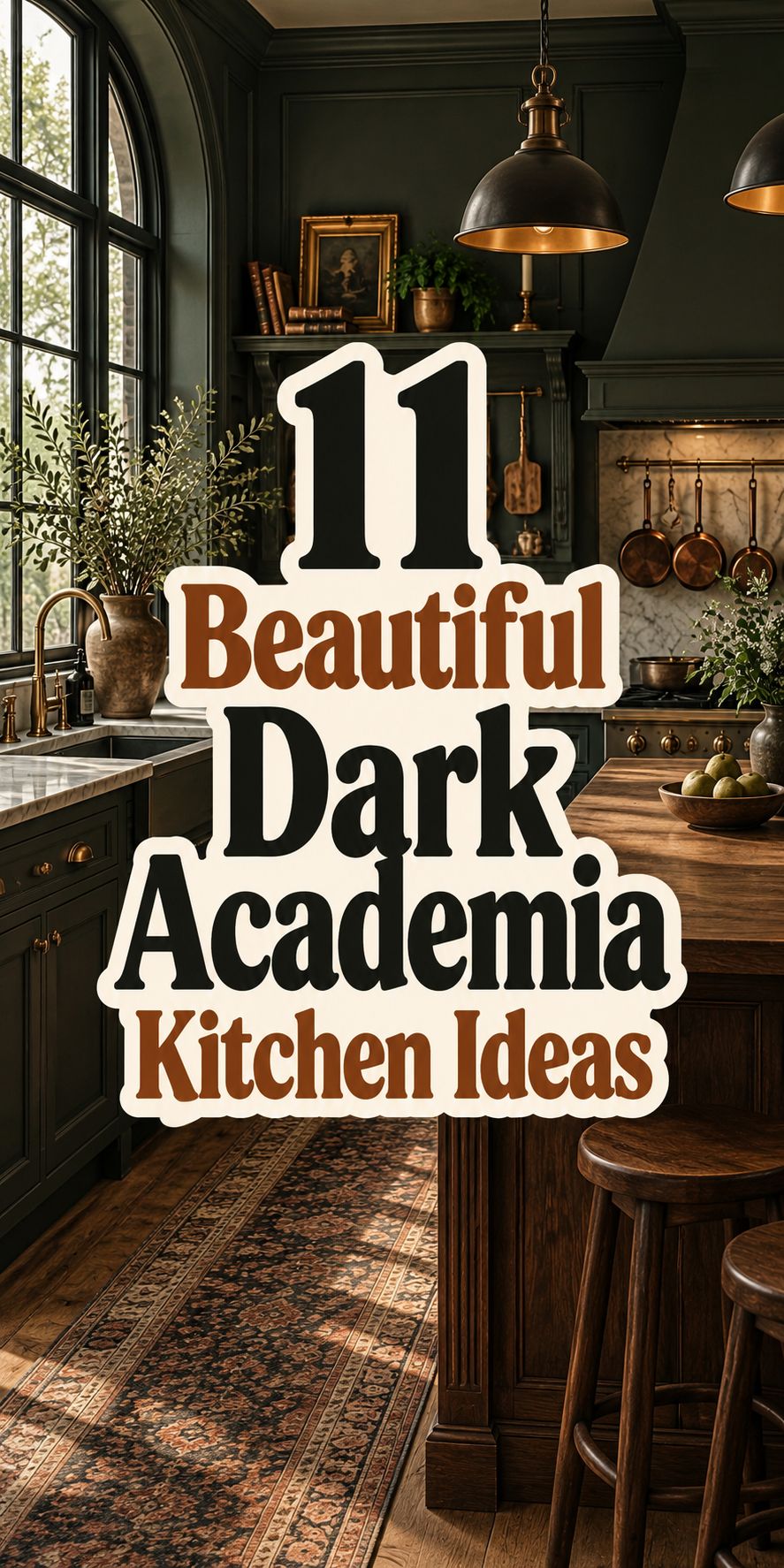
Dark academia style can give a kitchen the warmth and character of an old library, historic townhouse, or traditional scholar’s home. Dark wood, deep heritage colors, aged brass, stone, vintage artwork, and open displays of everyday objects help create the look without sacrificing function.
These Dark Academia Kitchen Ideas approach the aesthetic in different ways, from dramatic green cabinetry and library-inspired shelving to intimate breakfast corners and old-world pantry storage.
1. Choose Deep Forest Green Cabinetry
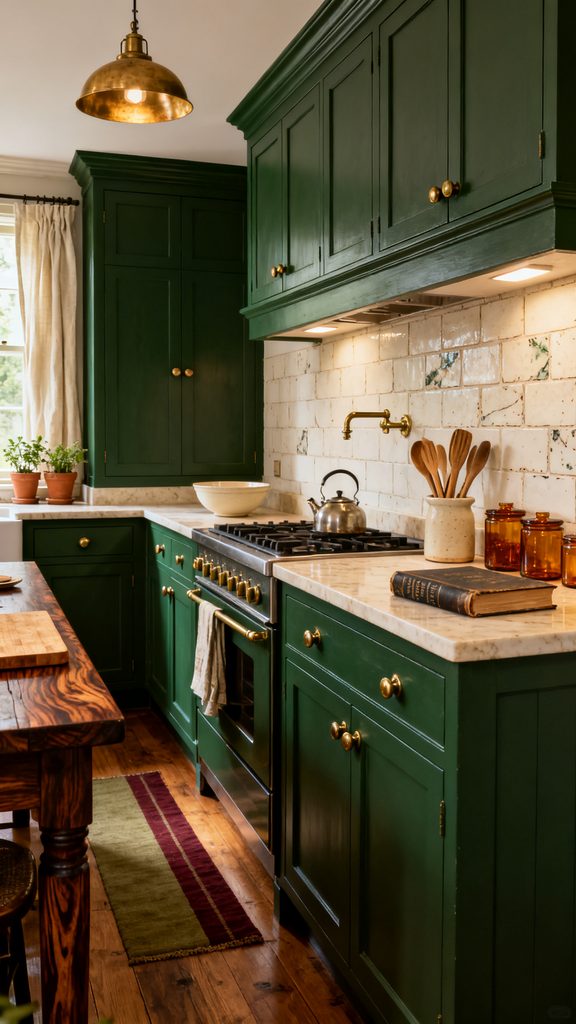
Make deep forest green cabinetry the defining feature of the kitchen. Use the saturated shade across both lower and upper cabinets so the color feels architectural rather than like a small accent.
Pair the cabinetry with aged brass hardware, creamy stone countertops, and a warm off-white backsplash. Dark wood cutting boards, amber glass containers, vintage-style ceramics, and a brass pendant repeat the earthy, scholarly palette while keeping work surfaces practical.
2. Create a Dark Wood Library Kitchen
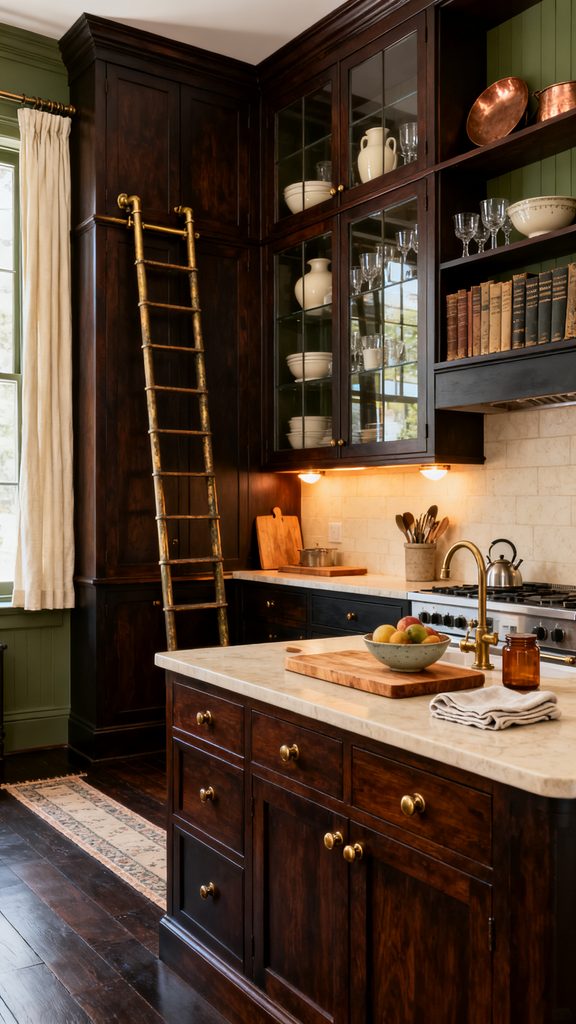
Bring the atmosphere of an old library into the kitchen with walnut or espresso-stained cabinetry extending toward the ceiling. Glass-front upper cabinets can display ceramics, glassware, cookbooks, and useful serving pieces.
Add a small library-style ladder where appropriate, aged brass cabinet hardware, warm under-cabinet lighting, and a substantial wooden island. Cream stone countertops and a lighter backsplash provide enough contrast to keep the room from becoming visually heavy.
3. Add a Moody Burgundy Kitchen Island
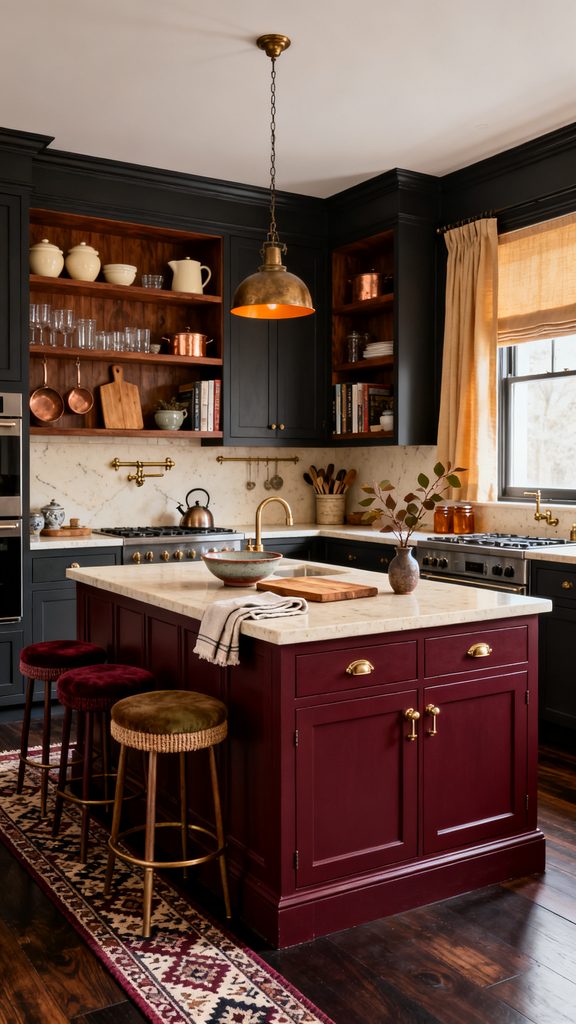
Instead of making every surface dark, use a burgundy kitchen island as the dramatic focal point. Its deep red tone works particularly well with charcoal cabinetry and warm walnut details.
Repeat burgundy through a patterned runner, small ceramics, and upholstered counter stools. Antique brass pendants, cream stone counters, and dark wooden shelves soften the contrast while maintaining the academic atmosphere.
4. Style Open Shelves Like a Scholar’s Collection
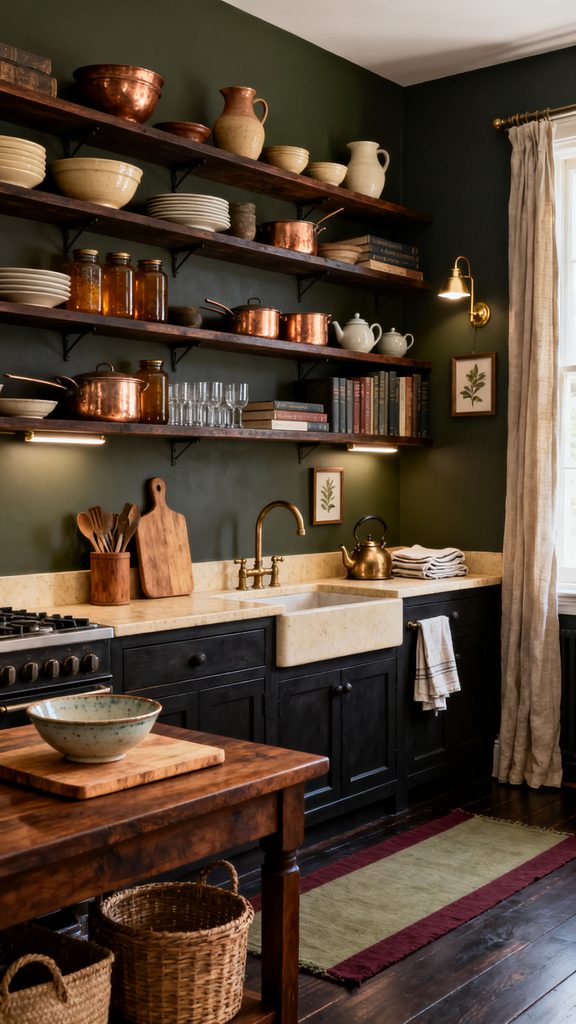
Turn a wall of practical open shelving into a carefully collected display. Choose dark walnut shelves mounted against deep olive or charcoal walls and fill them with useful kitchen pieces rather than purely decorative objects.
Mix stoneware bowls, amber glass jars, copper cookware, wooden boards, cookbooks, teapots, and small framed botanical imagery. Keep frequently used items within easy reach while allowing enough empty space to prevent the shelves from looking cluttered.
5. Create an Old-World Breakfast Nook
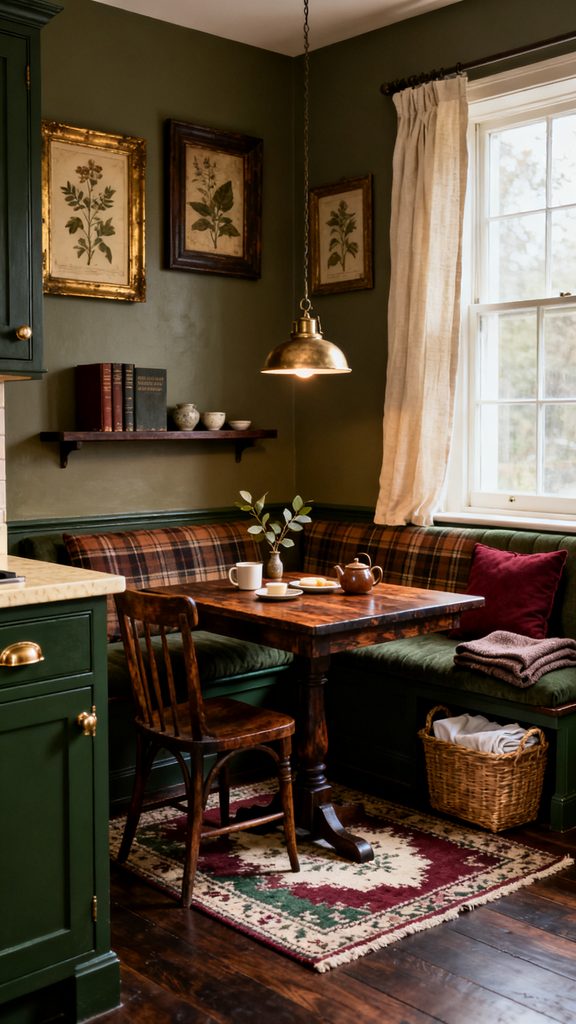
Give one corner of the kitchen the intimacy of a historic café or reading room. Build the nook around a dark wooden table with a banquette or pair of traditional chairs.
Use deep olive upholstery, plaid cushions, a faded burgundy rug, and a small antique-brass pendant to reinforce the dark academia palette. Framed botanical artwork, a narrow book ledge, and linen curtains make the area comfortable for breakfast, reading, or coffee.
6. Use Black Cabinets With Warm Brass Details
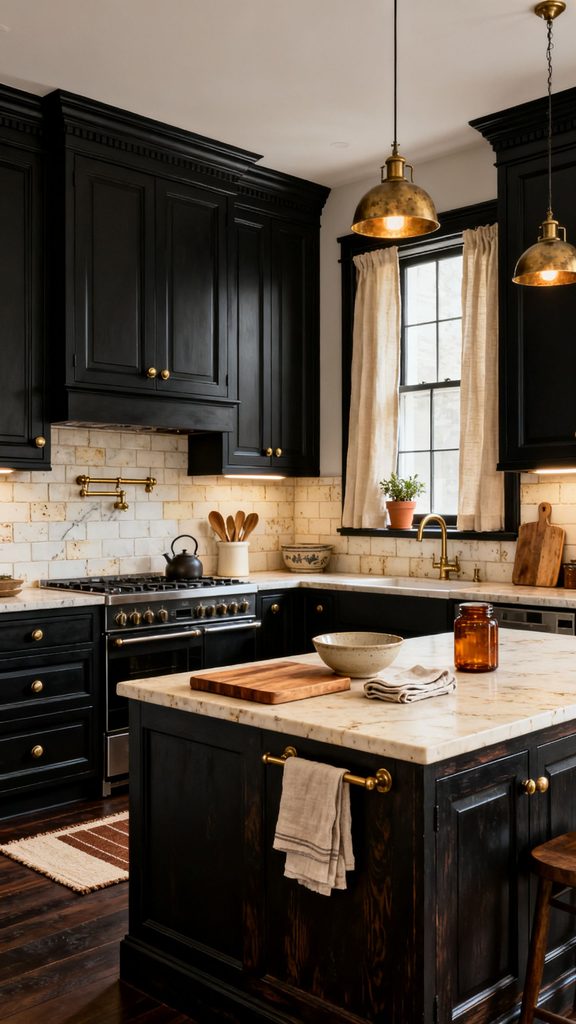
For a stronger, more dramatic version of dark academia, choose matte black cabinetry with traditional panel fronts. Warm brass knobs, cup pulls, faucets, and lighting keep the black surfaces from feeling stark or contemporary.
Balance the cabinetry with warm cream stone countertops, dark hardwood flooring, and an aged white or cream backsplash. Wooden utensils, vintage ceramics, and amber glass accessories add warmth while remaining useful in an everyday kitchen.
7. Build a Vintage-Inspired Coffee Station
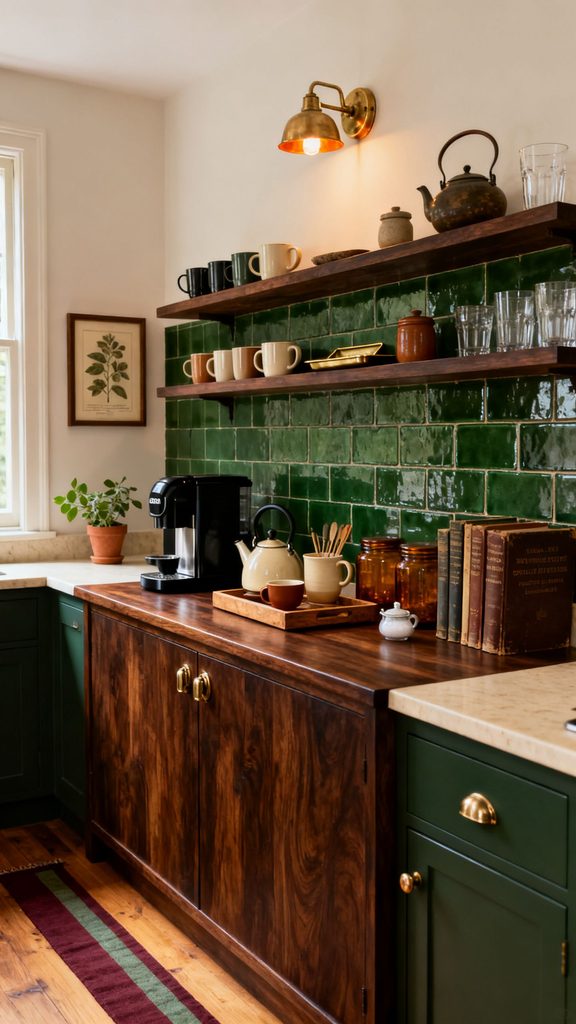
Dedicate a small section of cabinetry to a dark academia coffee and tea station. Use a walnut sideboard, built-in cabinet, or compact counter beneath dark shelves.
Arrange ceramic mugs, an everyday coffee maker or kettle, amber storage jars, a wooden tray, and tea accessories alongside a few old cookbooks. A brass wall sconce, framed botanical print, and dark green backsplash can make this functional zone feel intentionally connected to the larger kitchen.
8. Bring in Botanical Academia Details
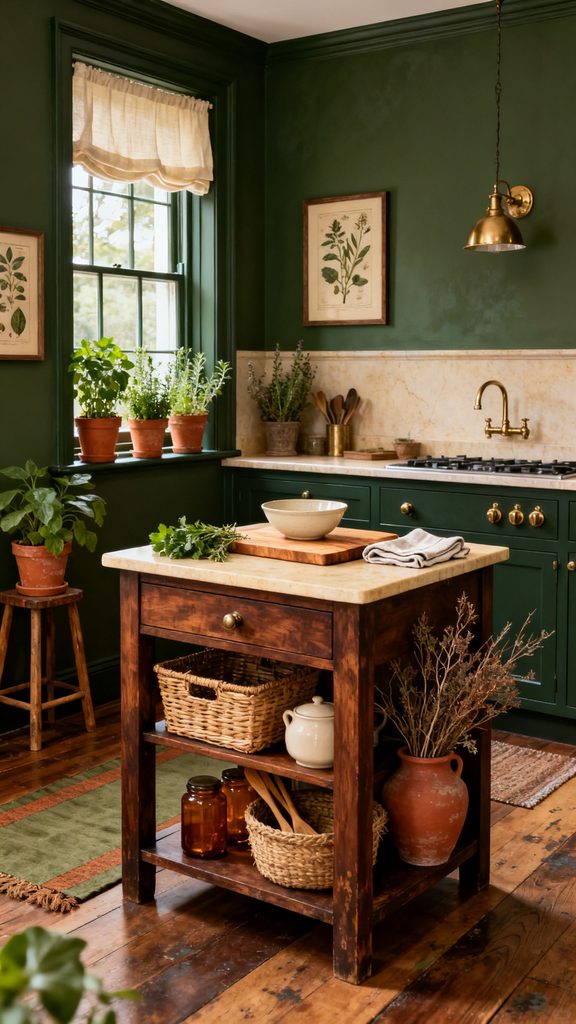
Take inspiration from historic botanical studies by combining dark cabinetry with earthy greens and natural materials. Deep moss or olive walls provide a strong background for wood, terracotta, brass, and cream ceramics.
Display culinary herbs in terracotta pots near a window, botanical imagery on an open wall, and dried branches or herbs in simple vessels. A wooden prep table and woven baskets strengthen the natural character while providing useful workspace and storage.
9. Add a Dramatic Antique-Style Range Area
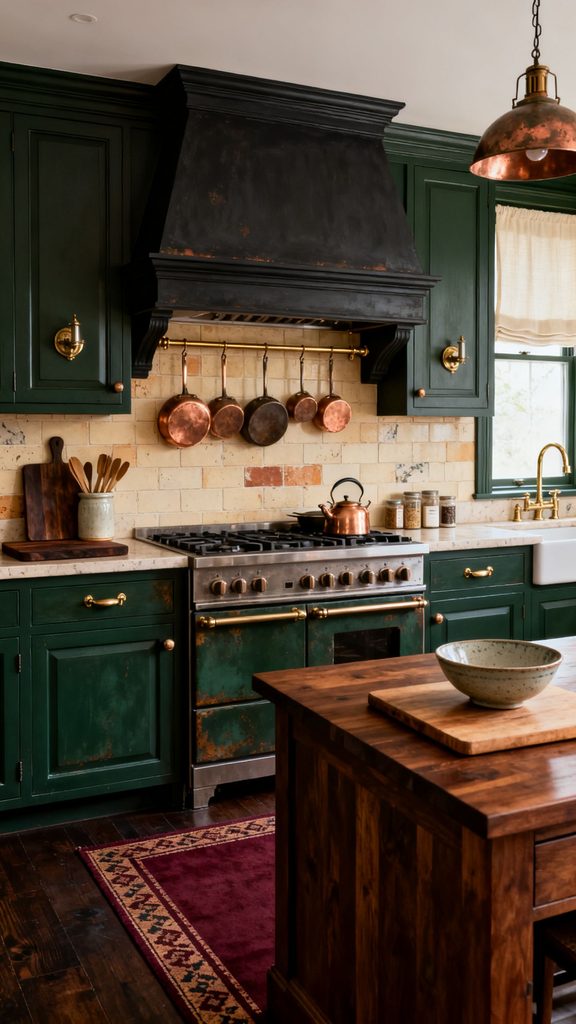
Make the cooking zone the architectural centerpiece with a substantial range framed by a dark mantel-style hood or traditional surround. Charcoal, deep brown, or forest green finishes work especially well.
Use aged brass pot rails, copper pans, cream stone, and handmade-look backsplash tiles around the range. Keep seasonings, wooden utensils, and frequently used cookware nearby so the arrangement feels like a working kitchen rather than a decorative display.
10. Create a Moody Butler’s Pantry
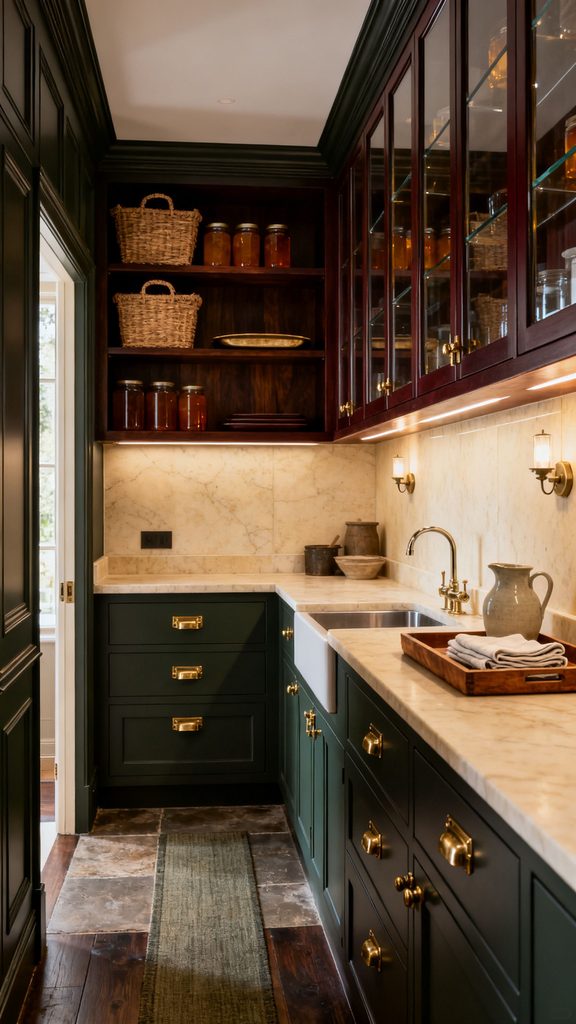
A small pantry provides an ideal place to use darker colors without overwhelming the main kitchen. Paint the cabinetry and walls in deep charcoal, oxblood, or dark olive for an enveloping effect.
Include glass-front cabinets for glassware and serving pieces, open shelving for baskets and jars, and lower cupboards for practical concealed storage. Warm brass hardware and under-shelf lighting give the compact space depth while a light stone counter keeps it functional.
11. Try a Lighter Dark Academia Kitchen
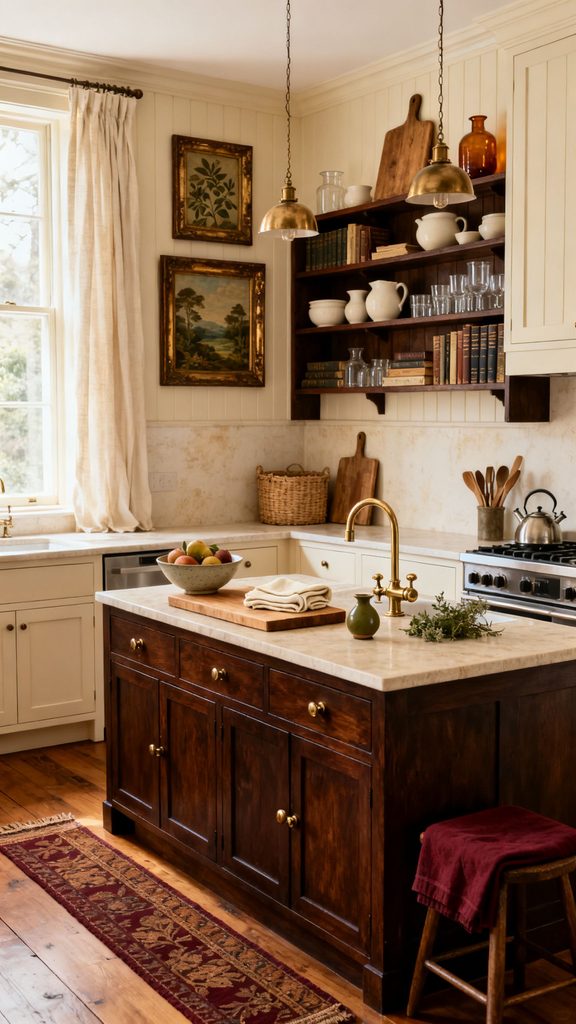
For a brighter interpretation, begin with warm cream or aged parchment walls and cabinetry, then introduce dark academia through contrasting materials and furnishings.
Use dark walnut open shelves, a deep brown island, antique brass fixtures, vintage-style artwork, and a brown-and-burgundy runner. Cream ceramics, old cookbooks, wooden boards, and a few olive accents retain the collected scholarly character while allowing natural daylight to dominate the room.
Creating a Cohesive Dark Academia Kitchen
Successful dark academia kitchens balance atmosphere with everyday practicality. Deep greens, burgundy, charcoal, walnut, aged brass, stone, and vintage-inspired details can establish the aesthetic, but countertops and work zones should remain comfortable and uncluttered.
Choose one dominant feature—such as dark cabinetry, a statement island, an old-world range, open shelving, or a moody pantry—and repeat its colors and materials in smaller details throughout the kitchen. This creates a collected appearance while keeping the room functional for cooking, storage, and daily routines.