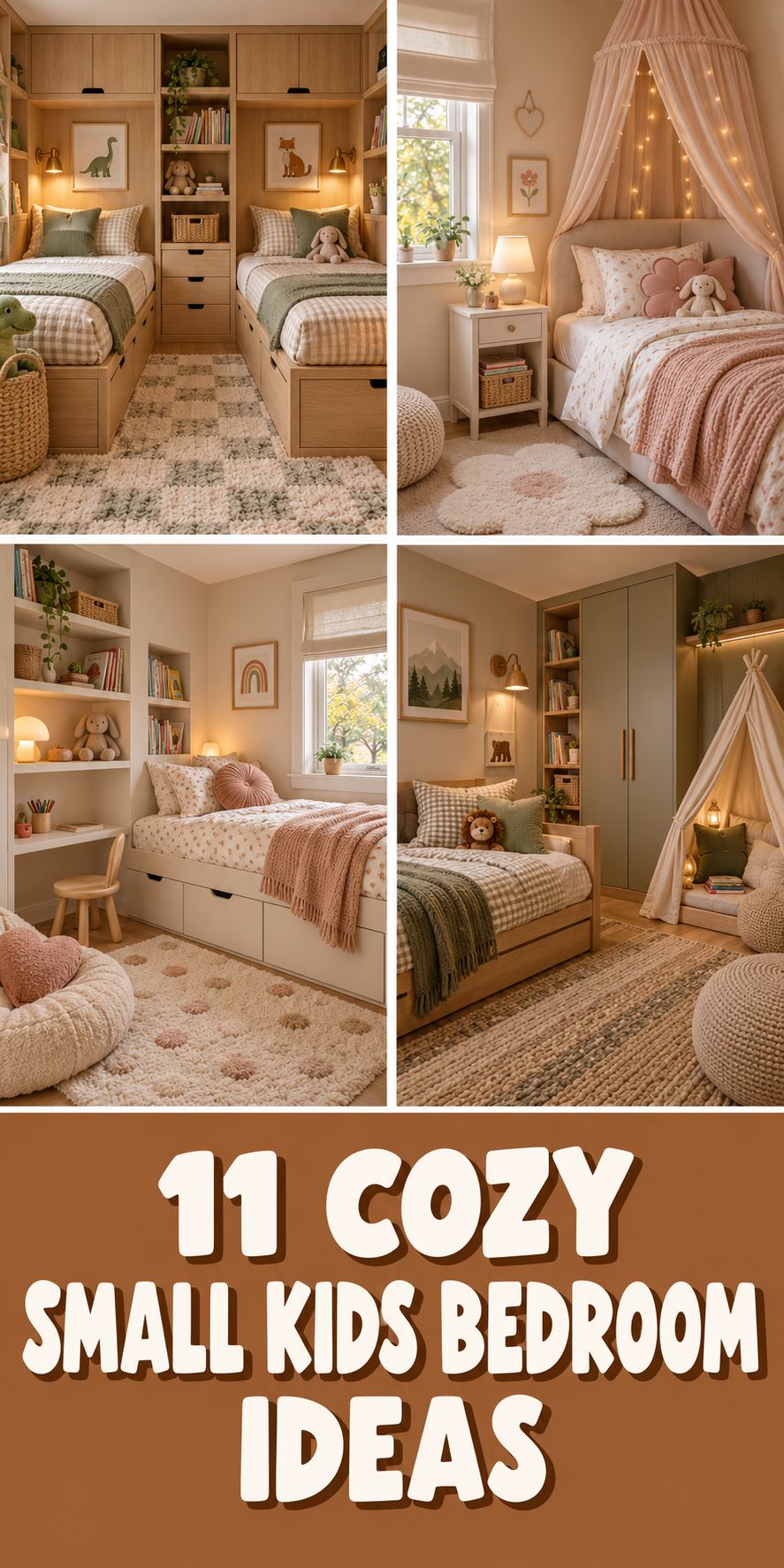
Designing a compact bedroom for a child means balancing sleep, play, storage, and personality without making the room feel crowded. The most effective Small Kids Bedroom Ideas use vertical space, multifunctional furniture, thoughtful storage, and a controlled color palette to make every area useful.
These 11 concepts take different approaches to a small bedroom, from raised beds and reading corners to shared layouts and creative storage solutions.
1. Loft Bed With a Cozy Study Nook
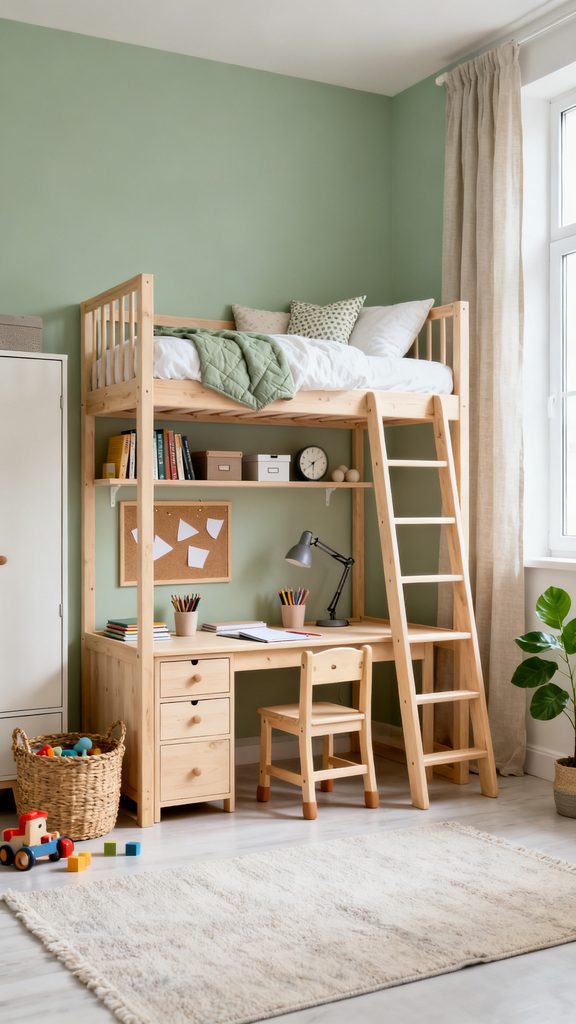
Make vertical space work harder by placing a loft bed along one wall and turning the area underneath into a compact study zone. A natural wood or white loft frame keeps the arrangement visually light while freeing valuable floor space.
Underneath, fit a small desk with drawers, a comfortable child-size chair, and wall-mounted shelves for books and school supplies. Use soft sage green, warm white, and natural wood throughout the bedding, storage boxes, desk accessories, and wall decor. A pinboard and adjustable desk lamp make the nook practical without taking up much room.
2. Built-In Bed With Hidden Storage
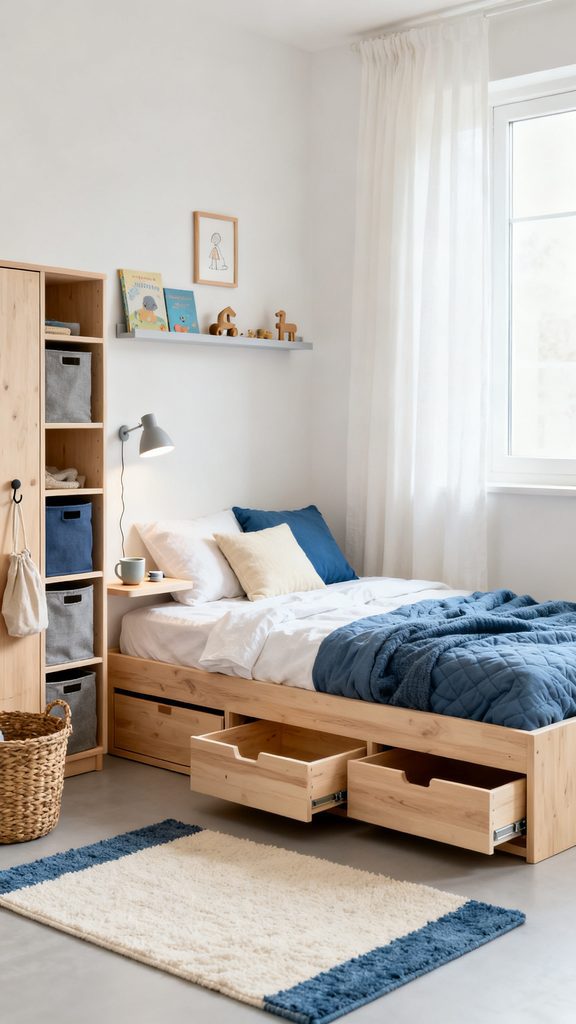
Turn the bed itself into the main storage feature. Choose a simple platform bed with deep drawers underneath for clothes, toys, extra bedding, and seasonal items.
A palette of warm white, muted blue, and pale oak helps the small bedroom feel open. Add a slim bedside shelf instead of a bulky nightstand, wall-mounted reading light, and shallow picture ledges above the bed for books and small decorative pieces. Matching storage bins keep frequently used belongings organized.
3. Small Shared Bedroom With Twin Beds
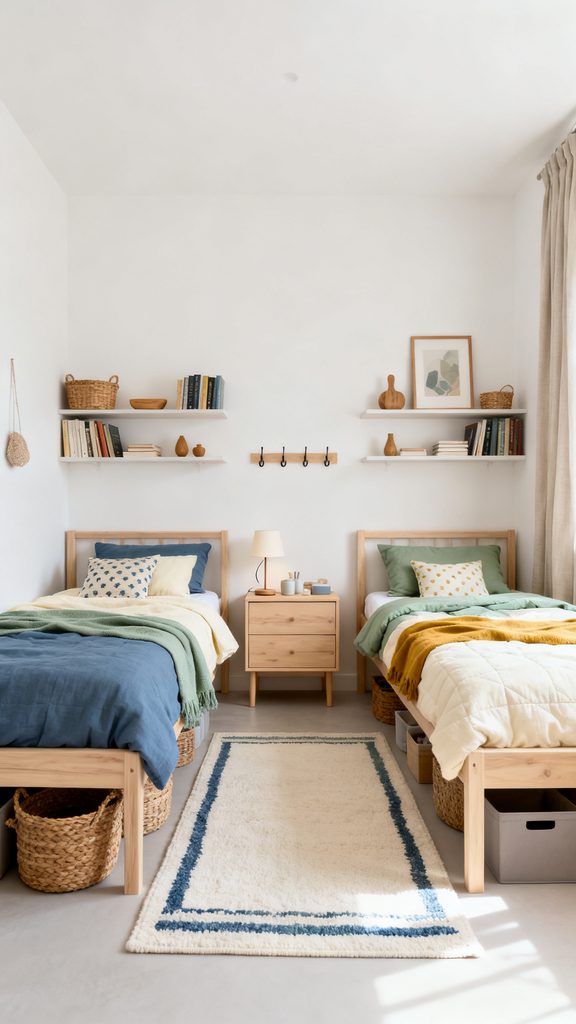
A compact room can still work comfortably for two children when the layout is symmetrical. Position two slim twin beds along opposite walls, leaving a clear walkway through the middle.
Use matching light-wood bed frames and coordinated bedding in dusty blue, sage, cream, and muted mustard. A narrow shared nightstand between the beds provides space for a lamp and a few essentials, while wall shelves above each bed give both children individual storage. Under-bed baskets provide additional room for toys and clothes without taking over the floor.
4. Space-Saving Bunk Bed Room
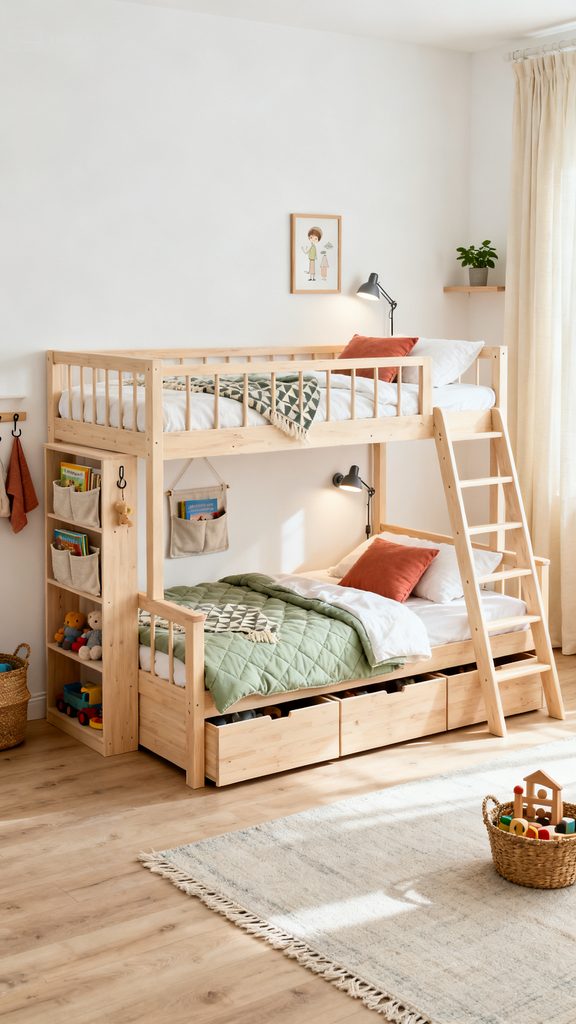
Use a bunk bed as the dominant feature when two sleeping spaces are needed but floor area is limited. Choose a simple light-wood bunk with an integrated ladder and safety rails rather than a bulky themed design.
Keep the room bright with warm white walls, pale wood, soft green, and muted terracotta accents. Add under-bunk drawers, wall-mounted book pockets, and small individual reading lights for each sleeping level. A compact rug and one open section of floor preserve a practical play area.
5. Cozy Reading Corner Bedroom
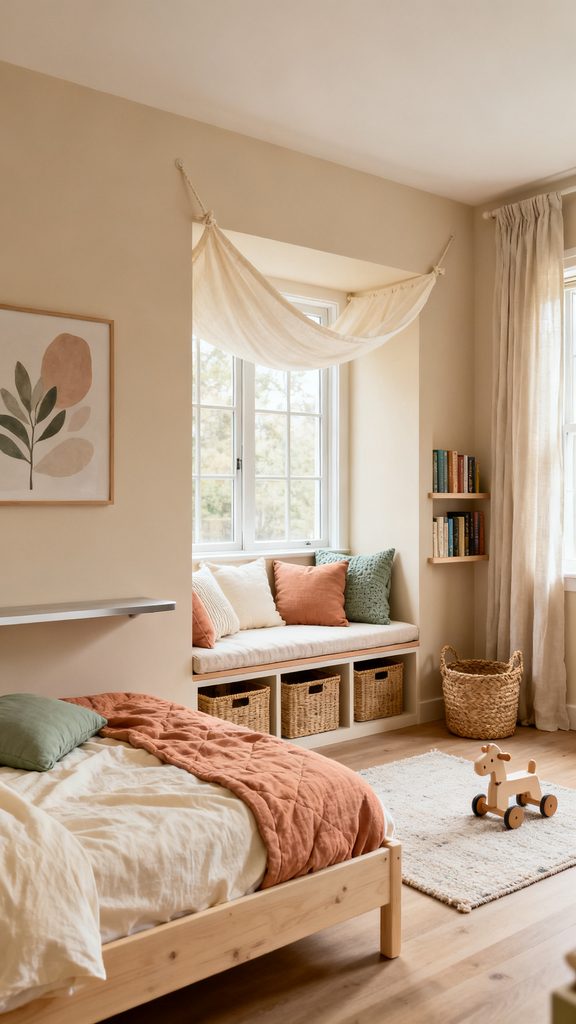
Turn an awkward corner into a dedicated reading retreat. Place a low cushioned bench or compact floor mattress beneath a window, using the space underneath for pull-out baskets or drawers.
Repeat warm beige, dusty peach, cream, and soft sage across cushions, bedding, storage baskets, and artwork. Add narrow book ledges at child height so favorite covers remain visible without requiring a full bookcase. A small wall sconce and lightweight canopy above the corner can make it feel special while using almost no additional floor space.
6. Small Bedroom With Floor-to-Ceiling Storage
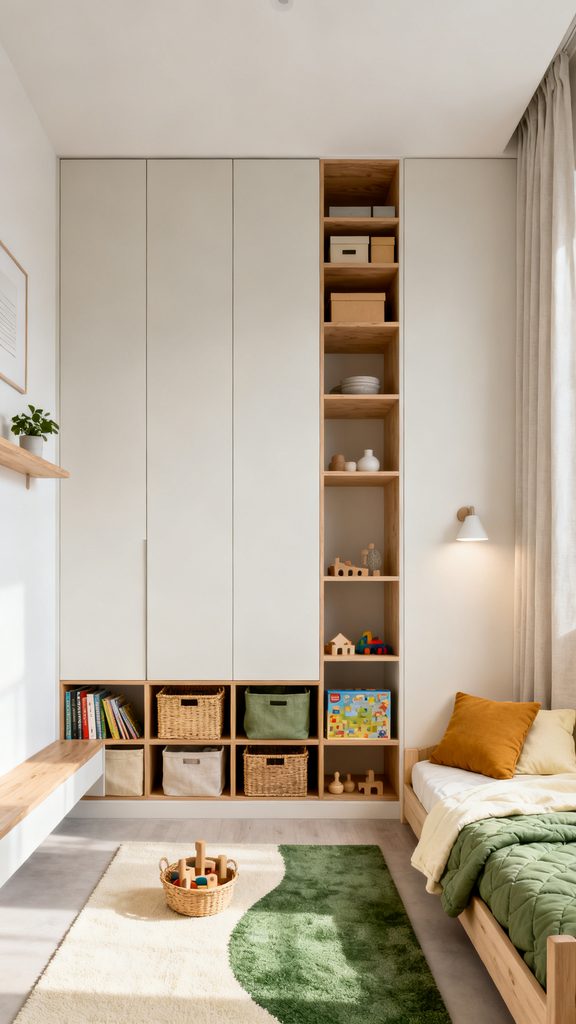
Use one wall almost entirely for vertical storage so the rest of the bedroom remains uncluttered. Combine tall closed cabinets with open cubbies for books, toys, baskets, and decorative objects.
Choose cabinetry in soft warm white or pale greige so it blends into the walls rather than visually shrinking the room. Introduce muted green, ochre, and natural wood through bedding, baskets, handles, and accessories. Keep frequently used toys in lower cubbies and less-used belongings higher up.
7. Montessori-Inspired Small Kids Bedroom
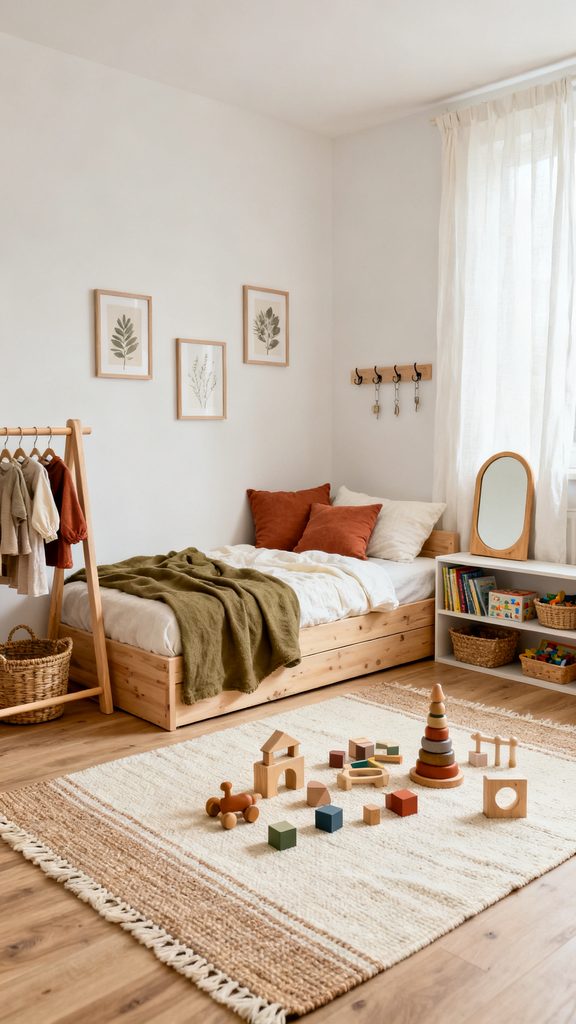
Create an accessible room where furniture and storage are scaled to the child. Use a low natural-wood floor bed as the main feature, leaving the upper half of the room visually open.
Add low book ledges, a small clothing rail, accessible toy baskets, and a child-height mirror. Keep the palette calm with warm white, beige, natural timber, muted terracotta, and soft olive. A washable woven rug defines the play zone while simple wooden toys and a few framed illustrations provide decoration without clutter.
8. Colorful Small Bedroom With Smart Storage
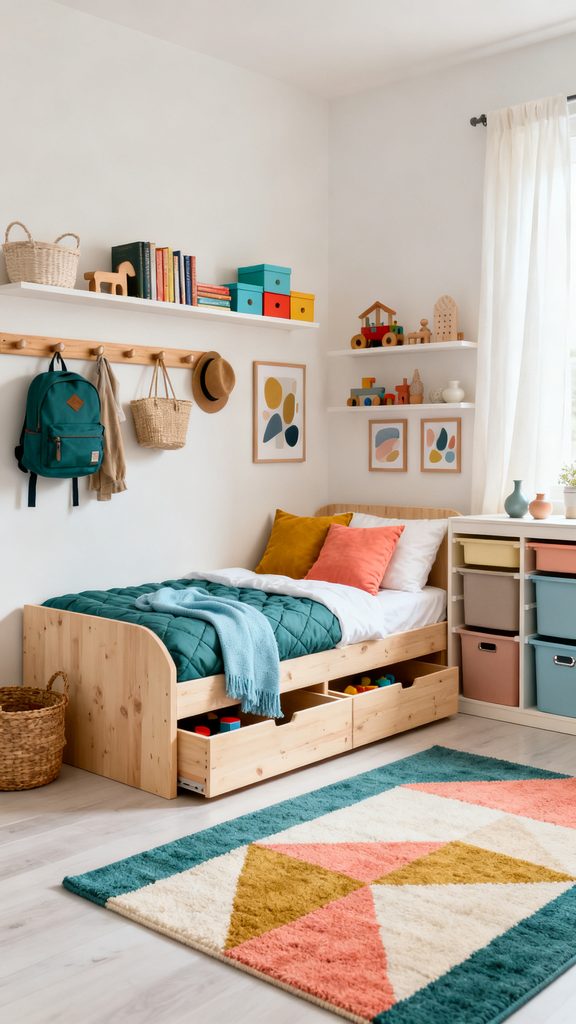
A small bedroom does not have to rely entirely on neutrals. Start with warm white walls and introduce cheerful muted colors through furniture and accessories rather than covering every surface.
Use a compact bed with storage drawers and repeat dusty teal, mustard, coral, and soft blue across bedding, storage bins, artwork, and a small rug. Wall-mounted shelves can hold books and favorite objects, while peg rails provide vertical storage for bags, hats, and lightweight baskets. Keeping the major furniture simple prevents the colorful scheme from becoming visually busy.
9. Small Bedroom With a Window-Side Bed
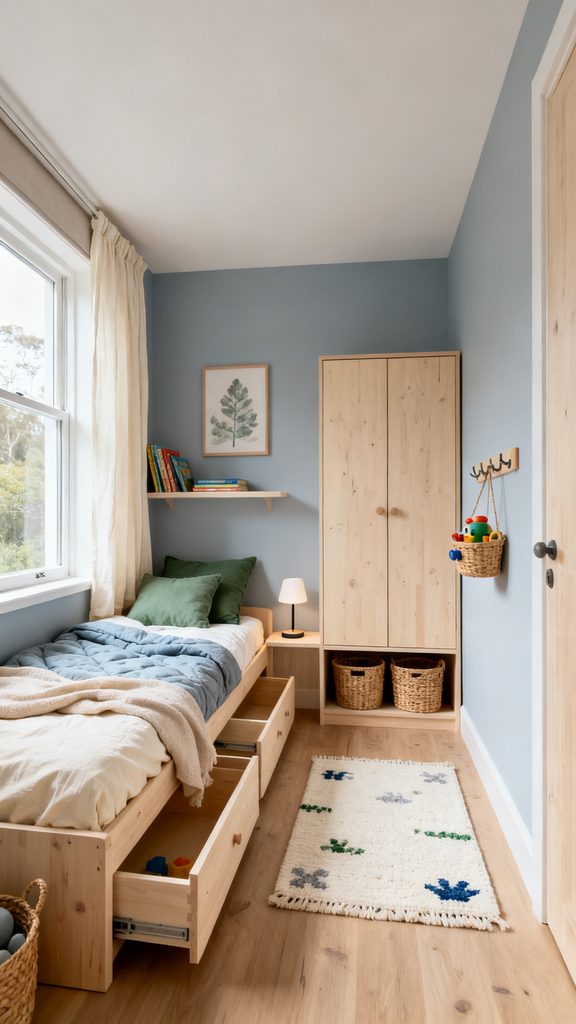
Placing the bed beside a window can free the opposite side of a narrow room for storage or play. Choose a simple low bed that does not obstruct the window and use safe, easy-to-operate window treatments.
Build the palette around soft blue-gray, cream, pale wood, and muted green. Add shallow drawers beneath the bed, a slim wall shelf for bedtime books, and a compact wardrobe opposite. A small washable rug in the center maintains an open area for play while light curtains help natural daylight reach the whole room.
10. Small Kids Bedroom With a Creative Art Station
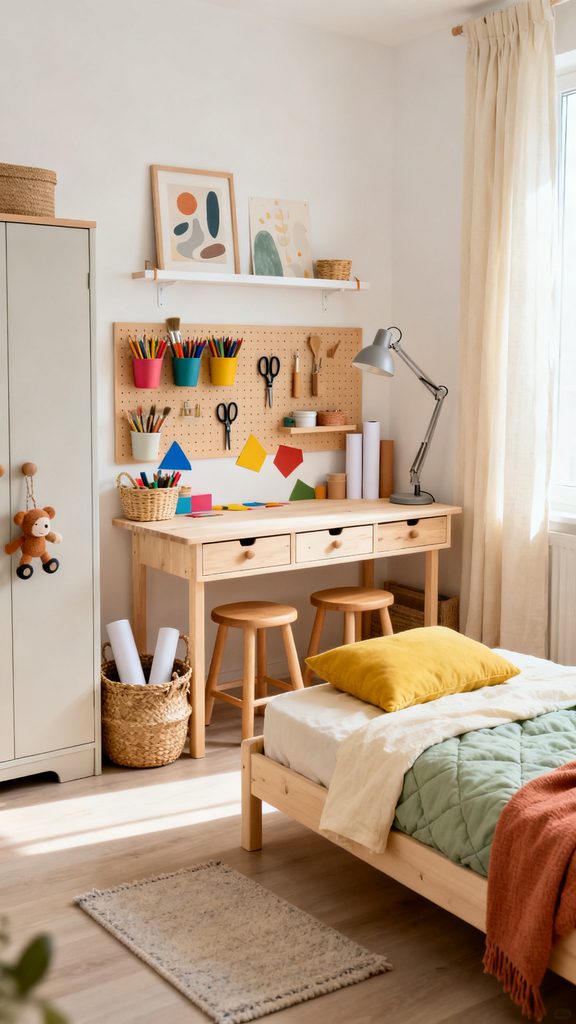
Dedicate one wall to creativity without sacrificing much floor space. Install a narrow child-height desk or wall-mounted tabletop with compact stools that can tuck underneath when not in use.
Use warm white, pale wood, muted yellow, sage, and soft terracotta throughout the room. Above the desk, add pegboard storage for cups of pencils, paper rolls, craft tools, and small containers. Keep larger supplies in labeled-looking but text-free baskets and drawers, while a simple display rail can showcase changing artwork.
11. Calm Minimal Small Kids Bedroom
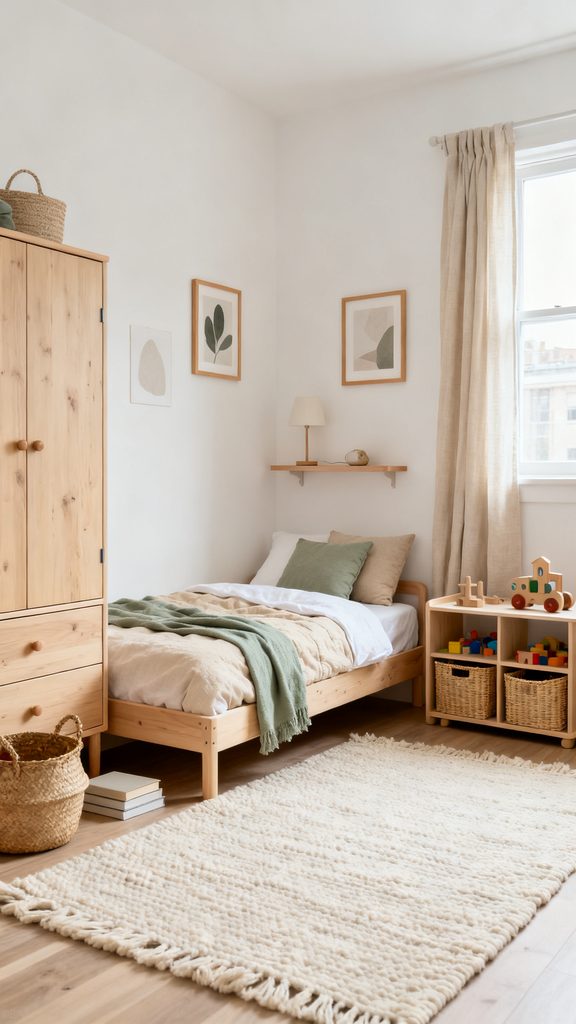
Finish with a quieter approach that reduces visual clutter. Choose only essential furniture: a low bed, compact wardrobe or dresser, small bedside shelf, and one accessible toy-storage unit.
Use a gentle palette of warm white, oatmeal, pale oak, soft beige, and muted sage. Plain cotton bedding, a textured wool or washable woven rug, linen curtains, and natural baskets add warmth without filling the room with decoration. Keep toys organized in a few open baskets and use two or three simple wall prints rather than a crowded gallery.
The most useful Small Kids Bedroom Ideas make limited square footage work in several ways at once. Beds can provide storage, walls can replace bulky furniture with shelves and rails, and overlooked corners can become reading, studying, or creative zones. Keeping pathways clear and repeating a controlled palette throughout the room also helps compact spaces feel calmer, brighter, and easier for children to use.