Your front door has a way of collecting everything you carry home. Shoes gather under coats, keys disappear beneath the mail, and suddenly a small entrance feels even smaller. I like storage that gives those things a clear home while still leaving room to step inside.
These Small Entryway Storage Ideas use narrow walls, tucked-away corners, and useful furniture to make everyday arrivals easier. You can choose one setup that fits your doorway rather than trying to squeeze in every feature. A little color, texture, and thoughtful lighting will help the storage feel like part of your home.
1. A Shoe Bench With Pullout Baskets
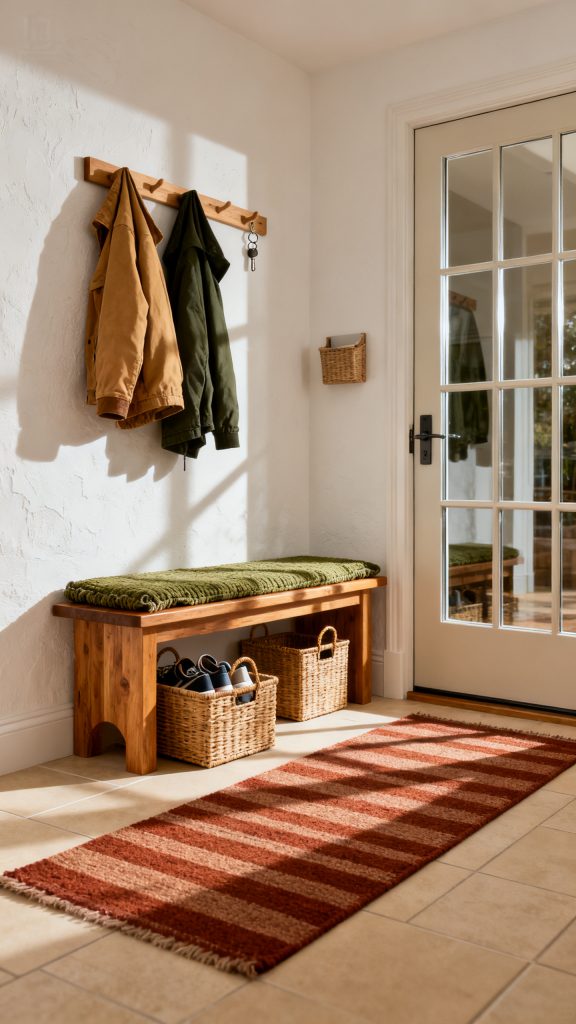
A short oak bench gives you somewhere to sit while keeping daily shoes close by. Slide two square woven baskets beneath it, then add a moss-green seat pad against warm white walls. I love how the open base keeps a little entrance from feeling boxed in.
Hang a short row of coat pegs above one end so jackets don’t cover the whole seat. A small wall pocket beside the pegs can hold keys, while a rust-striped washable runner adds color below. Let daylight from the door show off the basket weave, and leave one end of the bench clear for sitting.
2. Shallow Shoe Storage Along a Narrow Hall
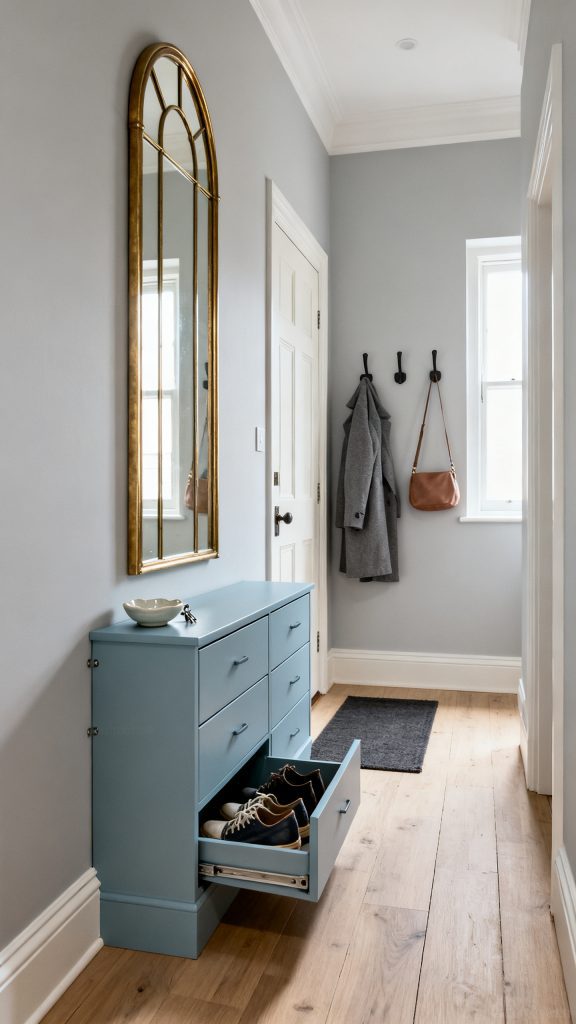
When your entrance is a slim hallway, I’d start with a shallow flip-down shoe unit rather than a deep bench. A muted blue finish against pale gray walls gives the long wall some color without taking over the passage. Check that the compartments fit your shoes before choosing the unit.
Center a tall arched brass wall mirror above it and keep a small ceramic key dish on top. Put coat hooks farther along the wall, outside the door swing, with a narrow charcoal runner connecting both spots. Soft side-window light and the mirror’s curved frame make the practical storage feel welcoming.
3. A Corner Rack That Uses Two Walls
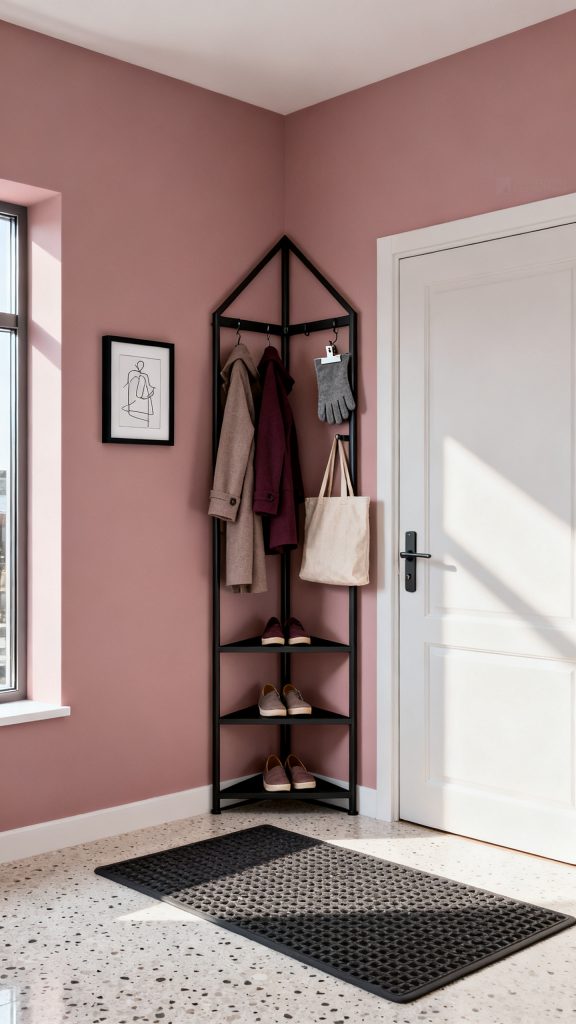
An empty corner can hold more than you might think. Try a compact black metal corner rack with a short hanging rail above triangular shoe shelves. Dusty rose walls and a dark rubber-backed mat give the little setup a warm, grounded feel.
Keep one tote and two everyday coats on the rail so the corner stays easy to reach. A clipped fabric pouch can hold gloves, and a small framed line drawing on the neighboring wall adds a softer note. I would keep the rack outside the door’s sweep and let nearby window light reach both sides.
4. A Closet Door With Hanging Pockets
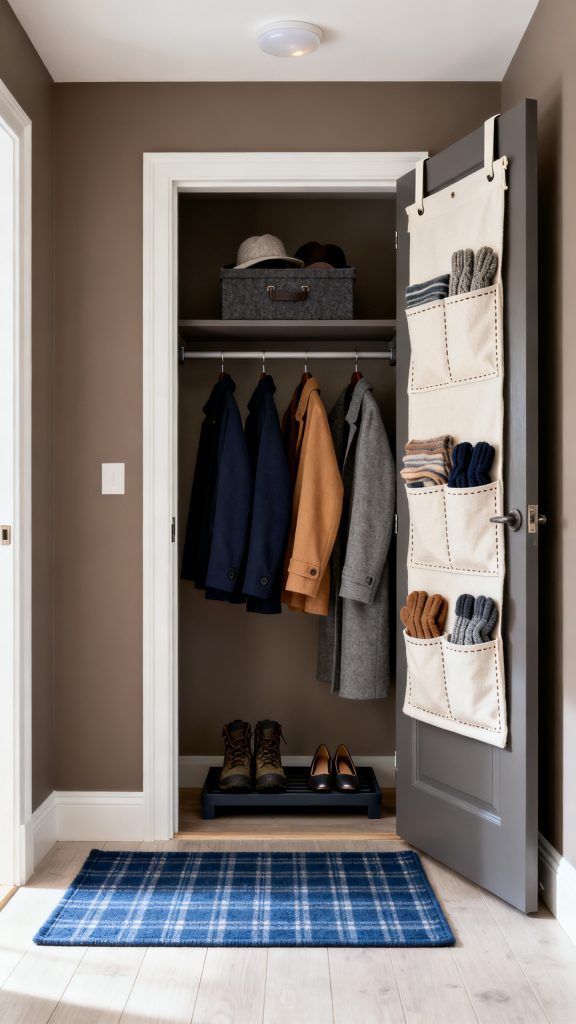
If you already have a coat closet by the entrance, the inside of its door is useful storage space. A cream fabric pocket organizer can hold scarves, gloves, and slim shoes while the main rail keeps coats together. I like the softer look of fabric against a warm gray closet interior.
Use a low shoe tray beneath the coats, and keep a handled felt box on the top shelf for spare hats. Outside the closet, a blue checked runner and a small flush ceiling light make the doorway feel finished. Check the organizer’s depth and hanger fit so the door can close without squeezing anything.
5. A Floating Drop Zone Above a Shoe Tray
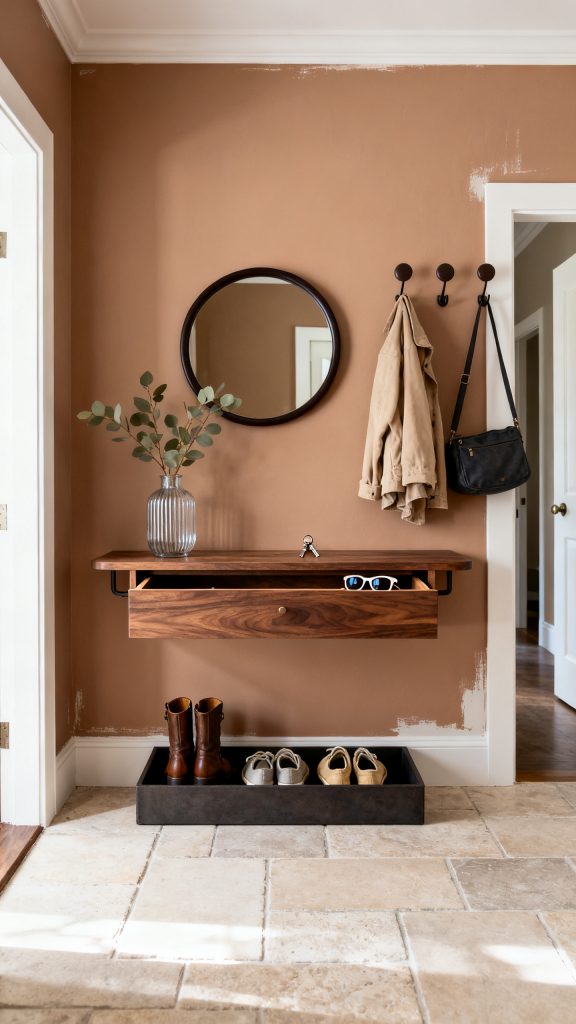
You don’t need floor-standing furniture to make a useful landing place. A walnut floating shelf with a slim drawer can hold keys and sunglasses above a dark boot tray. Pair it with clay-colored walls and a small round mirror for a compact setup with some warmth.
Place three rounded coat hooks beside the shelf rather than directly over it. A ribbed glass vase with leafy stems can sit at the shelf’s far end, leaving the center useful for your bag’s smaller contents. Soft daylight across the walnut grain keeps the arrangement relaxed, and the open floor makes sweeping easier.
6. An Entry Closet With the Doors Removed
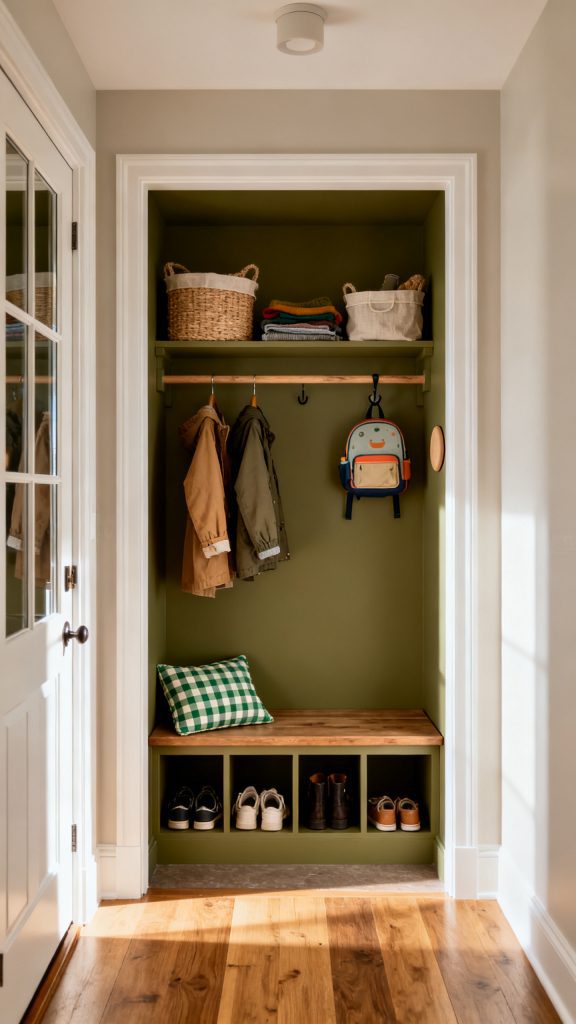
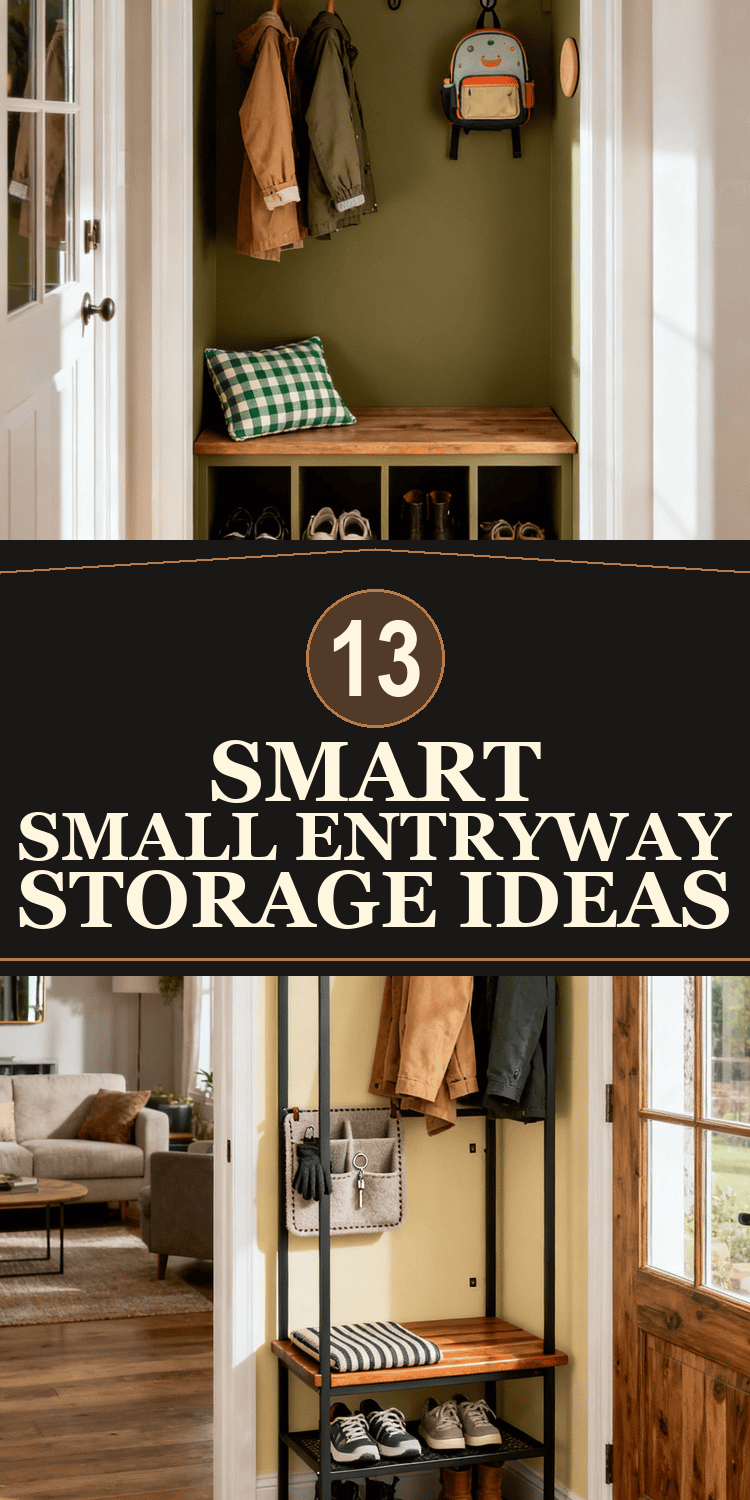
A shallow entry closet can become a little open storage nook if swinging doors make access awkward. Keep the existing opening and fit a bench between the side walls, with shoe cubbies below and a coat rail above. Olive paint inside the nook gives it a clear place in an otherwise pale hallway.
I’d add a small gingham seat cushion and matching cloth bins on the upper shelf for seasonal extras. A low hook on one side can catch a child’s backpack without covering the seat. A nearby ceiling light and daylight from the front door should reach the nook, and any removed doors can be stored if you may want them back.
7. A Pegboard for Bags and Daily Essentials
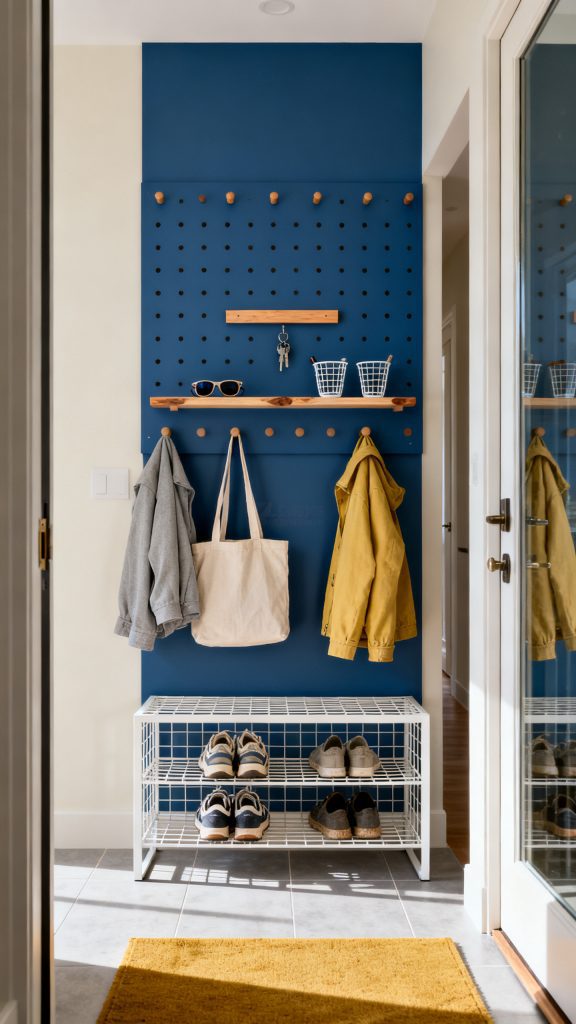
A sturdy wall-mounted pegboard lets you move storage around as your needs change. Use a deep blue board on an off-white wall, with timber pegs, a narrow key ledge, and small wire cups for sunglasses. The mix feels cheerful without needing lots of separate wall pieces.
Place a low white wire shoe rack beneath it and reserve the outer pegs for two light jackets and a tote. A mustard door mat brings the color down to the floor, while daylight catches the wood and painted surface. Choose hardware rated for the loads you plan to hang, and keep the ledge away from swinging bags.
8. A Storage Ottoman Beside the Door
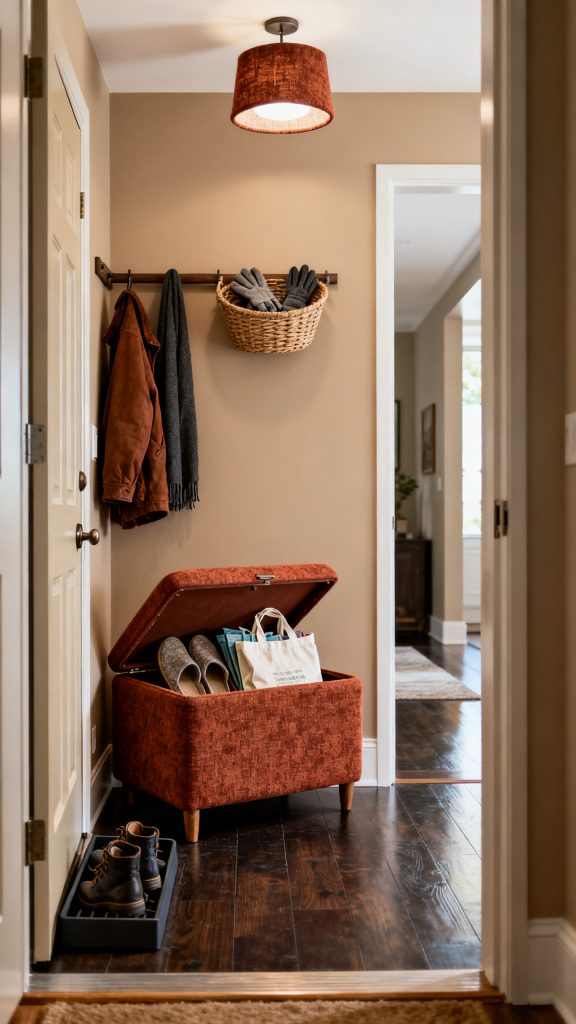
A small rust-colored storage ottoman can do two jobs in a square entryway. You get a soft seat for pulling on shoes and a hidden place for dry slippers or spare tote bags. I’d pair the textured fabric with sandy walls and dark wood flooring for a warm welcome.
Use a wall-mounted coat rail nearby and a slim boot tray beside the seat for outdoor shoes. Above the ottoman, a shallow wall basket can collect gloves, while a small fabric-shade ceiling light softens the corner. Leave enough room to lift the lid fully, and keep damp shoes out of the upholstered storage.
9. A Compact Family Cubby Tower
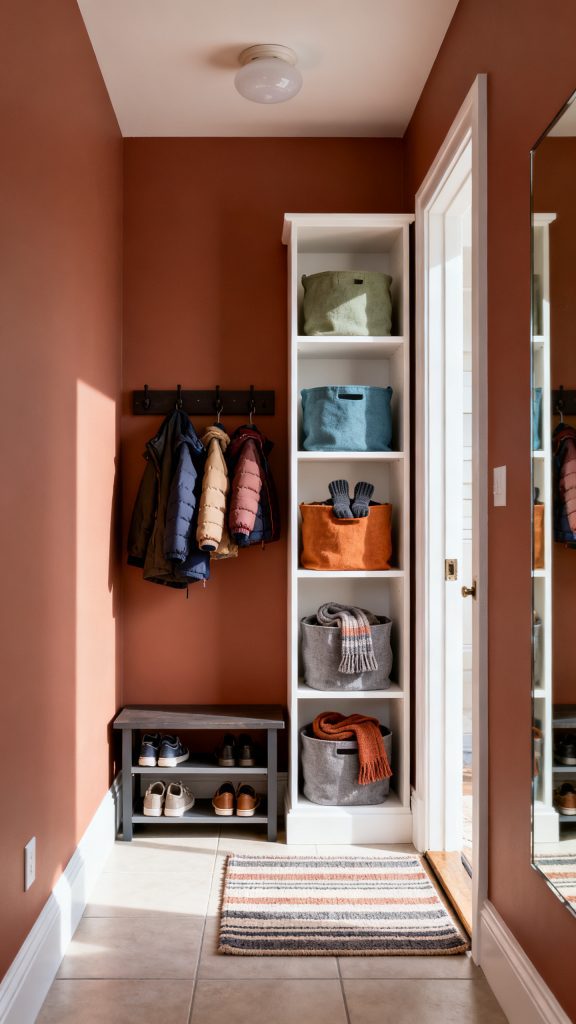
When several people share a tiny entrance, giving everyone one small cubby can make the space easier to use. Try a narrow, securely anchored tower with four open compartments, each holding a cloth bin in a different muted color. A terracotta wall behind it makes the white storage feel less plain.
Mount a short coat rail on the neighboring wall and tuck a low shoe shelf beneath it. A striped cotton mat connects the two pieces, and a simple ceiling fixture keeps the bins easy to see on darker mornings. I like using different bin colors instead of large name signs, with daily items down low and less-used things higher up.
10. A Tucked-Away Space Beneath the Stairs
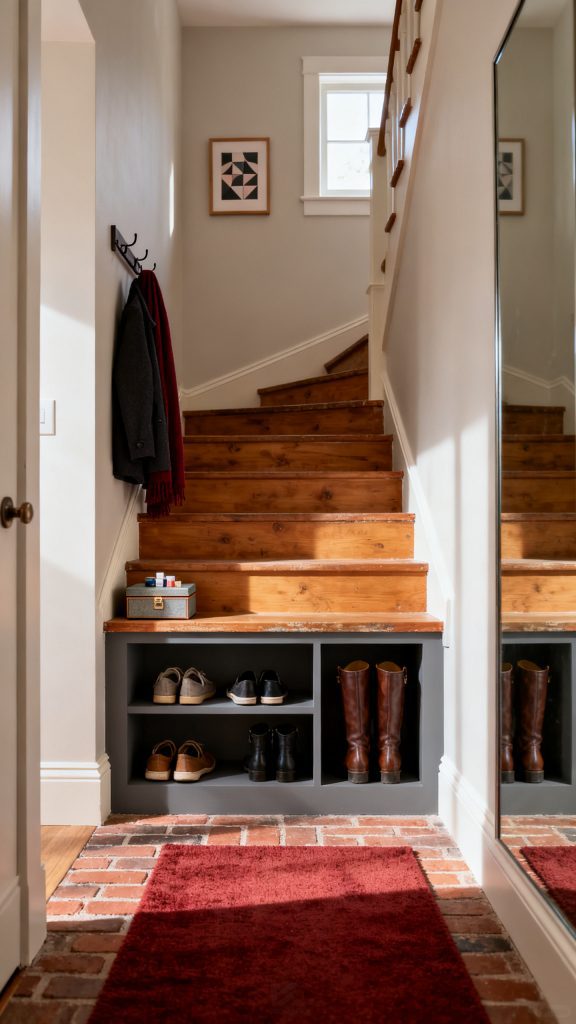
That low patch beneath the first part of a staircase can become a useful shoe nook. Fit stepped open shelves below the slope and place taller boots at the higher end. Warm gray shelves, honey-toned stair treads, and a brick-red runner keep the arrangement connected to the hallway.
Add a narrow rail of coat hooks on the full-height wall beside the stairs, away from the lowest ceiling. A small lidded box on the highest shelf can hold shoe-care items, with a framed geometric print above the hooks. I’d keep everything within the stair footprint so side-window daylight reaches the shelves and the walking route stays open.
11. A Slim Hall Tree for an Entrance Without a Closet
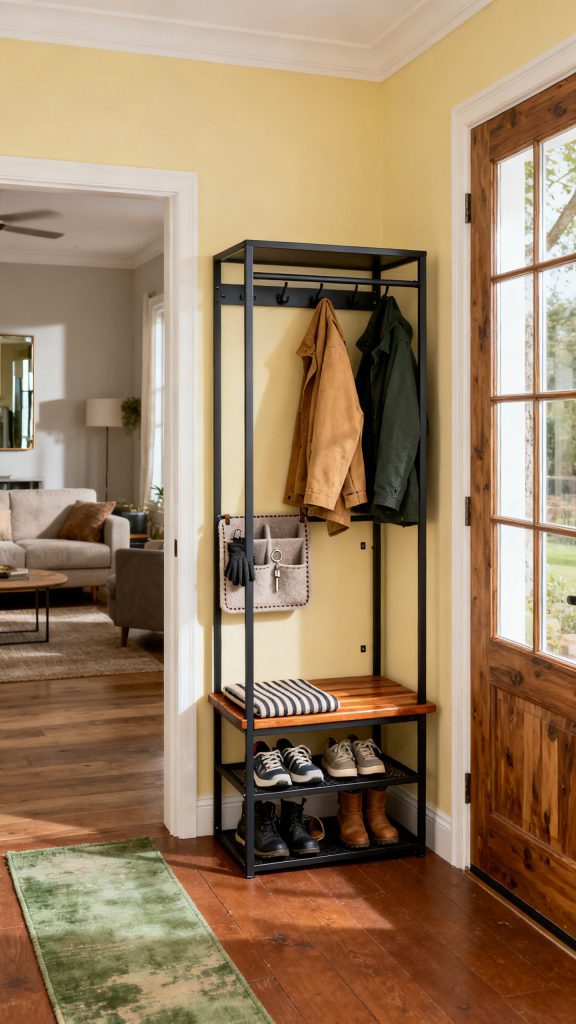
If your doorway opens straight into the main room, a slim hall tree can give the entrance its own boundary. Choose a freestanding piece with a short coat rail, a small seat, and two shoe shelves in dark metal and warm wood. Pale yellow walls and a faded green runner make the storage feel friendly rather than heavy.
Anchor the piece as directed and place its back against the wall so coats stay out of the route into the room. Hang a shallow felt organizer at one end for keys and gloves, then add a striped seat pad. Nearby window light can pick out the wood grain, while the open frame leaves the small entrance visually connected to the room.
12. A High Shelf With a Rail Underneath
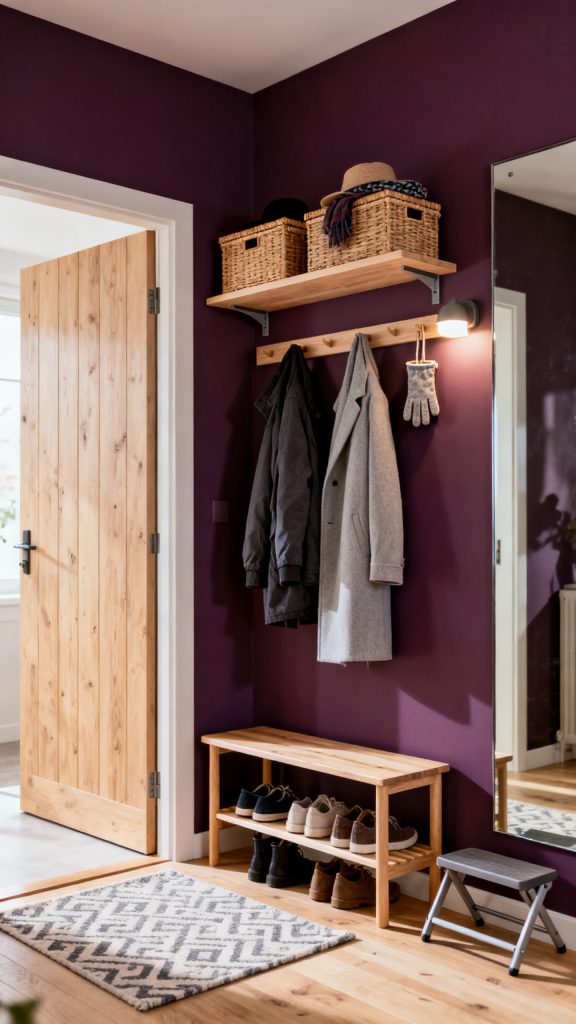
For an entrance with a short usable wall, try stacking storage upward. A securely mounted high shelf can hold woven lidded baskets, with a coat rail directly beneath it and a low two-tier shoe rack below. Deep plum on the wall and light ash wood give the compact arrangement a little depth.
Keep everyday gloves in a small pouch on the rail and save the high baskets for less-used hats and scarves. I would add a pale patterned runner and a compact wall light beside the installation, safely clear of hanging coats. Check that the shelf is reachable with a proper step stool, and avoid placing heavy items overhead.
13. A Window Bench With Hidden Shoe Drawers
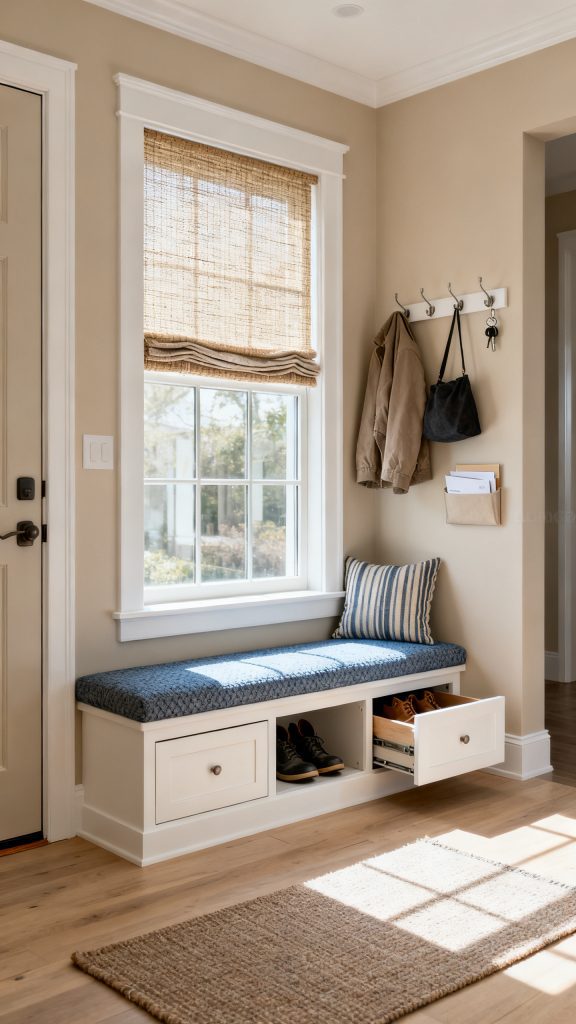
A small window beside the front door is a lovely place for a bench with deep shoe drawers. Choose a low piece that sits below the sill, with a blue-gray cushion and warm white fronts against soft beige walls. Sunlight through a simple woven shade gives the seat a gentle, settled feel.
Put coat hooks on the solid wall beside the window, keeping jackets clear of the glass. A small wall pocket beneath the hooks can hold keys and outgoing mail, while a flat woven rug leaves the drawers easy to open. My favorite detail here is a single striped cushion at one end, with the rest of the seat ready when you need it.
Final Thoughts
The most useful Small Entryway Storage Ideas start with what you actually bring through the door. I’d choose a place for your daily shoes, a spot for coats, and one easy landing place for keys before adding anything else. Let the shape of your entrance decide how those pieces fit together.
You can build the rest slowly, adding a rug you love or a softer cushion when the basics feel right. Keep the details that make coming home feel good, and leave yourself space to move. Your entryway can be small and still feel very much like you.