A small bedroom needs to work hard without feeling crowded. The right wardrobe can provide generous storage while also improving the room’s layout, proportions, and overall style. These Small Bedroom Ideas with Wardrobes use built-ins, slim cabinets, mirrored doors, corner layouts, and multifunctional designs to make limited floor space feel more organized and comfortable.

1. Floor-to-Ceiling Built-In Wardrobe
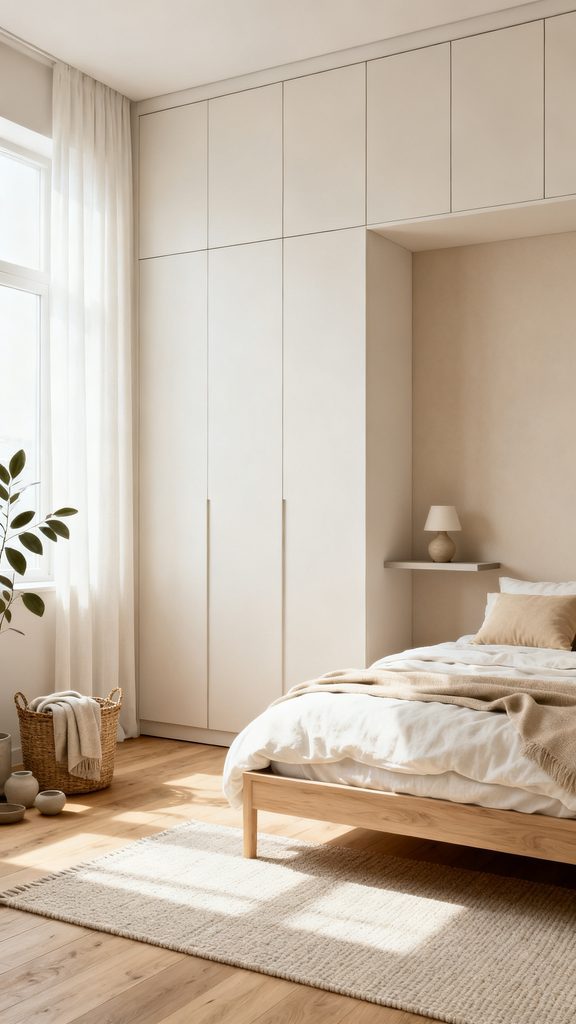
Turn an entire wall into streamlined storage with a floor-to-ceiling built-in wardrobe. Warm white or soft beige doors help the large surface blend into the bedroom instead of becoming visually heavy.
Choose flat, handleless fronts for a clean appearance and use the upper cabinets for seasonal clothing, spare bedding, and less frequently used belongings. Keeping the remaining furniture low and simple gives the room a calmer, more spacious feel.
2. Mirrored Wardrobe for a Brighter Bedroom
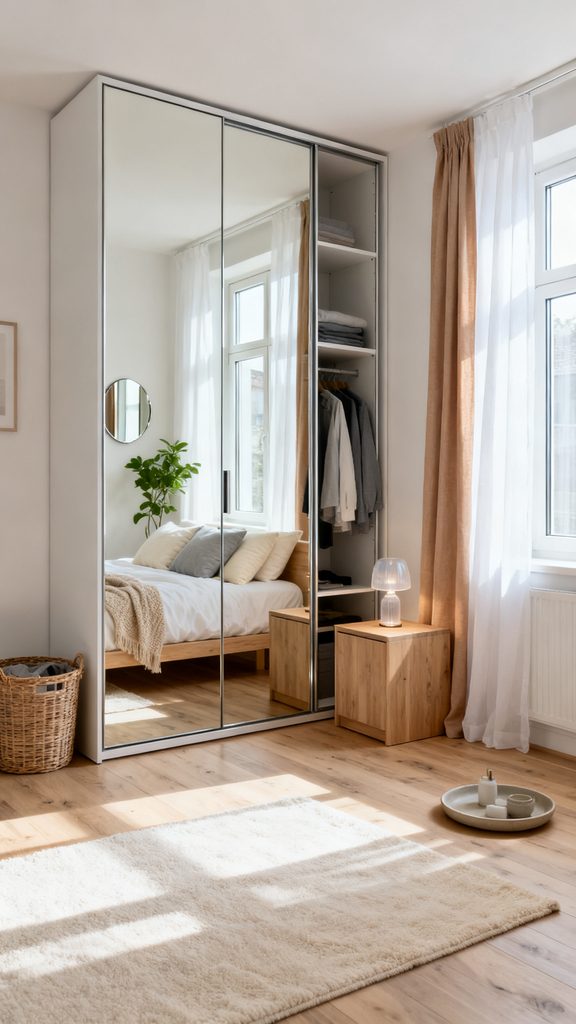
A mirrored wardrobe combines full-size clothing storage with a practical dressing mirror. More importantly, the reflective surface can visually extend the bedroom and bounce daylight deeper into the space.
Position the wardrobe where its doors can reflect a window or an uncluttered part of the room. Pair it with pale bedding, light wood furniture, and understated lighting so the reflections make the bedroom feel open rather than busy.
3. Wardrobe Built Around the Bed
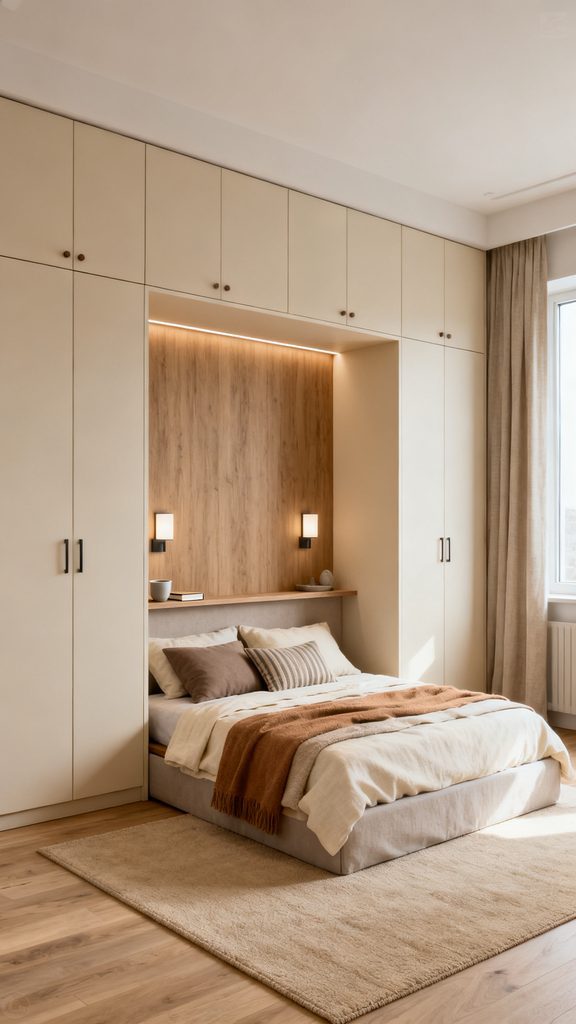
Use the bed wall as the main storage zone by installing wardrobes on both sides with cabinets spanning the space above the headboard. This arrangement leaves other walls available for circulation or additional furniture.
A recessed headboard niche can hold reading lights, books, and nighttime essentials, reducing the need for bulky bedside tables. Matching the cabinetry to the wall color also helps this substantial storage system feel architectural rather than oversized.
4. Slim Wardrobe Beside the Bed
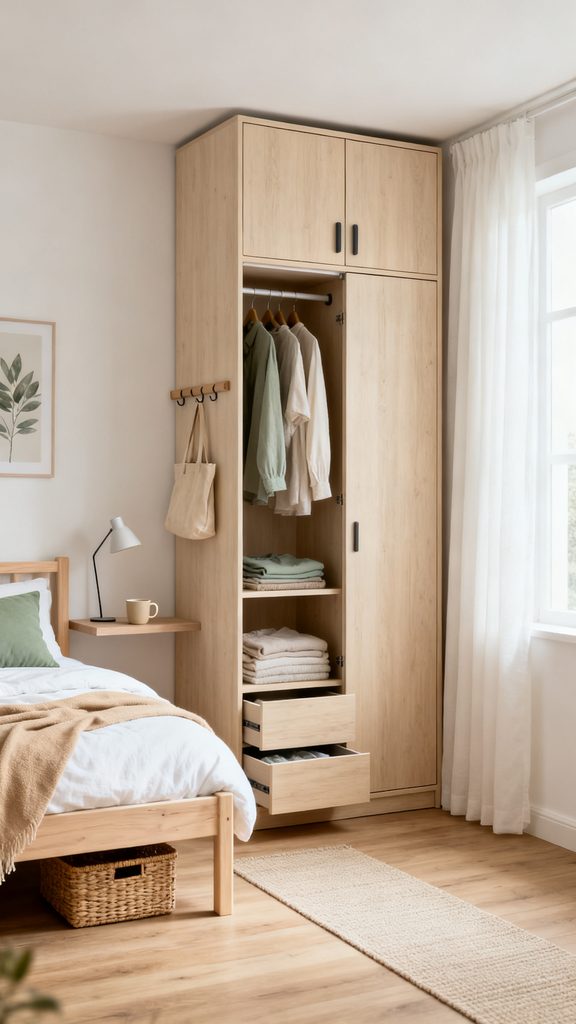
When every inch matters, replace an extra-deep cabinet with a tall, slim wardrobe. A narrow design beside the bed works particularly well in compact guest rooms, box rooms, and small apartments.
Keep the interior efficient with hanging rails, adjustable shelves, and pull-out accessories. A light oak or pale painted finish introduces warmth without making this corner of the bedroom appear heavy.
5. Sliding-Door Wardrobe
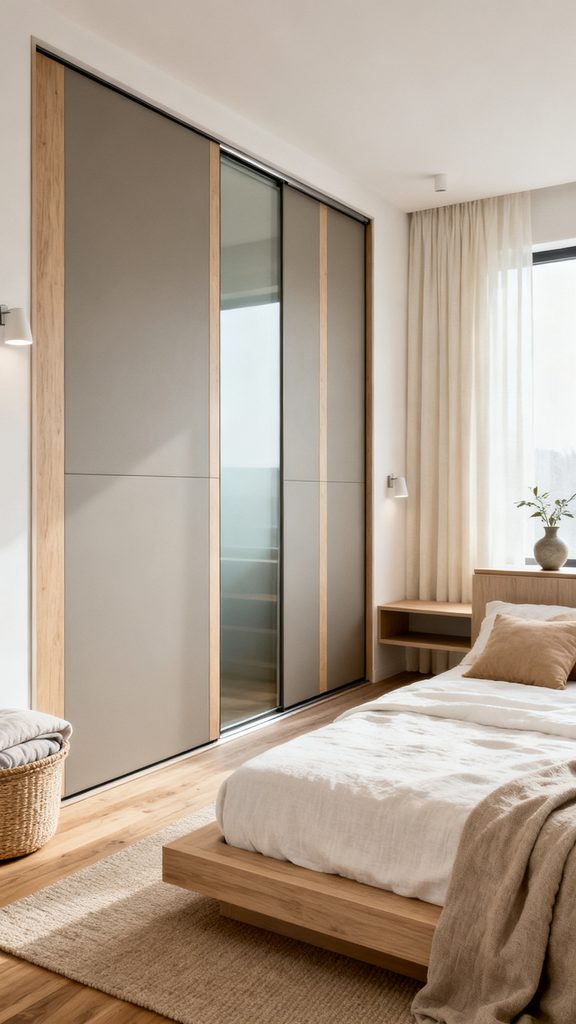
Sliding doors eliminate the clearance required by traditional hinged wardrobe doors. That makes them especially useful when the wardrobe faces the side or foot of the bed.
For a contemporary look, combine matte panels with subtle wood accents or softly tinted glass. Keep the wardrobe aligned with one wall and avoid unnecessary projections to maintain a clear pathway through the bedroom.
6. Corner Wardrobe Layout
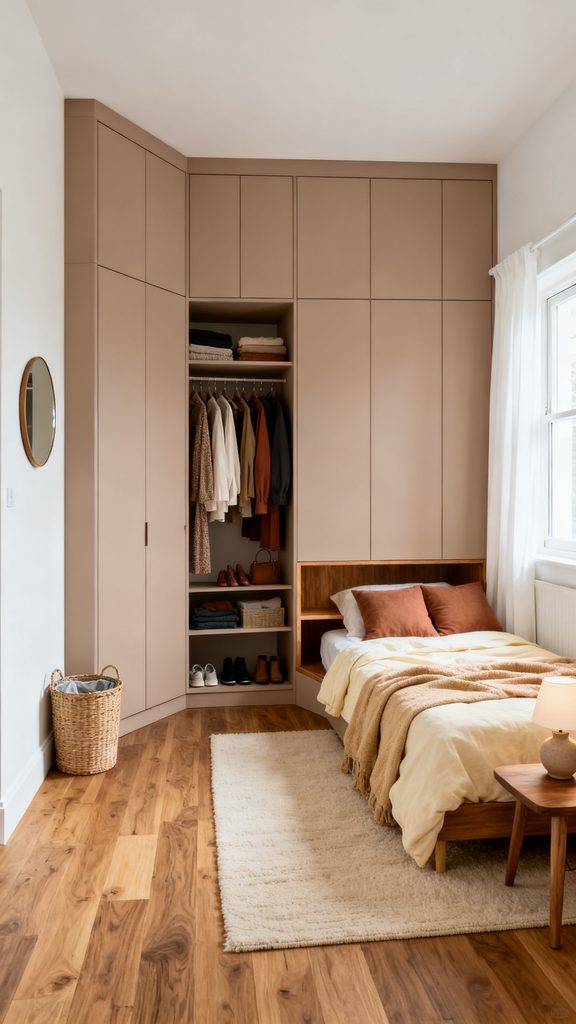
An L-shaped wardrobe can turn an awkward corner into a substantial storage area while keeping the center of the room open. This solution works well when a conventional straight wardrobe would leave unusable gaps.
Use the deeper corner section for hanging clothes and the narrower side for folded items, shoes, or accessories. Coordinated cabinet fronts create a continuous appearance and prevent the two-wall arrangement from looking fragmented.
7. Wardrobe and Desk Combination
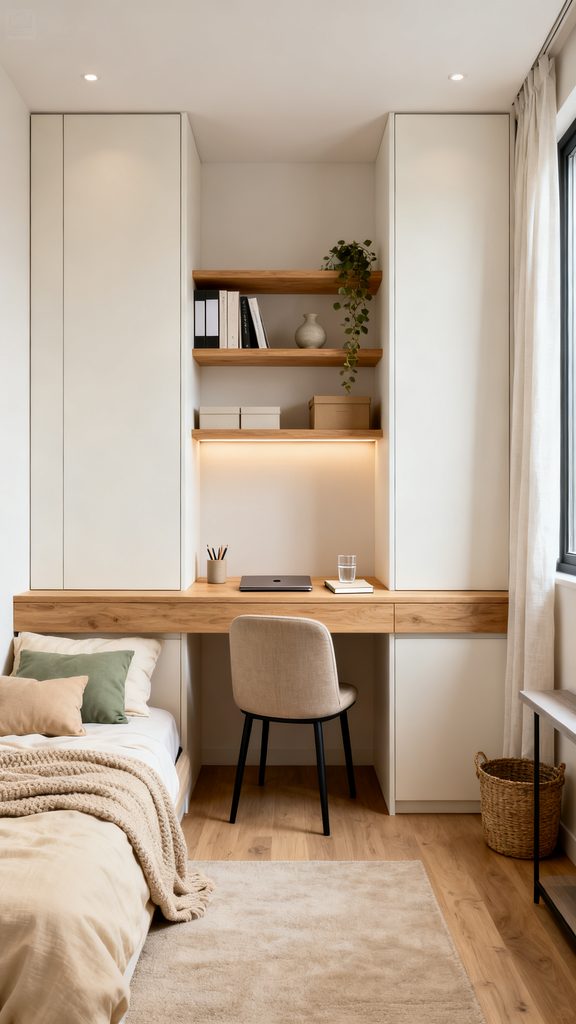
Combine two functions on one wall by extending the wardrobe cabinetry into a compact desk. This creates a practical work or study area without adding another freestanding piece of furniture.
A wood desktop recessed between tall cabinets provides visual contrast and defines the workspace. Add floating shelves, an integrated task light, and a compact chair that can tuck completely beneath the desk when it is not being used.
8. Dark Wardrobe as a Statement Feature
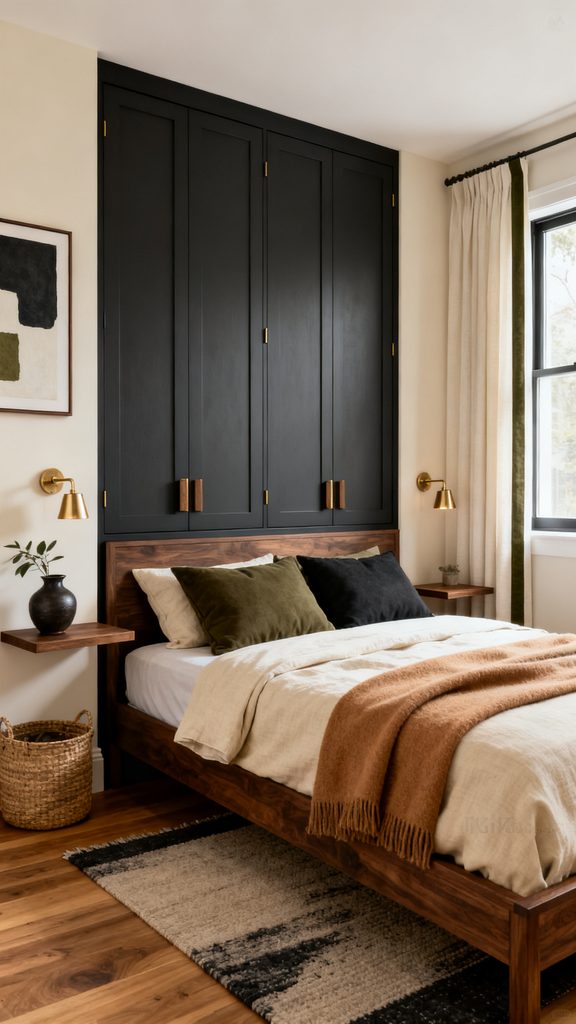
Small bedrooms do not always need pale furniture. A charcoal, deep olive, or muted navy wardrobe can create a strong focal point when the surrounding walls and textiles are kept relatively restrained.
Choose simple cabinet fronts and warm metal or timber details to soften the darker finish. Concentrating the deep color on one storage wall gives the bedroom character while maintaining a controlled visual composition.
9. Wardrobe with Open Display Niches
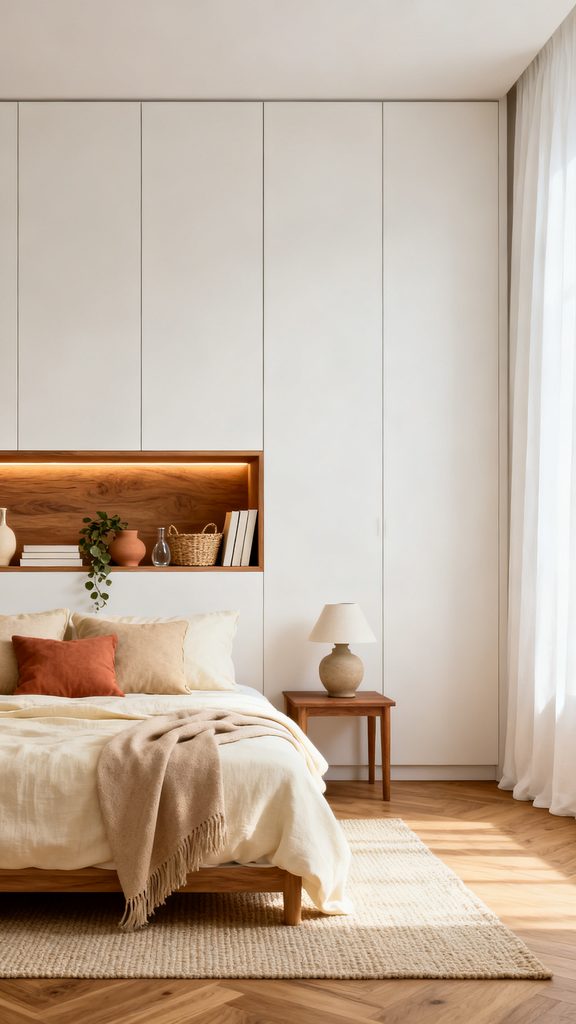
Break up a solid bank of wardrobe doors with an open niche for books, decorative objects, or everyday essentials. The recessed section gives tall cabinetry more depth and can replace a separate shelving unit.
Integrated lighting makes the niche a subtle focal point after dark. Keep most belongings concealed behind closed doors and style the open section selectively so the room remains visually calm.
10. Wardrobe as a Bedroom Divider
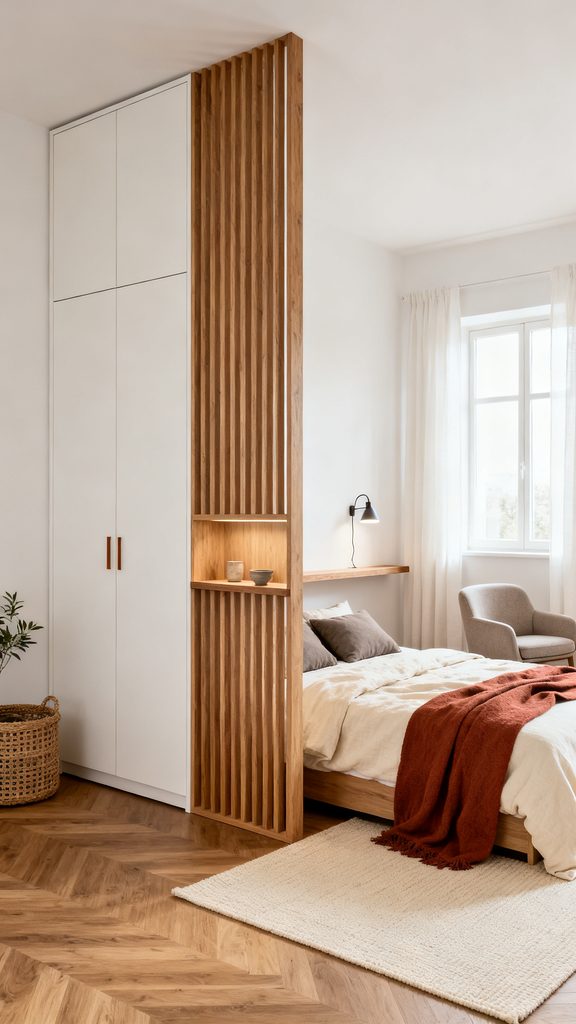
In a studio or elongated bedroom, a freestanding wardrobe can function as both storage and a partial room divider. Positioned perpendicular to a wall, it can create a more private sleeping zone without constructing a permanent partition.
Keep enough open space around the cabinet for comfortable circulation and natural light. A finished back panel can become a decorative feature of its own, using timber slats, painted panels, or understated shelving.
11. Wardrobe with a Window Seat
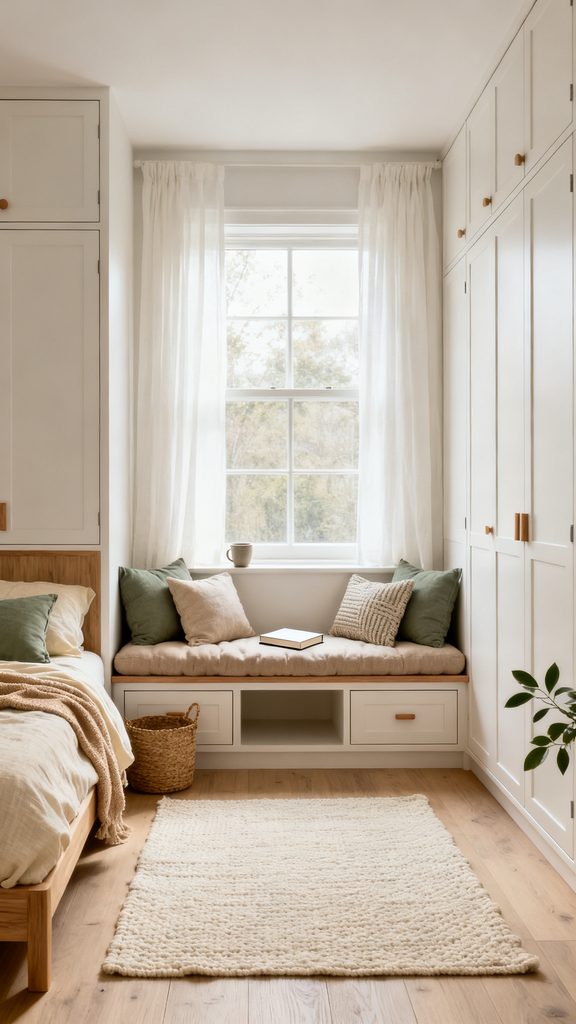
Frame a bedroom window with tall wardrobes and connect them with a built-in bench beneath the sill. This turns an often-underused wall into a combination of clothing storage, seating, and potentially additional drawers.
Use upholstered cushions to make the window seat comfortable while keeping the surrounding wardrobe fronts simple. Soft neutrals, natural wood, and gentle daylight can make this storage-heavy arrangement feel inviting rather than crowded.
Making Wardrobes Work in a Small Bedroom
The most effective Small Bedroom Ideas with Wardrobes treat storage as part of the architecture rather than simply adding a large cabinet wherever it fits. Floor-to-ceiling units maximize vertical space, sliding doors improve circulation, and multifunctional designs can replace desks, shelving, bedside furniture, or even room dividers.
Before choosing a wardrobe, measure door clearances and walking paths as carefully as the available wall space. A well-planned wardrobe should increase storage capacity while leaving the bedroom comfortable to move through and visually balanced.