A playroom feels best when kids can get right to the things they love doing. I’d begin with how they play today, then leave enough open space for the way they’ll want to play next year.
These Dream Kids’ Playroom Ideas give drawing, reading, building, and make-believe places to happen. You can borrow one corner at a time or use several ideas to plan the whole room.
1. A Window Seat for Story Time
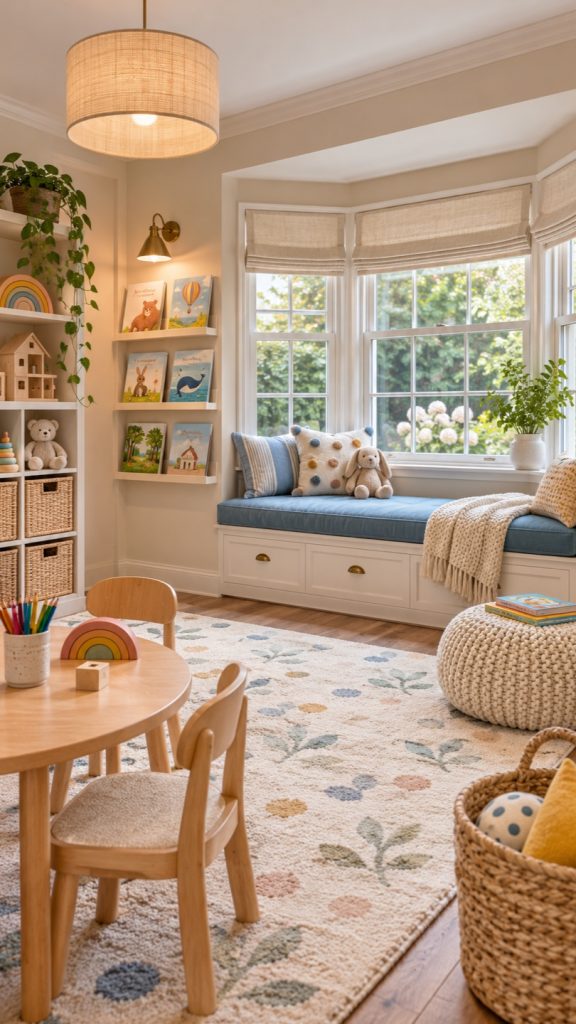
Fit a low cushioned seat under a window and add shallow shelves on one side. Face a few books outward so kids can pick their next story by its cover.
I’d choose a deep sky-blue cushion against soft cream walls. Add a small washable rug below the seat for days when the story moves to the floor.
2. A Wall-Sized Art Station
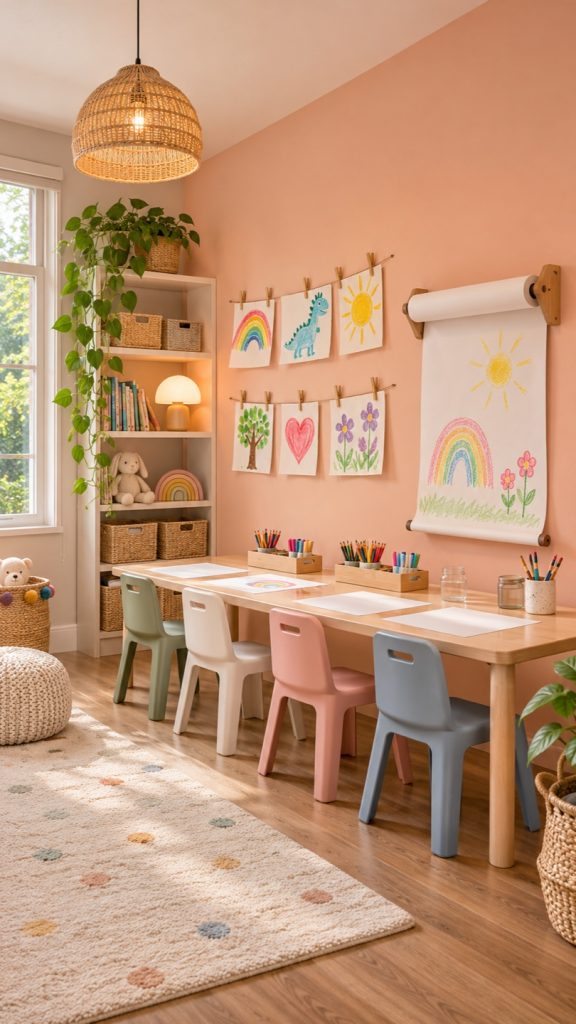
Give drawing and painting a long table with wipeable chairs. Put the everyday supplies in shallow containers at the center so kids can reach them from either end.
Hang a roll of paper above one side of the table and leave room to display finished work beside it. A soft peach wall makes the colors on the page pop.
3. A Building Table With Parts Drawers
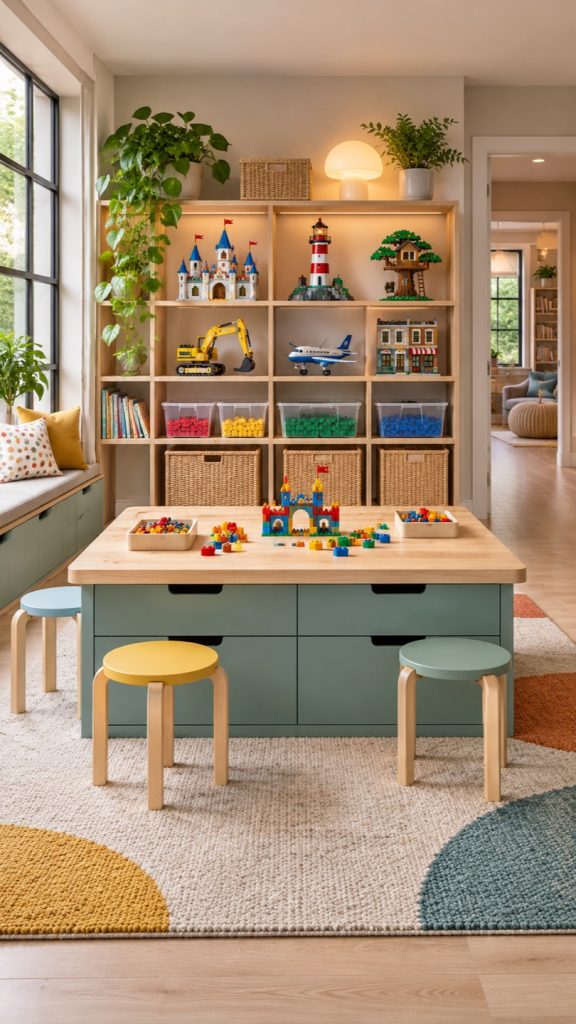
Put a low building table where there’s room to walk around all sides. Shallow drawers underneath keep pieces close enough to sort without leaving the project.
I’d give unfinished builds one open shelf. A muted teal base and pale timber top look cheerful together and make small pieces easy to see.
4. A Soft Floor Zone for Big Play
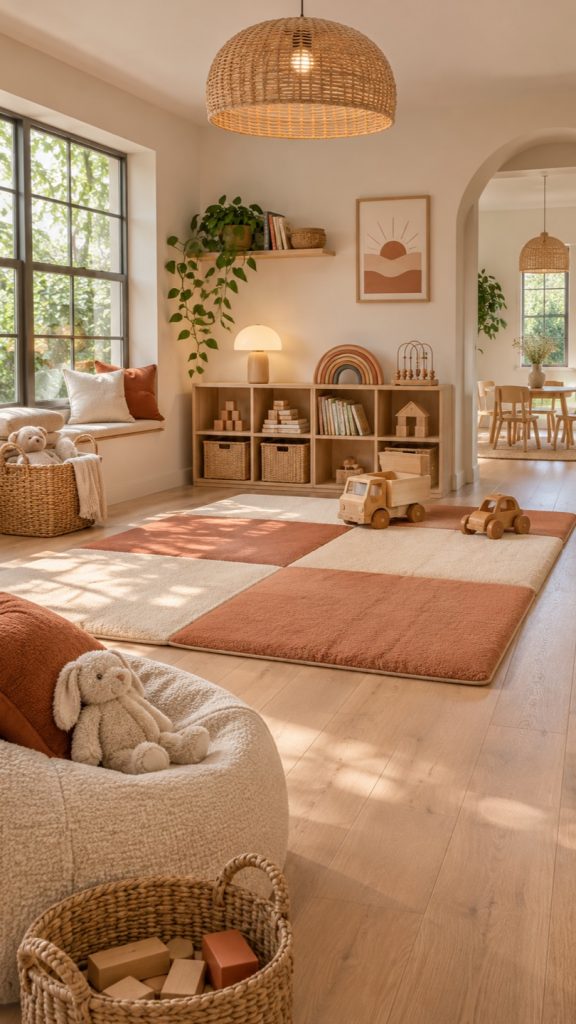
Keep the middle of the room clear and lay down a generously sized cushioned mat. It gives kids space to make a road, stretch out with puzzles, or sit together with a basket of toys.
I’d put a low shelf on the edge of the mat to keep it easy to find a toy. Soft terracotta and oat colors make a large play surface feel like part of the room.
5. A Pretend Market With Open Shelves
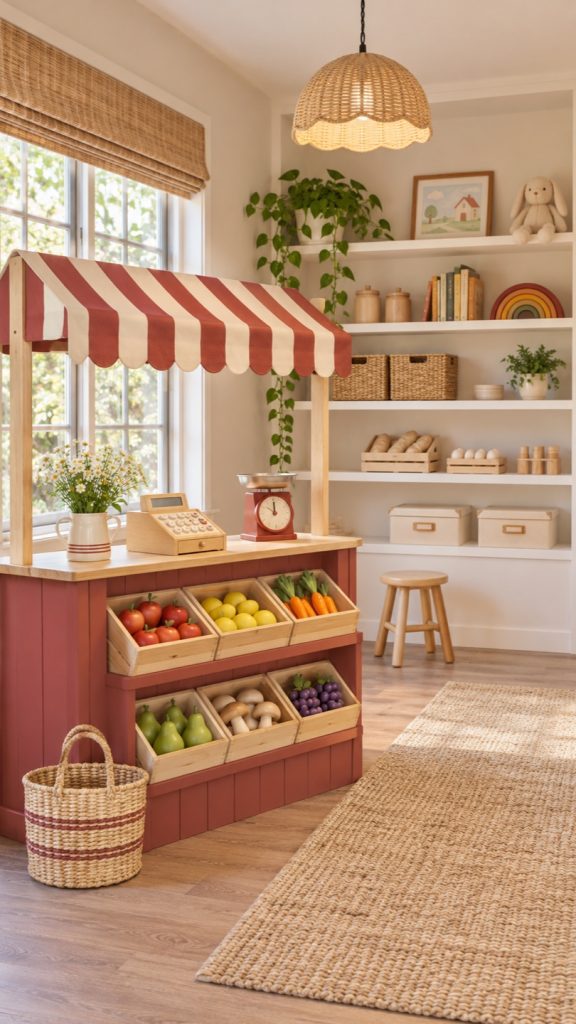
Give make-believe shopping a small counter and a few shelves of play food. Put a basket beside the counter where it’s easy to grab without reaching over the display.
A striped fabric canopy can mark the corner without building a full wall. Try a muted red counter and warm white shelves so the toy produce supplies the brighter colors.
6. A Play Kitchen in an Alcove
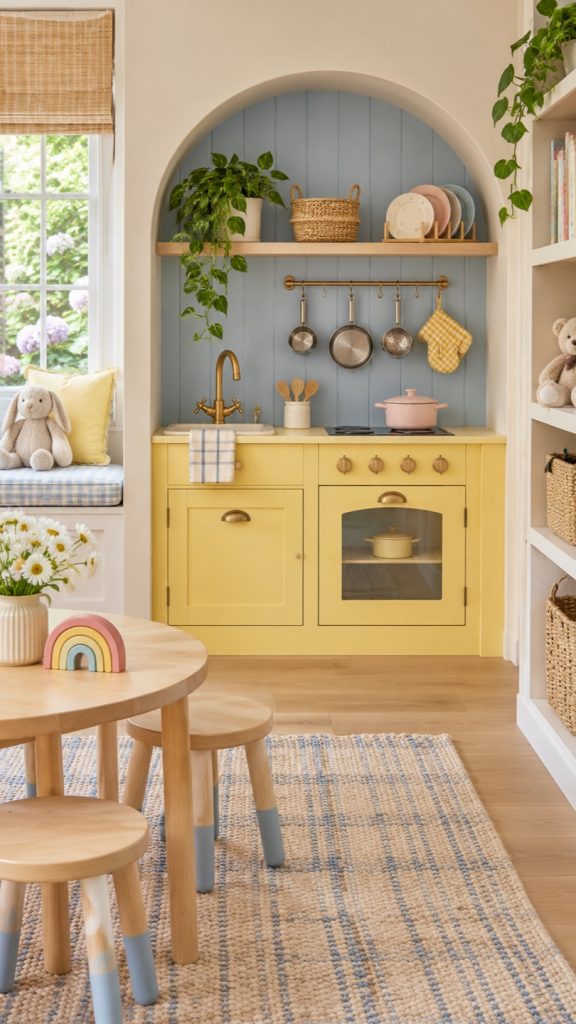
Tuck a child-sized kitchen into a shallow alcove so it’s easy to reach without filling the main floor. Hang the toy pans on hooks low enough for little hands.
I’d use butter-yellow fronts and a pale blue tile-look backing. Give toy plates a low shelf of their own so the pretend dishes have a clear place to go.
7. A Picture Ledge for Rotating Toys
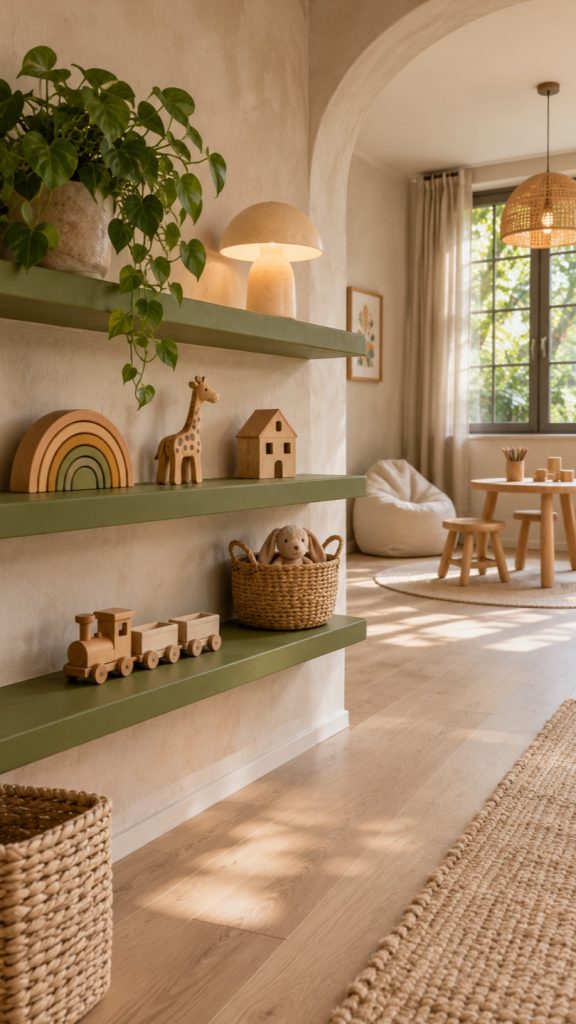
Place a few broad shelves at child height and put out a small group of toys with space between them. Store the extras out of sight and change the selection when it starts to feel familiar.
Try a moss-green shelf wall against warm plaster. I’d add a flat basket below for the pieces that belong to the toys currently on display.
8. A Dress-Up Corner With a Low Rail
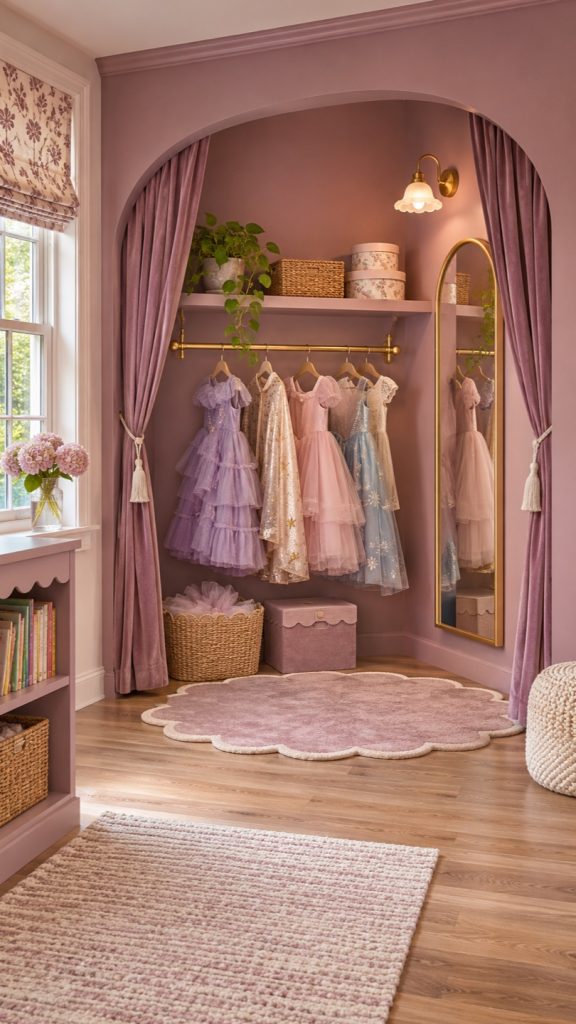
Put dress-up clothes on a low rail so kids can flip through them by themselves. Give hats and soft accessories a shelf beside it, then leave an open spot to try everything on.
I’d hang a child-safe full-length mirror next to the rail. A mauve wall and a small scalloped mat make the corner feel dressed up too.
9. A Puppet Stage in a Doorway Nook
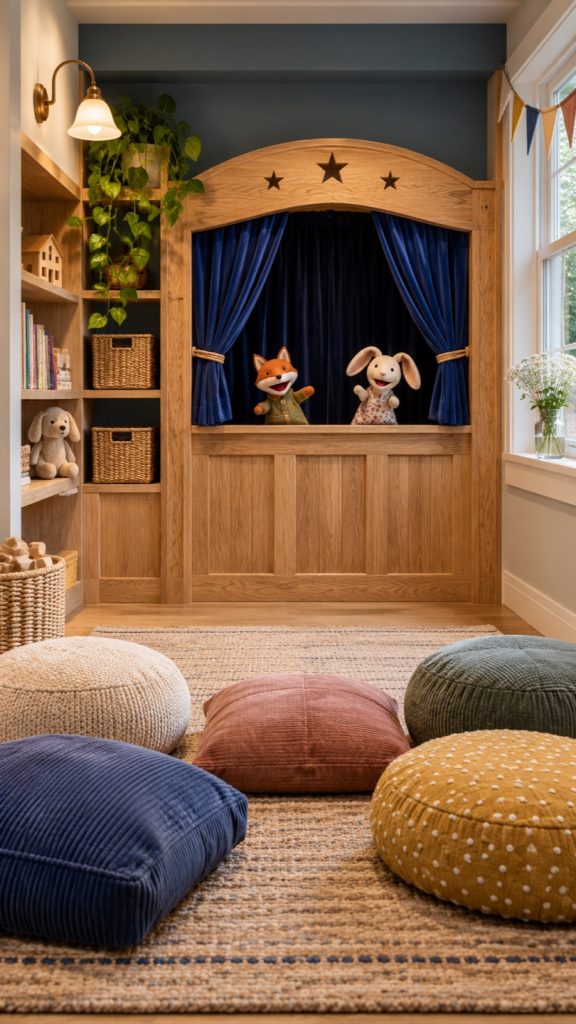
Give a shallow nook a small wooden puppet stage with a ledge and a soft curtain. Leave space behind the stage for two kids to sit or kneel comfortably.
Put a couple of floor cushions out front for the audience. Dark blue curtains and a pale oak frame make the little theater stand out from the rest of the room.
10. A Train Track Table Under the Eaves
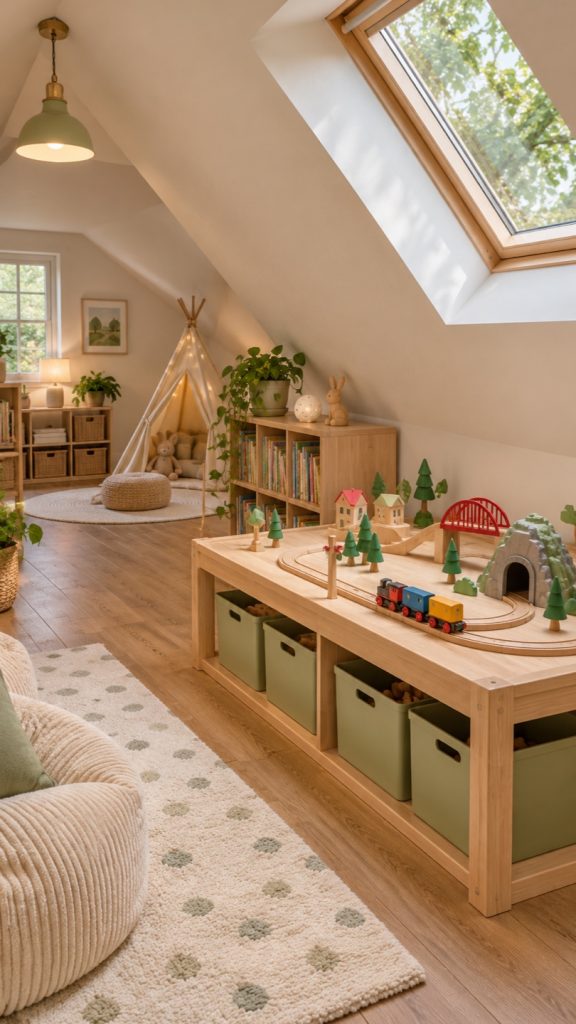
Use the low wall under the eaves for a train table, and keep the seating side where the ceiling is taller. Add a low lip to the tabletop so stray pieces stay within reach.
I’d use a warm ivory ceiling and pale green storage boxes below. The simple backdrop leaves room for a track that changes shape every day.
11. A Puzzle Corner With a Lift-Out Tray
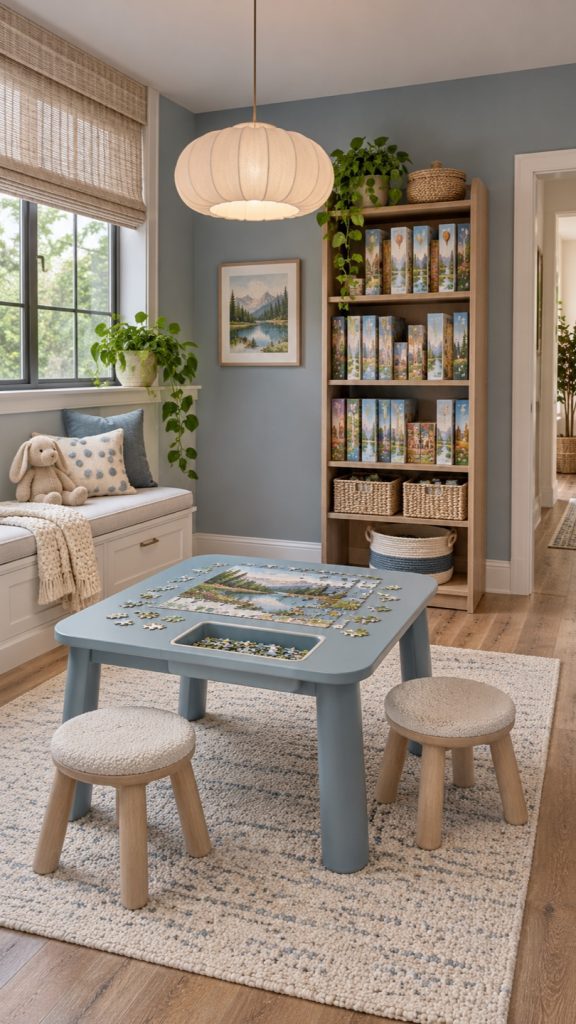
Give puzzles a low table with a removable tray so you can set an unfinished one aside. Keep boards and boxes upright in the shelf beside it so each one slides out separately.
I’d add two stools and a small light over the table. A dusty blue top makes bright pieces easy to see against the surface.
12. A Music Corner With Instrument Cubbies
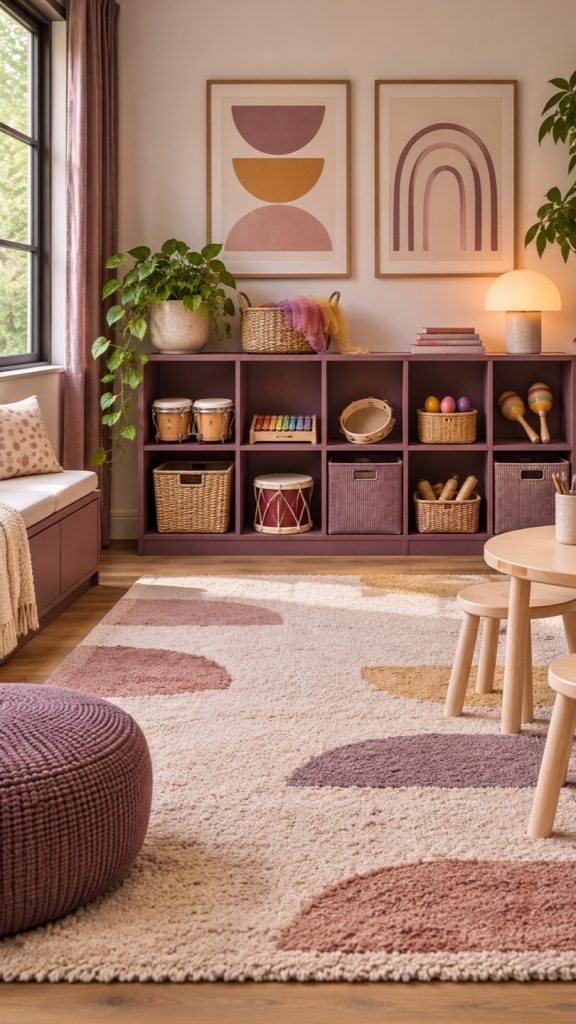
Set small drums and shakers on low shelves where they’re easy to put back. Save enough floor space in front for a child to sit with an instrument.
A thick washable rug softens the sound of moving stools and little feet. I’d use a muted plum shelf with warm wood instruments and one clear patch of wall for artwork.
13. A Shared Play Table Beside the Garden Door
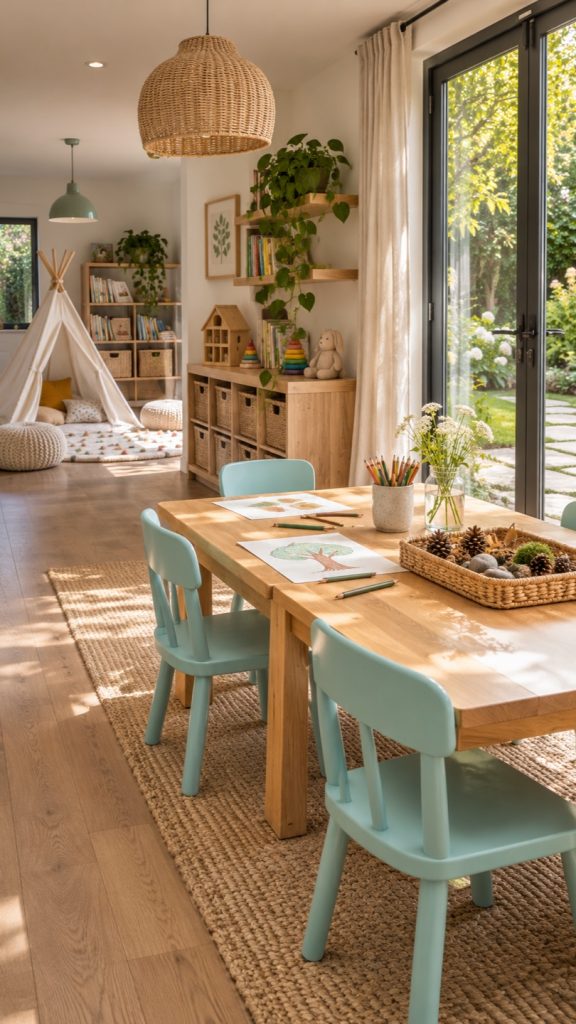
Put a long low table near a glazed garden door so daylight reaches both ends. Leave the route to the door clear and give supplies a nearby shelf so they don’t gather on the sill.
A honey oak top and pale turquoise chairs keep the room bright. I’d add a tray at one end for leaves or shells kids bring in to draw.
Final Thoughts
Choose a few activities to give a permanent home, then leave some floor space open. That gives kids a place to start and enough room to take an idea somewhere else.
I’d make cleanup part of the layout from the beginning. A basket close to the play mat or a shelf beside the art table can make putting things away feel like the last step of playing.