Dark Japandi home decor combines the peaceful simplicity of Japanese interiors with the warmth and functionality of Scandinavian design. By introducing deep earthy colors, natural materials, clean lines, and carefully selected furniture, this style creates a home that feels calm, sophisticated, and welcoming.
Unlike traditional light Japandi interiors, dark Japandi embraces charcoal, espresso brown, deep walnut, muted black, and rich natural textures. These darker elements add depth and intimacy while preserving the uncluttered beauty that makes Japandi design so appealing.
Whether you’re decorating a living room, bedroom, dining area, or a small corner of your home, these Dark Japandi Home Decor Ideas will help you create a balanced space filled with warmth, texture, and understated elegance.

1. Dark Walnut Living Room With Low-Profile Furniture
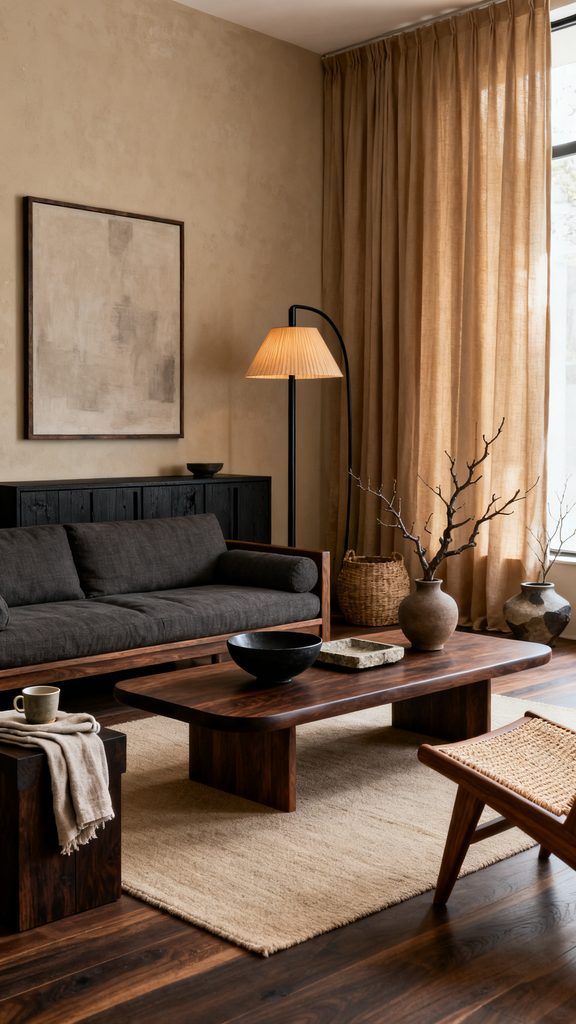
A dark walnut living room is a beautiful starting point for introducing Japandi style into your home. Rich wooden furniture creates a sense of warmth, while low-profile seating keeps the space grounded and visually peaceful.
Choose a low sofa upholstered in charcoal, warm gray, or deep taupe linen. Pair it with a solid walnut coffee table featuring clean lines and a simple rectangular or rounded silhouette.
A textured neutral rug helps soften the darker furniture, while a few handcrafted ceramic pieces add subtle personality.
Styling tips:
- Choose walnut or dark oak furniture with visible natural wood grain.
- Keep the sofa low and comfortable with simple linen cushions.
- Add one large ceramic vase or sculptural branch arrangement.
- Use warm, diffused lighting to soften dark surfaces.
The result is a sophisticated living room that feels inviting without relying on excessive decoration.
2. Charcoal Japandi Bedroom With Layered Natural Textiles
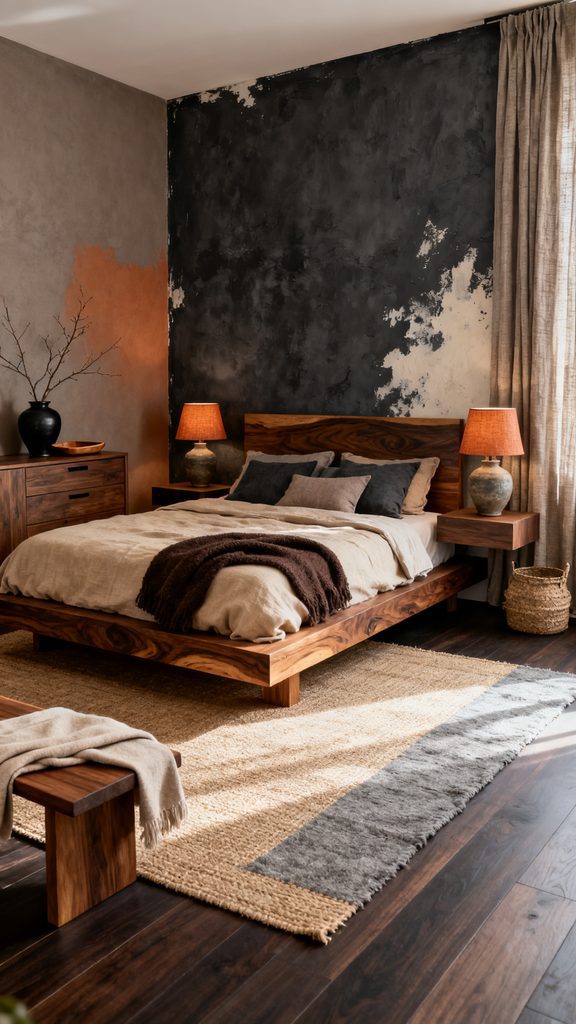
A charcoal bedroom creates a restful atmosphere that works perfectly with Japandi’s emphasis on comfort and simplicity.
Start with a deep charcoal or soft black accent wall behind a low wooden platform bed. This strong architectural feature gives the room depth without overwhelming the space.
Balance the darker backdrop with natural linen bedding in oatmeal, warm beige, and muted gray. Layer a textured wool throw and a few simple cushions for a cozy, understated appearance.
Choose floating wooden nightstands or compact dark timber bedside tables to maintain clean lines.
Styling tips:
- Use matte charcoal paint or textured plaster for the accent wall.
- Choose a low walnut or smoked oak platform bed.
- Layer breathable linen, cotton, and wool textiles.
- Add warm bedside lamps with paper or fabric shades.
This combination of dark colors and tactile fabrics creates a bedroom that feels peaceful, intimate, and naturally comfortable.
3. Black Wood Dining Room With Wabi-Sabi Details
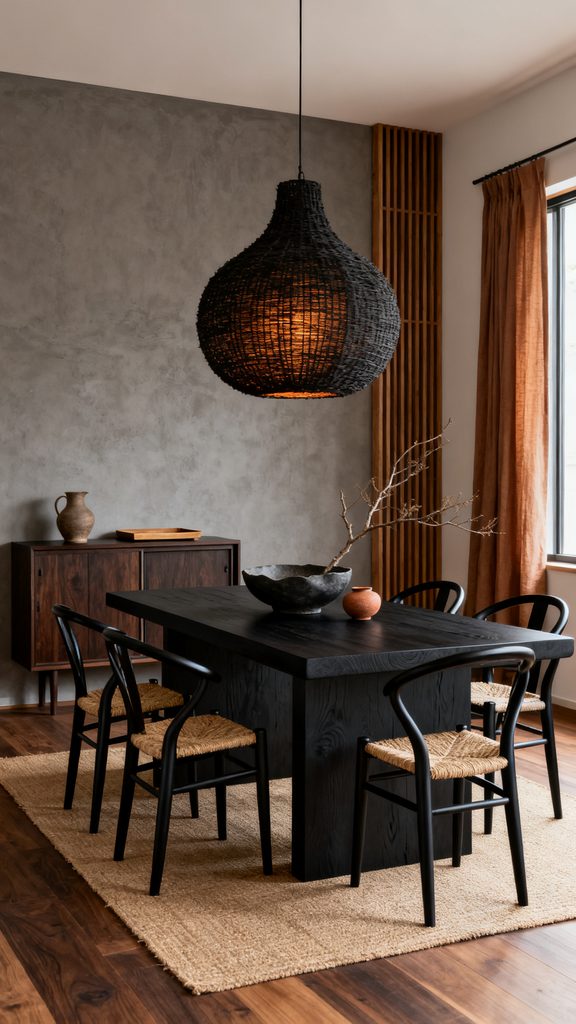
A black wood dining room brings together Japandi’s appreciation for craftsmanship, natural imperfections, and functional beauty.
Make a black-stained oak dining table the centerpiece of the room. Choose a design with a simple shape and visible wood grain rather than a glossy, heavily polished finish.
Surround it with understated wooden dining chairs featuring woven seats or gently curved backs.
For decoration, use handmade ceramic bowls, irregular pottery, and a simple branch arrangement. These pieces introduce the imperfect beauty associated with Japanese wabi-sabi aesthetics.
Styling tips:
- Choose matte black or dark espresso wood furniture.
- Pair dark surfaces with warm gray or clay-colored walls.
- Display a few handmade ceramic dishes as functional decor.
- Install a sculptural pendant light with soft, warm illumination.
The finished dining area feels grounded, intimate, and thoughtfully composed.
4. Moody Japandi Kitchen With Dark Wood Cabinets
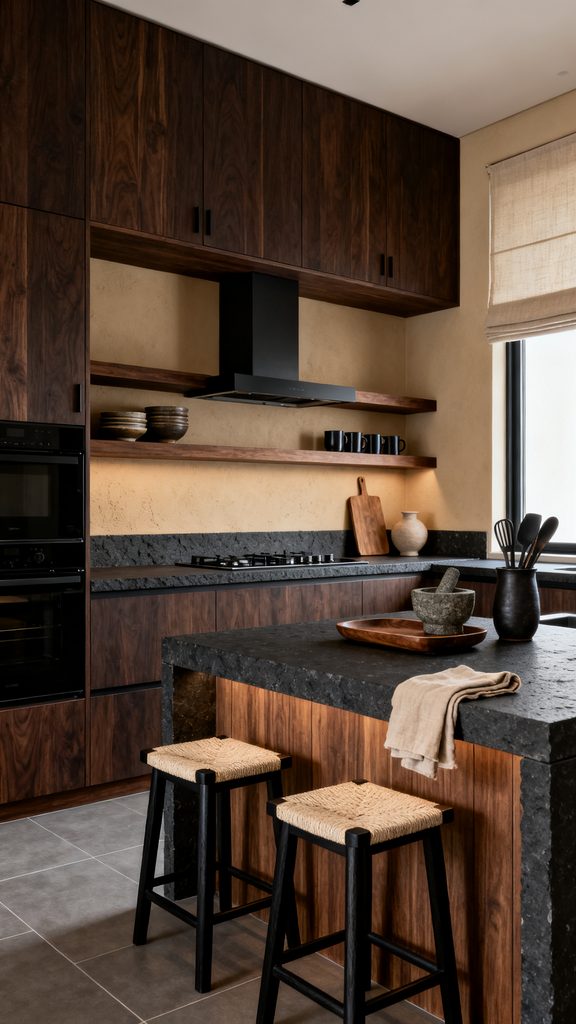
A dark Japandi kitchen combines streamlined cabinetry with rich materials and an uncluttered layout.
Choose flat-panel cabinets in deep walnut, smoked oak, or espresso brown. Their simple appearance allows the natural wood grain to become a central design feature.
Pair the cabinets with charcoal stone countertops and a warm beige backsplash to prevent the space from feeling too dark.
Keep hardware minimal, using integrated pulls or discreet matte black handles. Open shelving can display a small selection of ceramic dishes and wooden kitchen accessories.
Styling tips:
- Use dark wood cabinets with clean, uninterrupted surfaces.
- Choose honed stone or matte stone-look countertops.
- Add warm under-cabinet lighting for a softer atmosphere.
- Keep everyday appliances and utensils neatly organized.
This kitchen style feels refined and practical while maintaining the quiet simplicity of Japandi design.
5. Dark Japandi Entryway With a Floating Console
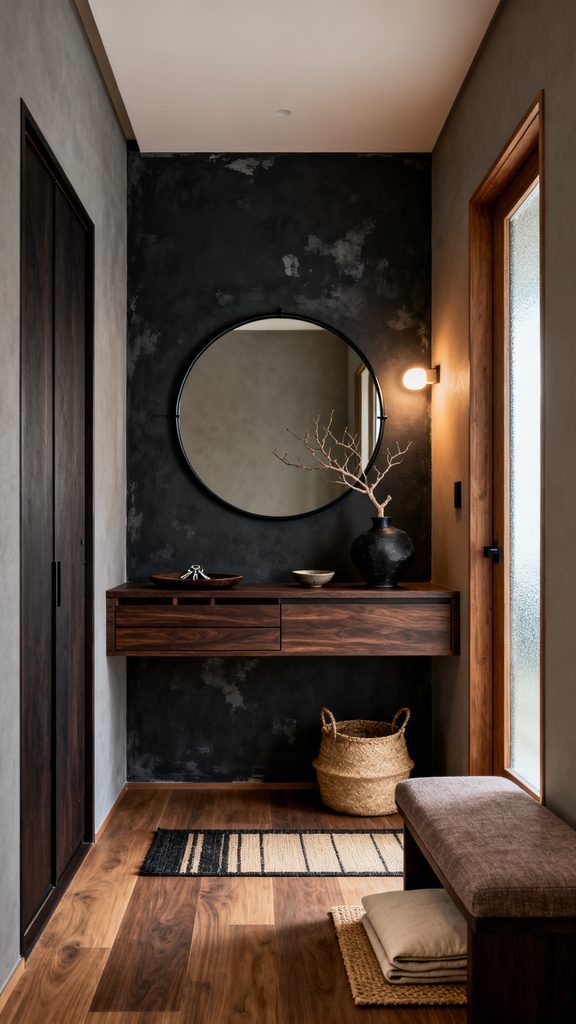
Your entryway sets the tone for the rest of your home, making it an ideal place to introduce dark Japandi decor.
Install a floating walnut console against a charcoal or warm gray textured wall. The floating design creates visual openness while providing a practical surface for everyday essentials.
Above the console, hang a simple round mirror with a thin black frame. Its curved shape balances the straight lines of the wooden furniture.
A handcrafted ceramic vase, small wooden tray, and woven storage basket provide subtle decoration without creating clutter.
Styling tips:
- Choose a slim floating console to preserve floor space.
- Use a charcoal limewash wall for gentle texture.
- Add a round or organically shaped mirror.
- Place a woven basket underneath for practical storage.
The result is a welcoming entrance that feels calm, organized, and visually connected to the rest of the home.
6. Japandi Bathroom With Black Stone and Warm Wood
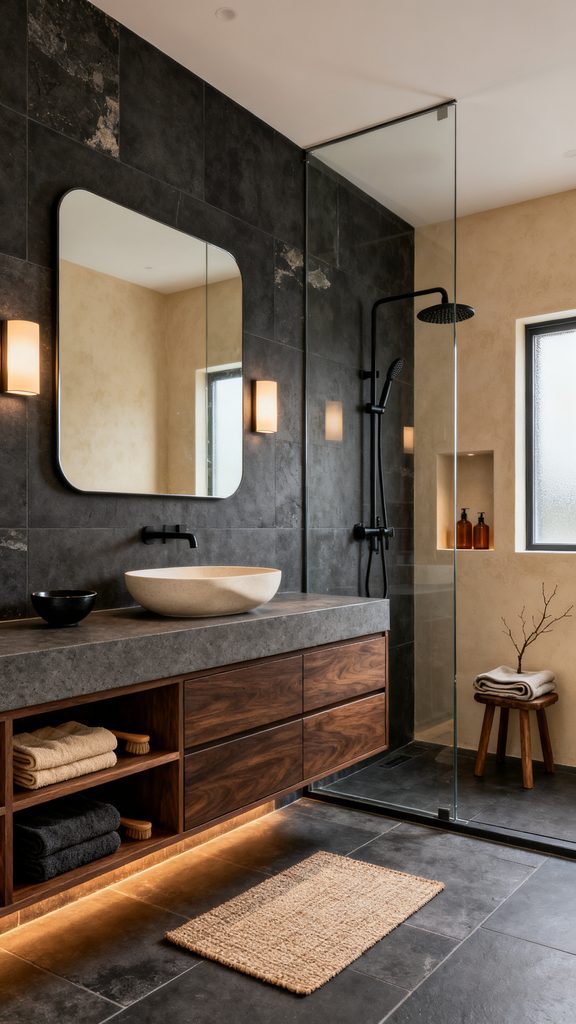
A dark Japandi bathroom creates a spa-like atmosphere through natural textures, restrained colors, and simple architectural details.
Use charcoal stone-look tiles on the walls or floor to establish a dramatic yet calming foundation.
Balance the darker surfaces with a floating walnut vanity and a simple ceramic or stone vessel sink. Matte black fixtures complement the overall palette without drawing too much attention.
Soft lighting is especially important in a darker bathroom. Choose warm wall sconces, concealed LED strips, or diffused overhead fixtures to maintain a relaxing atmosphere.
Styling tips:
- Combine charcoal tiles with warm walnut cabinetry.
- Choose simple black faucets and shower fixtures.
- Use stone, ceramic, and natural wood accessories.
- Keep toiletries in minimal containers or concealed storage.
This combination creates a bathroom that feels serene, functional, and quietly luxurious.
7. Dark Japandi Home Office With Minimalist Shelving
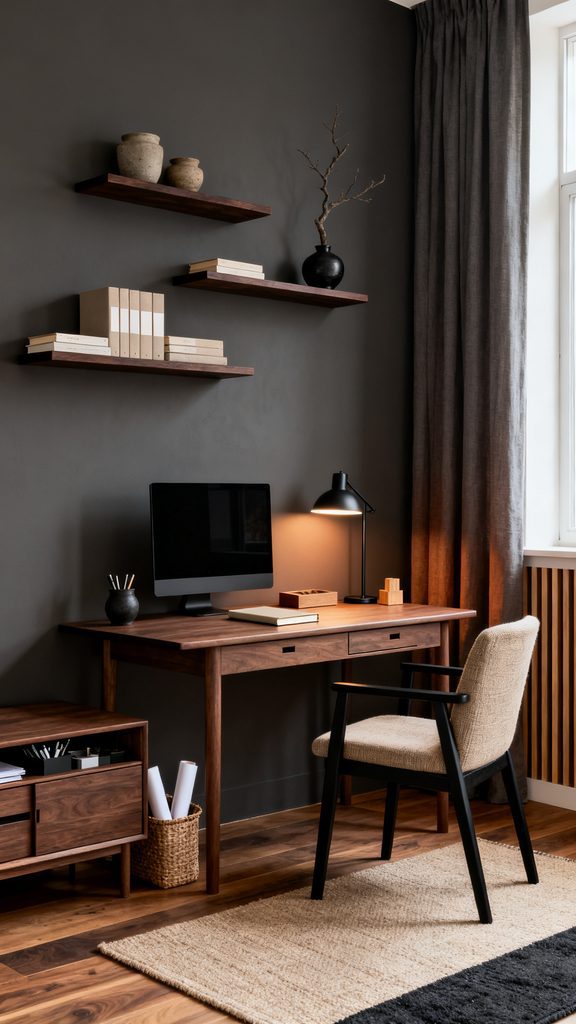
A dark Japandi home office provides a calm environment that supports concentration and creativity.
Start with a simple walnut writing desk positioned against a warm charcoal wall. Choose a desk with clean lines and enough surface space for essential work items.
Add floating black or dark wood shelves above the desk to create organized vertical storage. Display only a few books, ceramic containers, and functional accessories.
A comfortable chair upholstered in beige or muted gray fabric softens the darker furniture and maintains the natural aesthetic.
Styling tips:
- Choose a walnut desk with a matte finish.
- Use floating shelves to keep the workspace uncluttered.
- Add a warm desk lamp with a simple silhouette.
- Introduce texture through a woven rug or linen upholstery.
The result is a focused, comfortable workspace that feels visually peaceful throughout the day.
8. Cozy Japandi Reading Nook With Dark Timber Accents
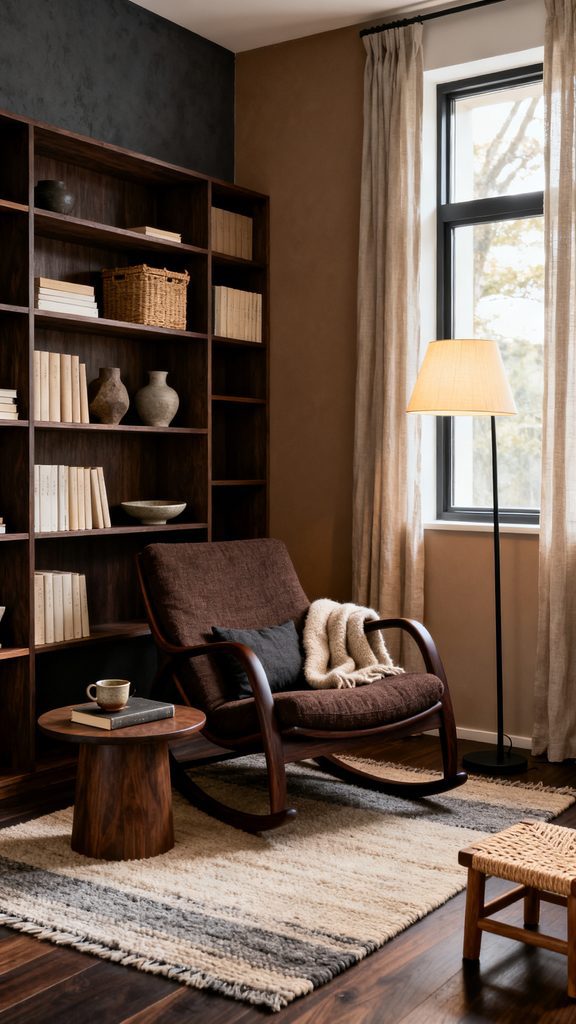
A dark Japandi reading nook turns an unused corner into a comfortable retreat for quiet moments.
Choose a low lounge chair upholstered in dark brown linen, charcoal fabric, or textured warm gray material. Pair it with a small walnut side table and a simple floor lamp.
A dark timber bookshelf or narrow wall-mounted shelving unit provides space for books and a few meaningful decorative objects.
Layer a soft wool throw and a textured neutral cushion to introduce comfort without making the space feel crowded.
Styling tips:
- Use dark brown or charcoal upholstery with natural texture.
- Choose a compact walnut side table.
- Add a warm paper-shade floor lamp.
- Keep books and decorative objects arranged simply.
This small retreat captures the essence of Japandi living through comfort, simplicity, and thoughtful design.
9. Dark Japandi Bedroom With Shoji-Inspired Sliding Panels
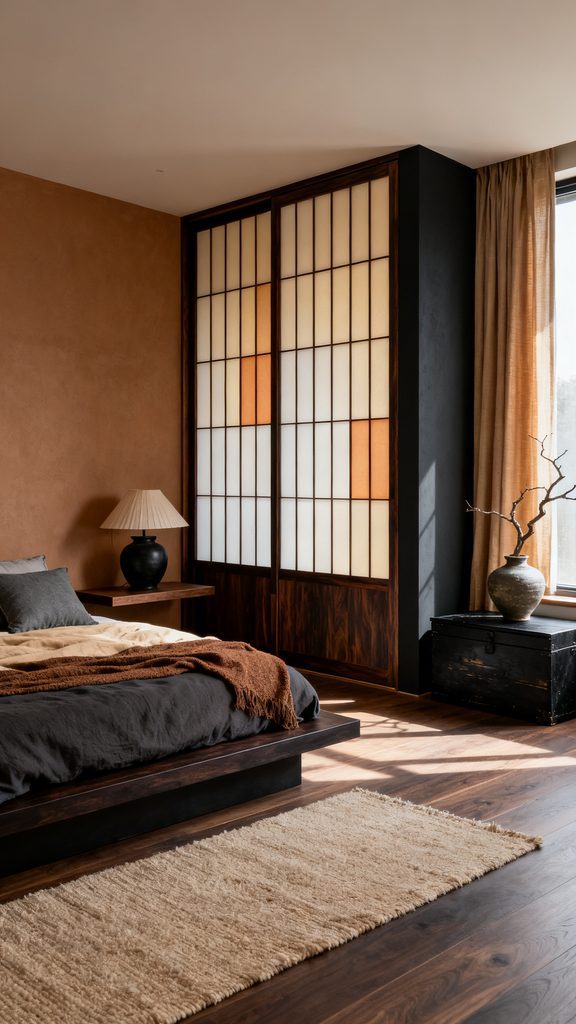
Shoji-inspired sliding panels introduce a distinctly Japanese architectural element while preserving Japandi’s minimalist character.
Choose panels with dark walnut or black-stained wooden frames and translucent cream inserts. These can be used as closet doors, room dividers, or decorative window screens.
Pair the panels with a low wooden bed and layered bedding in charcoal, taupe, and warm beige.
Keep the remaining furniture minimal so the geometric panel design becomes the focal point.
Styling tips:
- Choose dark wood frames with simple grid patterns.
- Use translucent inserts to soften natural light.
- Keep bedding neutral and low in contrast.
- Add minimal ceramic decor and warm bedside lighting.
The result is a bedroom that feels structured, intimate, and deeply connected to Japanese design traditions.
10. Japandi Living Room With a Dark Textured Feature Wall
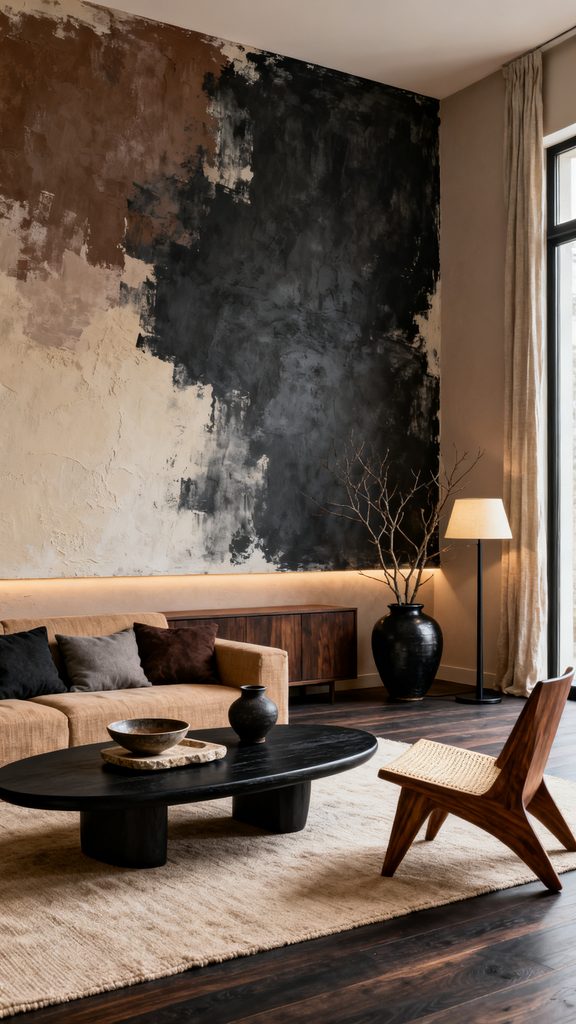
A dark textured feature wall is an effective way to create depth in a Japandi living room without introducing excessive furniture or decoration.
Choose charcoal limewash, dark clay plaster, or a matte textured paint finish. These materials create subtle movement across the wall while maintaining a natural, understated appearance.
Position a low beige or warm gray sofa in front of the wall to provide gentle contrast. Add a black wooden coffee table and a walnut accent chair to repeat the darker tones throughout the room.
A large ceramic floor vase or simple branch arrangement can provide an elegant focal detail.
Styling tips:
- Choose charcoal or deep taupe textured wall finishes.
- Balance dark walls with soft neutral upholstery.
- Repeat black and walnut accents in furniture.
- Use warm indirect lighting to highlight wall texture.
This approach creates a moody living room that feels balanced, welcoming, and sophisticated.
11. Dark Japandi Dining Corner With Built-In Bench Seating
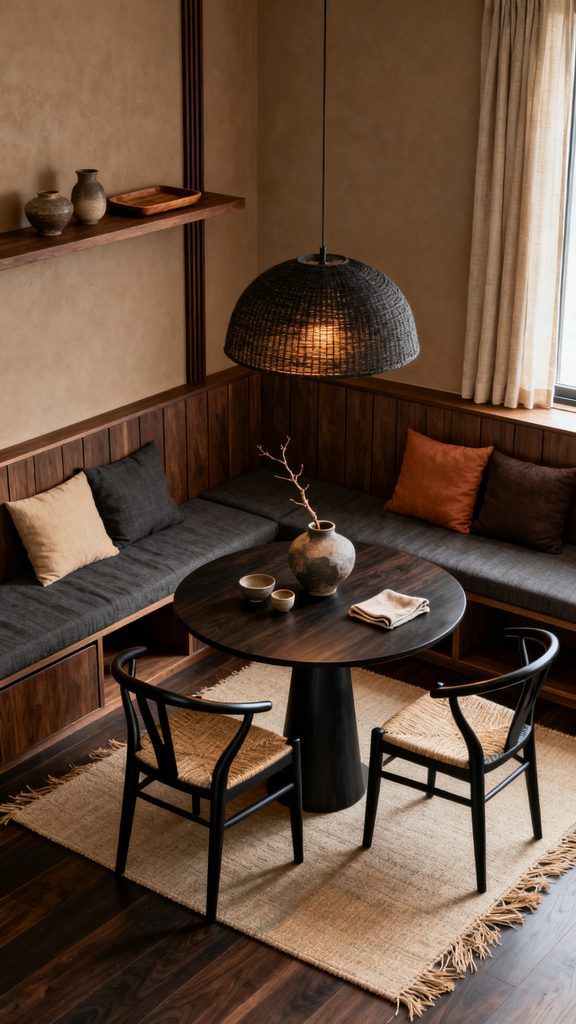
A built-in dining nook offers a practical way to introduce dark Japandi style into smaller homes and open-plan living spaces.
Create a simple walnut bench along one wall or corner, using charcoal or warm gray upholstered cushions for comfort.
Pair the bench with a round dark oak dining table and one or two minimalist wooden chairs. The curved tabletop softens the angular bench structure and encourages an intimate dining atmosphere.
Keep the surrounding decor understated with a single ceramic vase, a small pendant light, and a textured wall finish.
Styling tips:
- Choose walnut or smoked oak for built-in seating.
- Add charcoal linen or textured fabric cushions.
- Use a round table to improve movement in compact spaces.
- Install a warm pendant light above the dining area.
This design combines efficient space planning with the quiet warmth and simplicity of dark Japandi interiors.
How to Create a Balanced Dark Japandi Interior
Dark Japandi design works best when deeper colors are balanced with natural materials, soft textures, and carefully considered lighting.
Here are a few principles to keep in mind when decorating your home.
Choose a Warm, Earthy Color Palette
Instead of relying entirely on black, combine several rich neutral shades to create depth.
| Color | Best Uses |
|---|---|
| Charcoal gray | Accent walls, upholstery, stone tiles |
| Espresso brown | Wooden furniture, cabinetry, shelving |
| Deep walnut | Coffee tables, consoles, bed frames |
| Warm taupe | Walls, cushions, curtains |
| Soft beige | Bedding, rugs, upholstery |
| Matte black | Lighting, hardware, decorative accents |
These shades work together to create a cohesive interior without making every surface feel dark.
Incorporate Natural Materials
Natural materials are essential to the Japandi aesthetic. Dark walnut, smoked oak, linen, wool, handmade ceramics, woven fibers, and textured stone help create warmth and visual interest.
Choose materials with visible grain, subtle imperfections, and matte finishes rather than glossy or overly polished surfaces.
Keep Furniture Low and Simple
Low-profile furniture reinforces the grounded feeling associated with Japanese-inspired interiors.
Look for platform beds, simple sofas, low coffee tables, and dining furniture with clean silhouettes.
Avoid overly decorative shapes, ornate hardware, and bulky furniture that can disrupt the calm atmosphere.
Use Soft, Layered Lighting
Lighting plays an important role in making dark interiors feel comfortable.
Combine natural daylight with warm table lamps, paper lantern-style fixtures, wall sconces, and subtle indirect lighting.
Avoid relying solely on harsh overhead lights, which can make dark surfaces feel flat and uninviting.
Decorate With Intention
Dark Japandi interiors benefit from carefully selected decorative objects rather than large collections of accessories.
A handmade ceramic vase, a simple branch arrangement, a textured rug, or a small collection of books can provide enough personality.
Leave open space around furniture and decorative objects so each element has room to stand out.
Common Dark Japandi Decorating Mistakes to Avoid
Even a beautifully chosen color palette can feel unbalanced if the overall space becomes too heavy or cluttered.
Using too much black: Combine black with warm browns, charcoal, beige, and natural textures to maintain depth and softness.
Ignoring natural light: Dark rooms need thoughtful lighting to preserve a welcoming atmosphere.
Choosing glossy finishes: Matte wood, textured plaster, linen, and natural stone generally feel more appropriate for Japandi interiors.
Adding excessive decoration: Focus on a few meaningful objects rather than filling every shelf and surface.
Mixing too many wood tones: Choose one dominant dark wood finish and introduce lighter accents sparingly.
Forgetting comfort: Minimalism should still feel inviting, so incorporate comfortable seating, soft textiles, and practical storage.
Final Thoughts
Dark Japandi design offers a beautiful way to create a home that feels peaceful, warm, and visually refined. By combining Japanese simplicity with Scandinavian comfort, this style brings together rich colors, natural textures, and practical furniture in a harmonious way.
These Dark Japandi Home Decor Ideas show how the aesthetic can work across different spaces, from intimate bedrooms and cozy reading corners to functional kitchens, bathrooms, and dining areas.
Start with a few key elements, such as dark walnut furniture, charcoal walls, textured neutral fabrics, and soft lighting. Gradually introduce handcrafted accessories and natural materials to create a space that feels personal and balanced.
With thoughtful choices and an appreciation for simplicity, dark Japandi decor can make everyday living spaces feel calm, comfortable, and timeless.