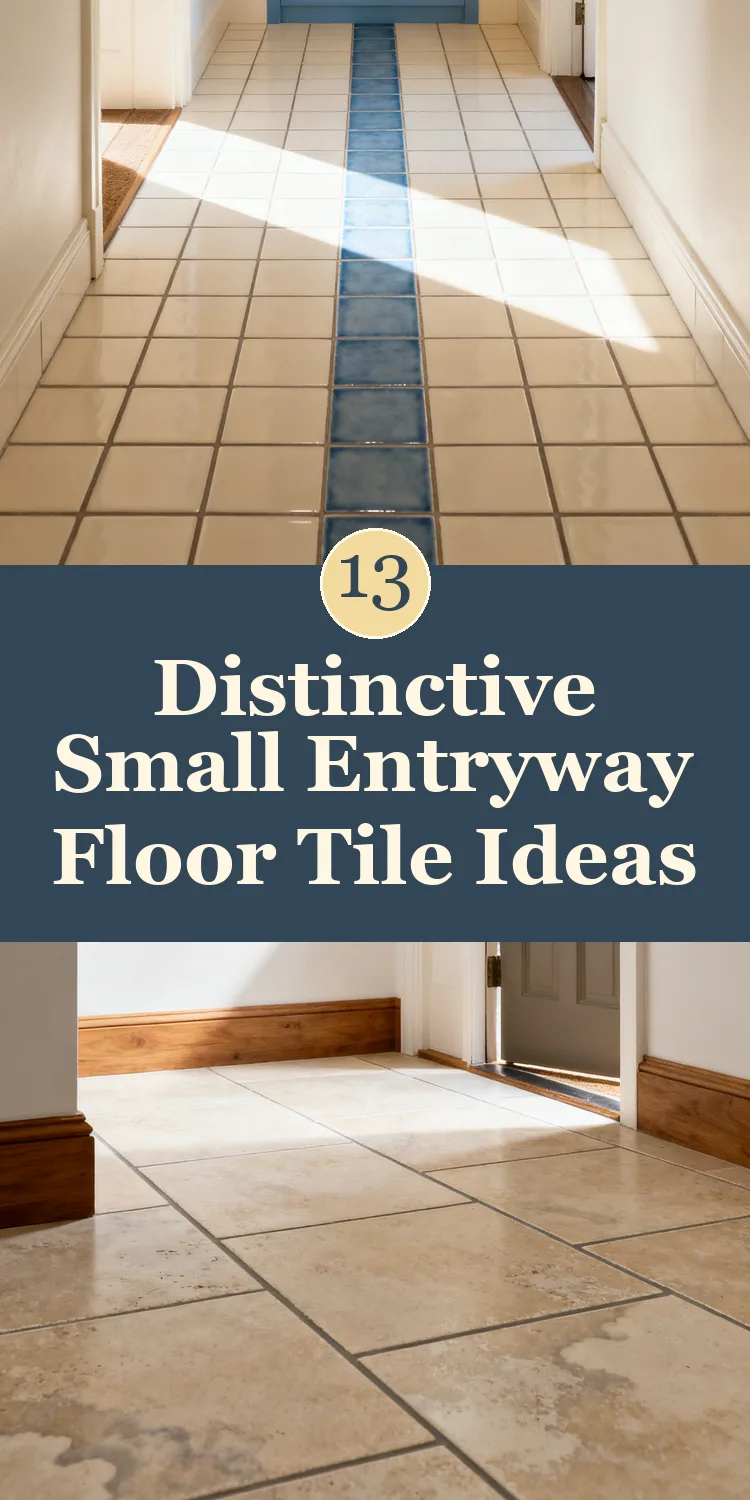
Open the front door and the floor is the first thing you see. In a short foyer, even four or five rows of tile can give the doorway a shape of its own. I like to choose the floor first and save a little room along the wall for whatever needs to come off before you go inside.
These Small Entryway Floor Tile Ideas range from quiet stone-look squares to patterned insets that fit between a door and a wood floor. Think about where you stop with wet shoes, where the door swings, and how much pattern you’ll see once a bench or boot tray is in place.
1. A Soft Black and Cream Checkerboard
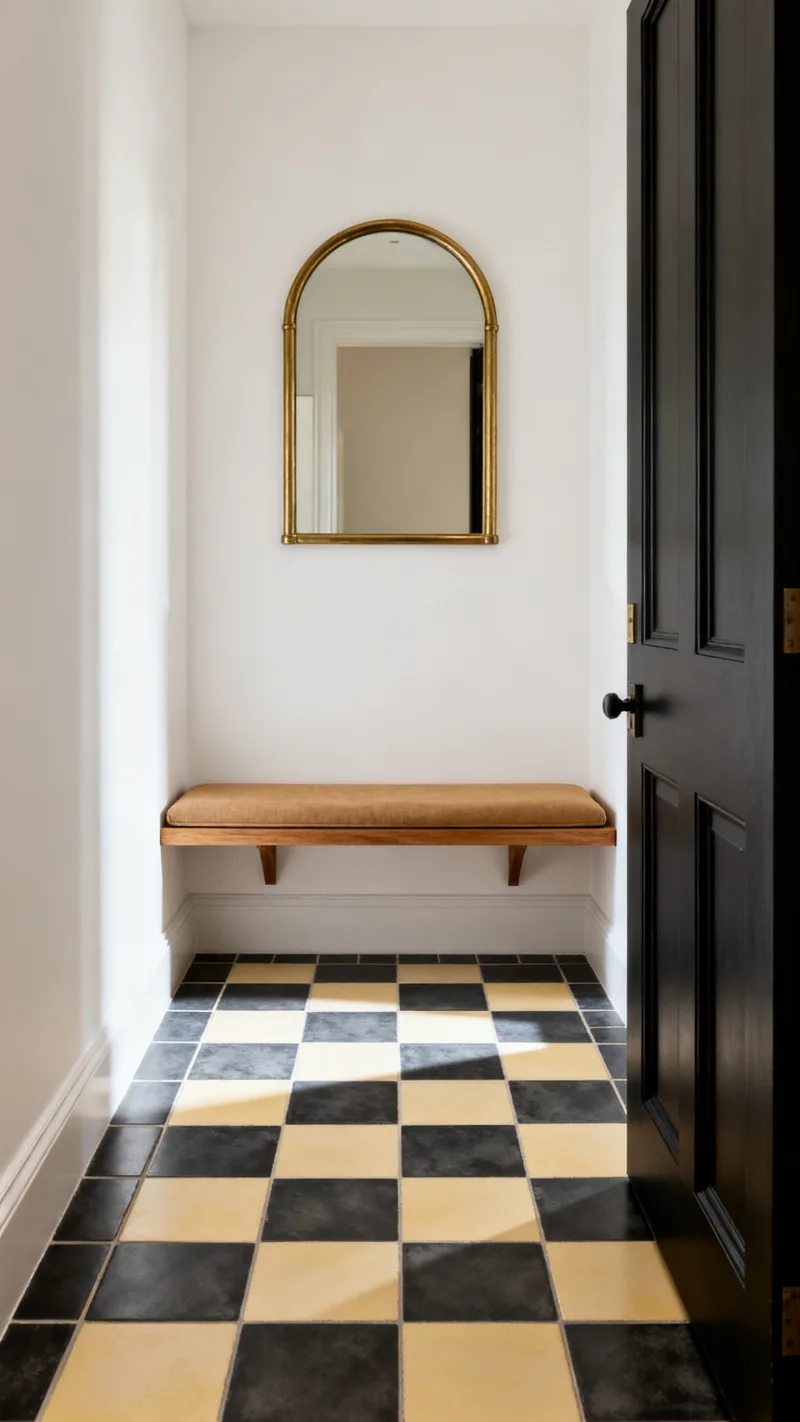
Matte charcoal and buttery cream make a checkerboard feel softer than a stark black-and-white grid. Use squares small enough for several checks to show across the entry, and lay a dry row from wall to wall before deciding where the first tile should go. If a narrow sliver would land beside the door, slide the pattern a little to balance the two edges.
Keep the bench shallow so you can still read the checks from the doorway. A tan cushion and an arched brass mirror warm up the dark door, while light from a sidelight brings out the cream. Leave the middle of the floor bare so the pattern can do the work.
2. Honey Brick in a Herringbone
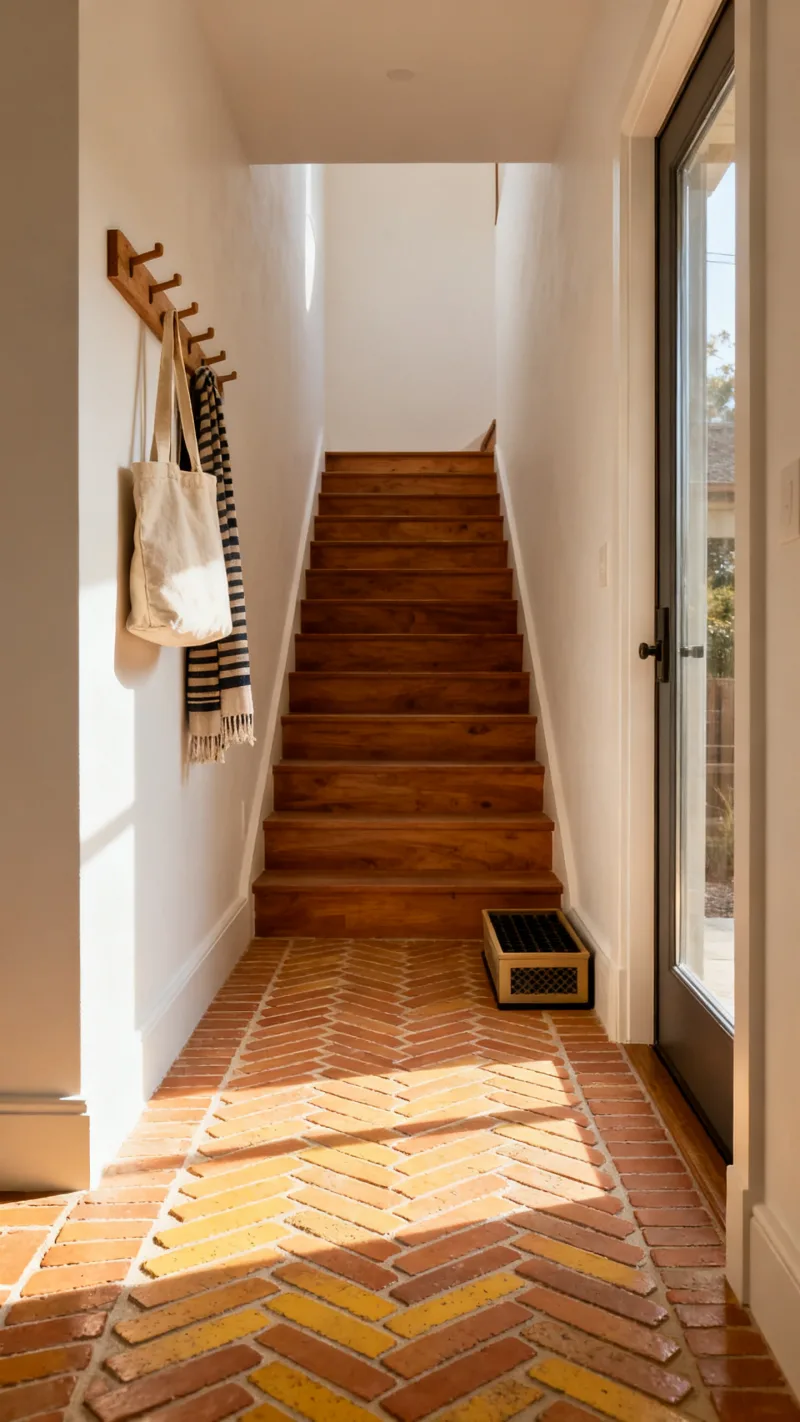
Honey and baked-clay brick-look tiles give this long entry a little movement between the front door and the stairs. Lay the herringbone so its points carry your eye toward the first stair tread. A sandy grout keeps the joints visible without making every little brick look outlined.
A peg rail for a tote and scarf makes use of the long wall. Put a shallow boot tray near the foot of the stairs, clear of the door swing, so the zigzag stays visible down the middle. The glazed door lets afternoon light pick out the small shifts from honey to terracotta.
3. Big Limestone-Look Squares
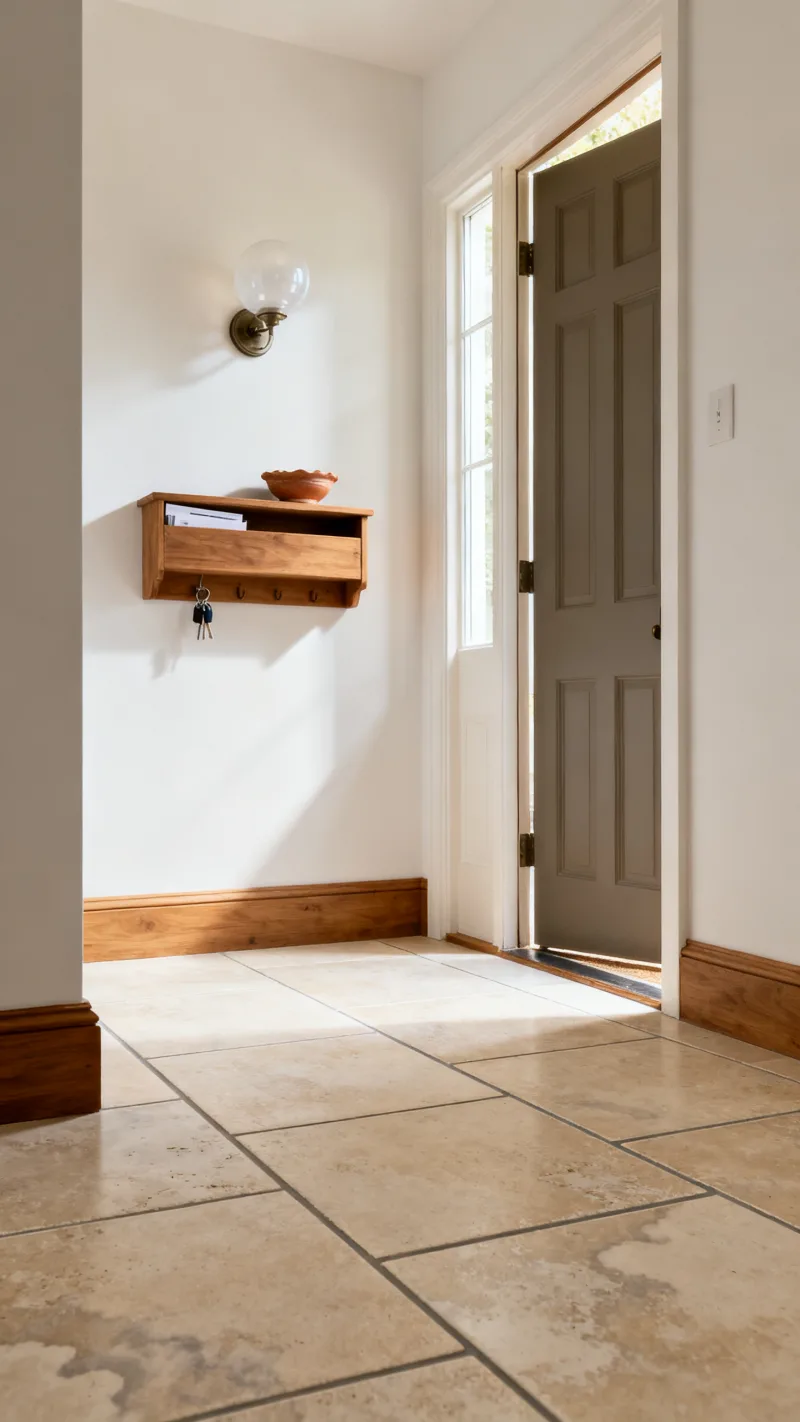
When your entry is barely wider than the door, I like a few large squares with a soft mushroom color. Look for limestone-look porcelain with gentle cloudy marks and pair it with grout close to the tile color. Try the layout on paper first so the cuts at the jamb read like part of the grid.
A shallow walnut shelf gives the mail somewhere to land without taking up a square of floor. Set a stoneware key dish at one end and let a frosted globe light wash down the wall. Warm wood trim helps the quiet tile feel at home in the little recess.
4. A Navy Border Around Pale Penny Tile
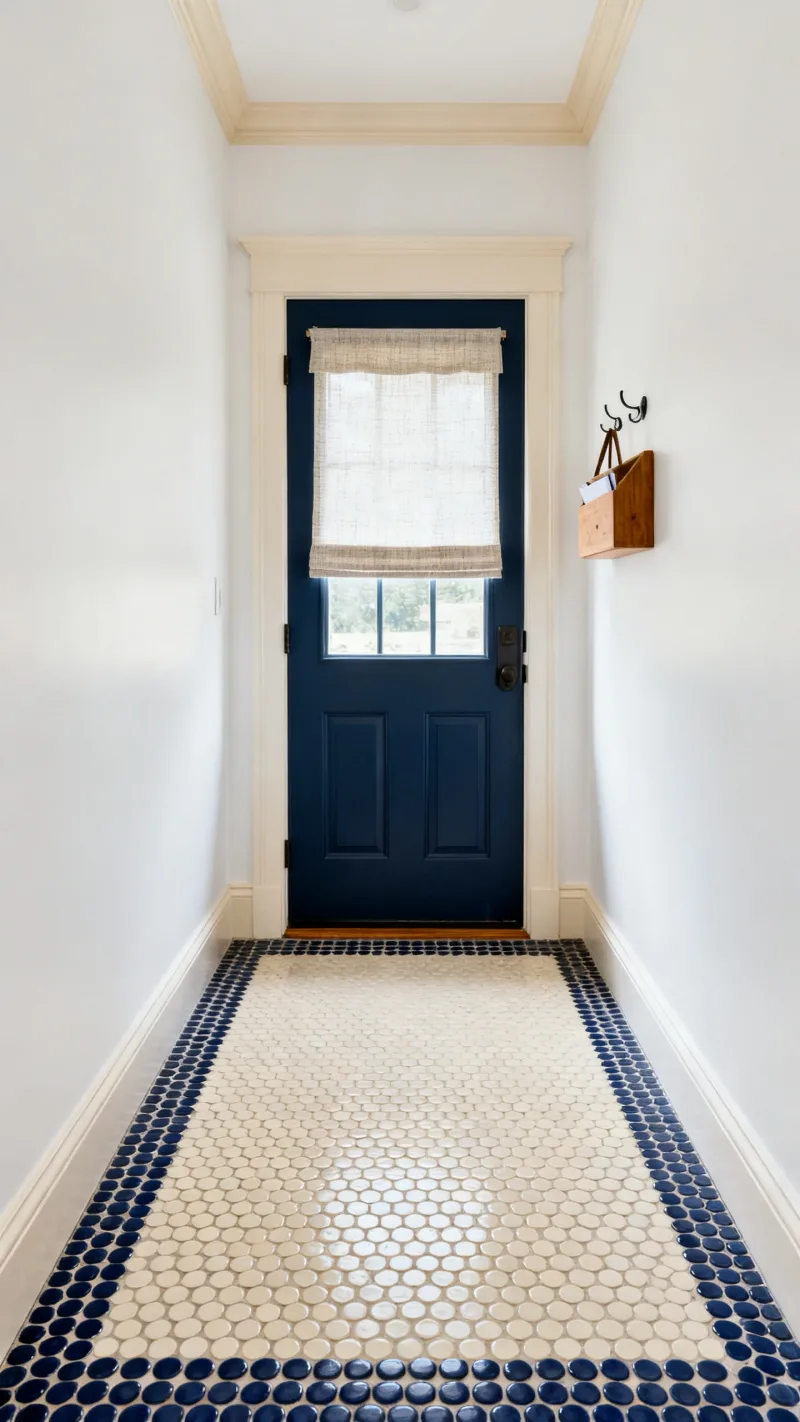
Ivory penny rounds and a navy border give this short vestibule a floor that reads like a little rug. Run the dark band just inside the walls and make the corners turn cleanly. I’d center the outline on the doorway so you see the whole rectangle when you step inside.
A navy door repeats the border color above the floor. Keep the walls soft white and hang a slim oak mail holder where it’s easy to reach as you come in. Daylight through a light fabric shade softens the navy without hiding the tiny rounds.
5. Olive and Cream in Diagonal Diamonds
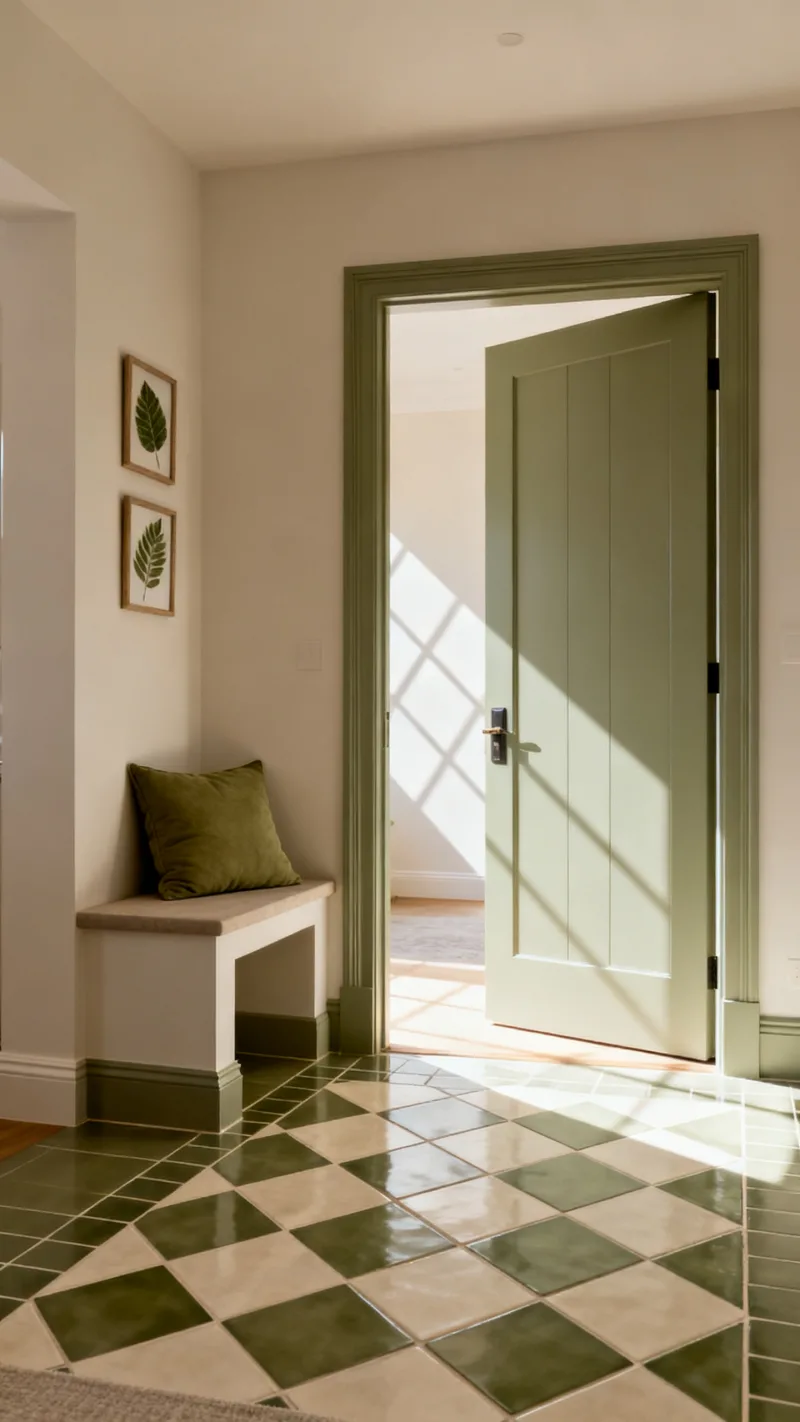
Turning the grid on the diagonal gives these muted olive and bone squares a little more room to move across a shallow entry. The diamonds are especially pretty when the front door sits off to one side. Check where the diagonal cuts land at the opening to the next room so the transition looks intentional.
Carry a bit of olive over to the cushion of a recessed seat. Two small leaf prints bring the color up the wall without adding anything to the floor. Leave the opening to the next room clear so daylight can fall across the full width of the pattern.
6. A Terrazzo Look With Colorful Chips
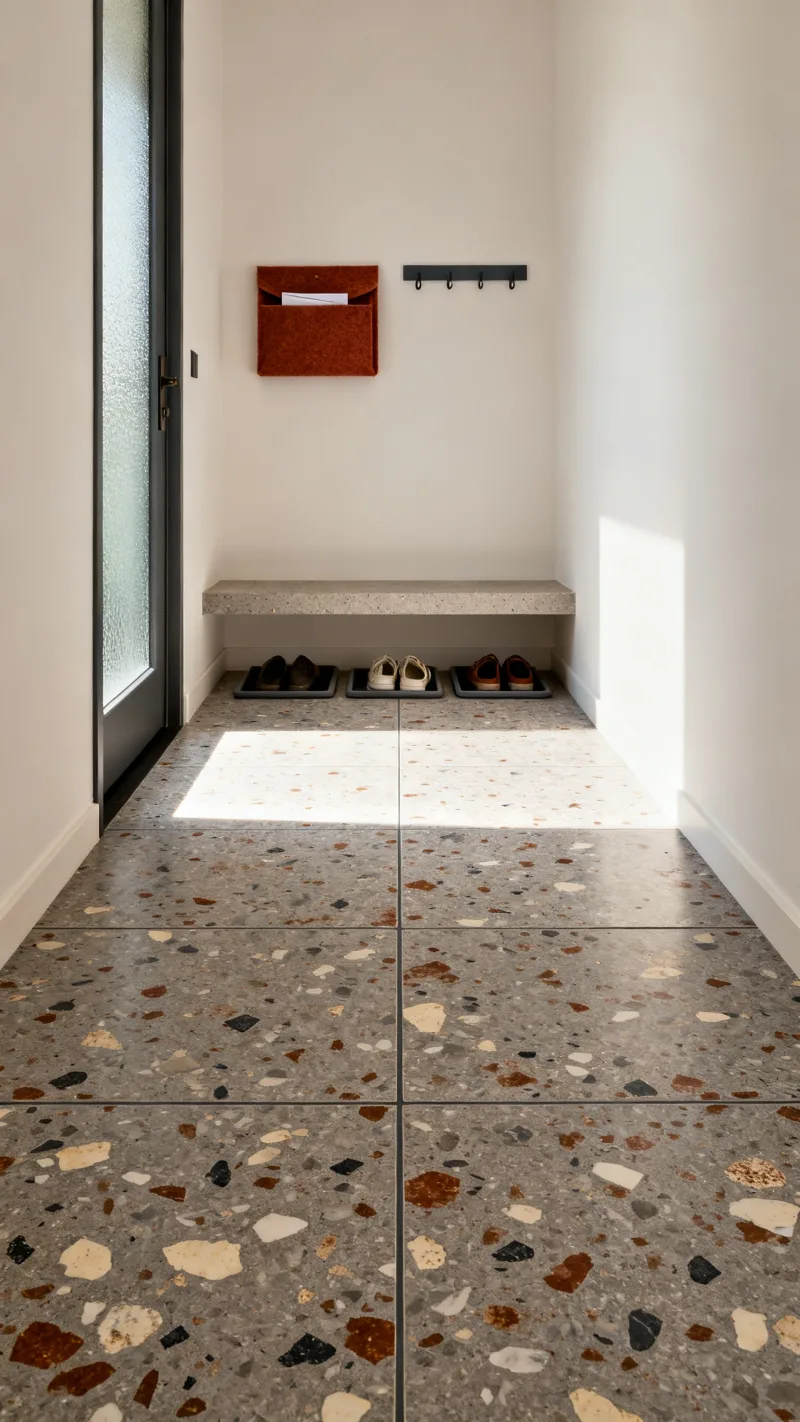
Warm gray terrazzo-look porcelain makes this busy landing feel playful without leaning on a large pattern. Look for cream, rust and charcoal chips of different sizes and use larger squares so you can see the mix between joints. A good sample should have enough variation to look natural across more than one tile.
Repeat the rust in a felt mail pocket and keep a pair of charcoal shoe trays beneath a shallow ledge. That gives wet shoes a home while leaving the speckled floor open. Frosted door glass takes the edge off the light and helps the small chips stay readable.
7. Slate-Look Tile in a Narrow Hall
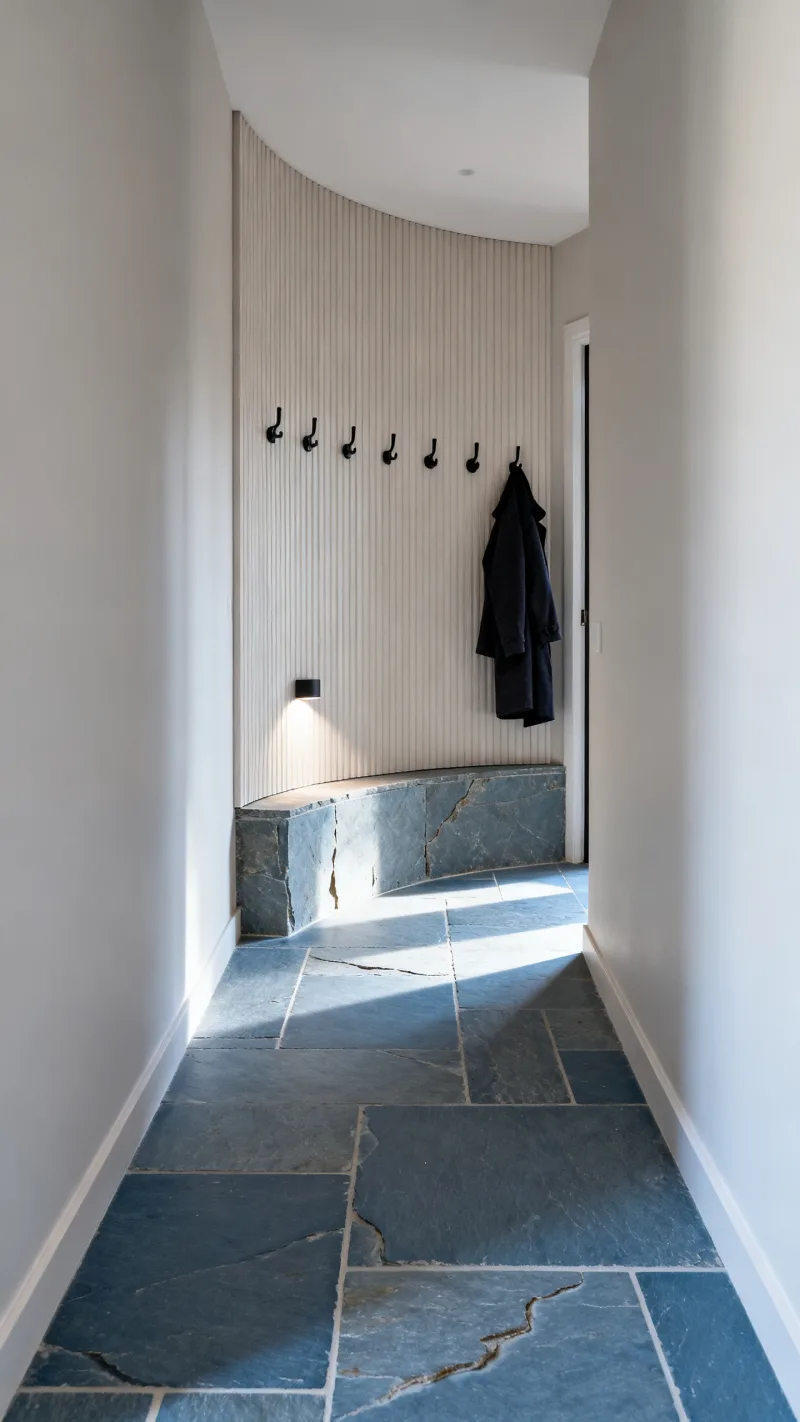
Blue-gray slate-look porcelain adds some depth to a narrow hall, especially when the surface has a little shift from piece to piece. A matte rectangular tile gives the floor the quiet weight of stone. Check the samples in low light so you can still see the texture and the joints on a cloudy day.
Pale ribbed paneling at the far end gives the dark floor a lighter backdrop. Put a short row of black hooks on that wall and add a low light near the bend to catch the ridges in the tile. Keep coats and shoes close to the side so the hall stays easy to walk through.
8. A Patch of Indigo Stars at the Door
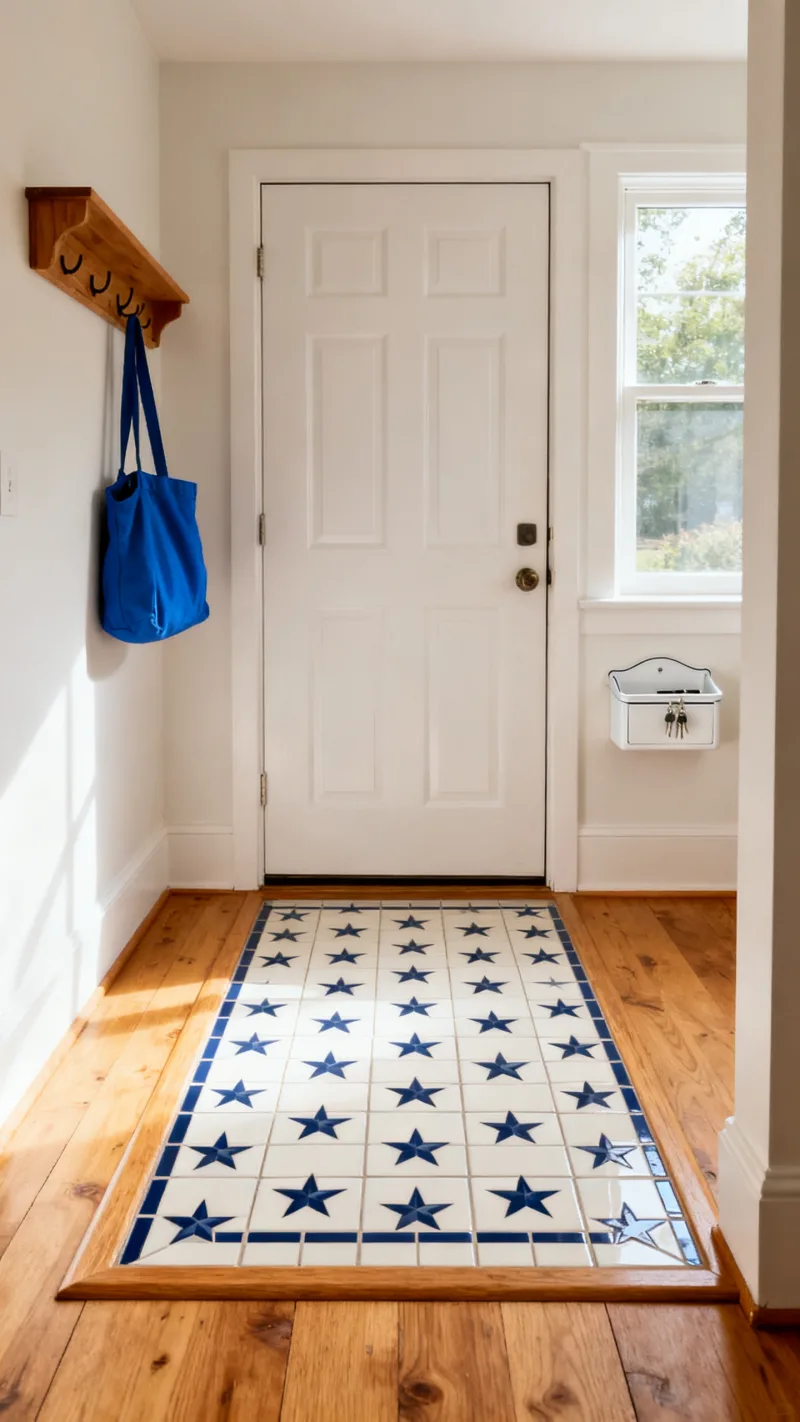
An indigo star inset gives you a place to pause inside a door that opens straight onto wood flooring. Keep the rectangle big enough for the stars to repeat and fit it flush with the surrounding boards. I’d lay out the motif first so full stars land where you see the patch from the next room.
A compact hook rail keeps bags up off the tile. Set a white enamel key tray to the side and bring the tile’s off-white into the window trim. Let the light fall on the blue stars and give the inset enough breathing room to read like its own little landing.
9. Sand and Blush Tile in a Side Entry
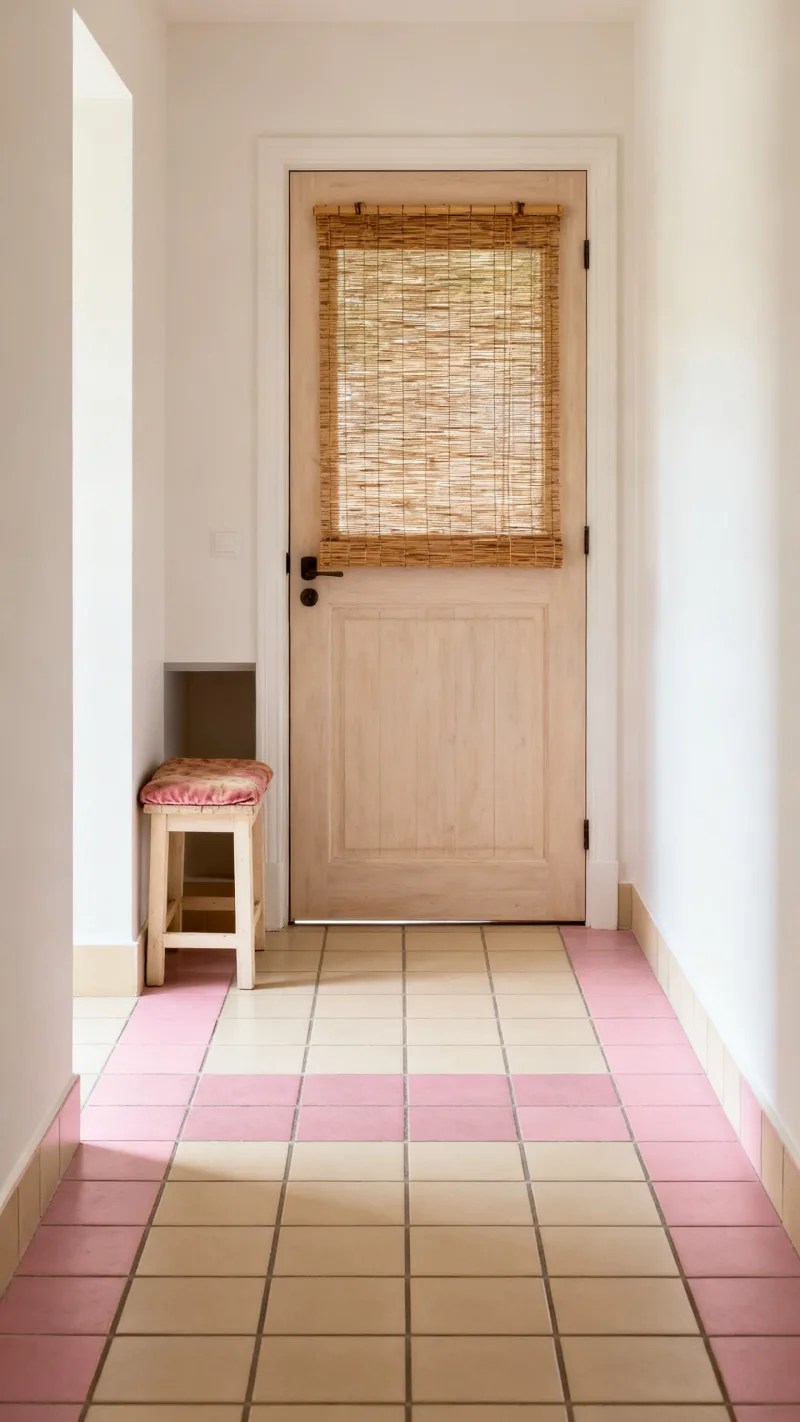
Sand and faded blush make a small side entry feel warm even when the light is cool. I’d use sandy porcelain through most of the floor and let a few blush rows frame the approach to the door. A sand-colored grout keeps the two colors close enough to feel like one floor.
Slip a small pale wood stool into the niche, away from the door’s swing. A faded rose pad ties back to the blush rows while a woven door shade filters the morning light. Keep the stool small enough that you can see the tile on either side of it.
10. An Ivory Basketweave With Brown Dots
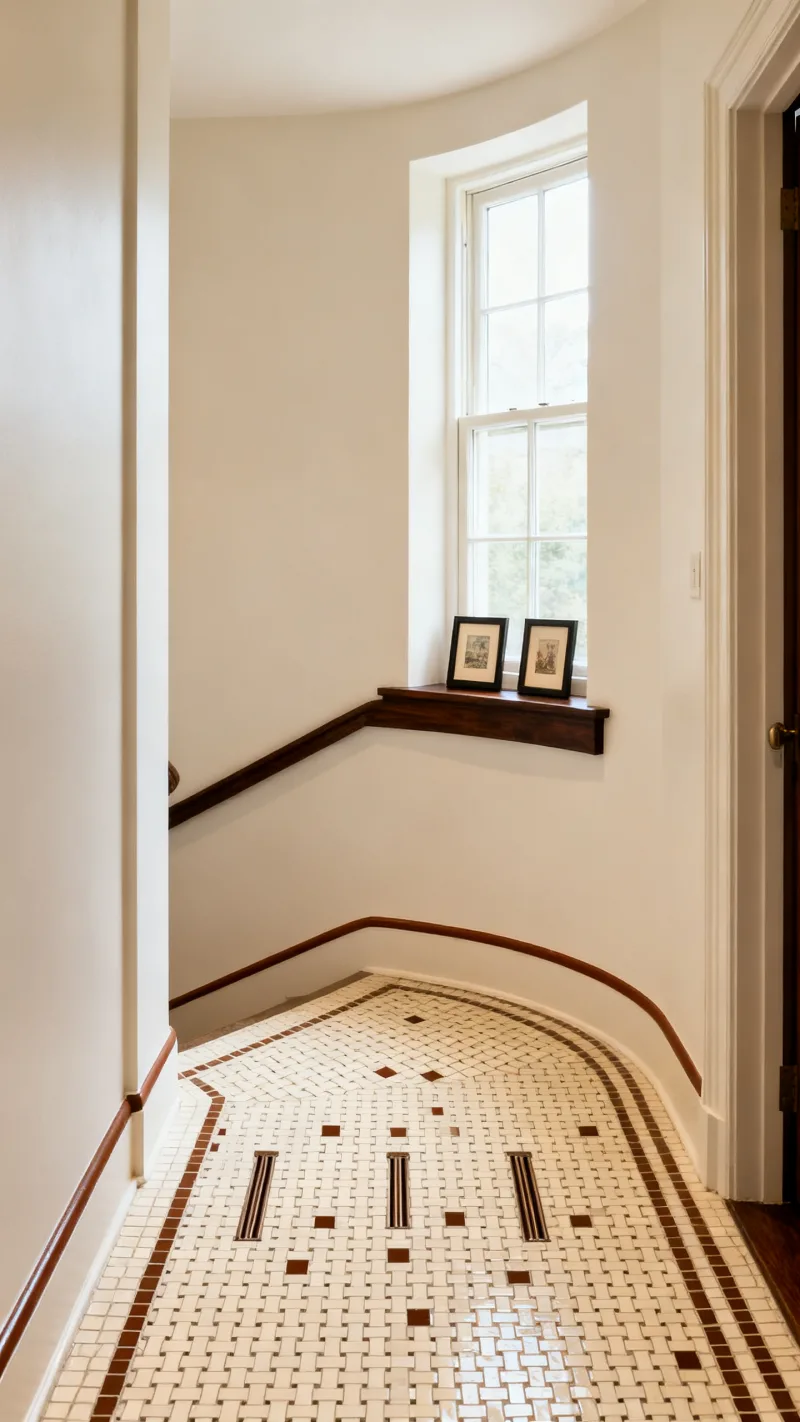
An ivory basketweave is a nice fit for an entry that turns a corner because the pattern reads from both directions. Look for pairs of small matte porcelain bars with cocoa dots between them. Before setting the first sheet, check that the weave carries cleanly around the turn and that the darker dots stay evenly spaced.
A dark wood picture ledge repeats the cocoa without crowding the floor. Lean a couple of small prints where the high side window can light them, then keep the bend clear for shoes and bags coming through. A narrow brown edge can help the weave follow the shape of a curved wall.
11. A Pebble-Gray Hexagon Field
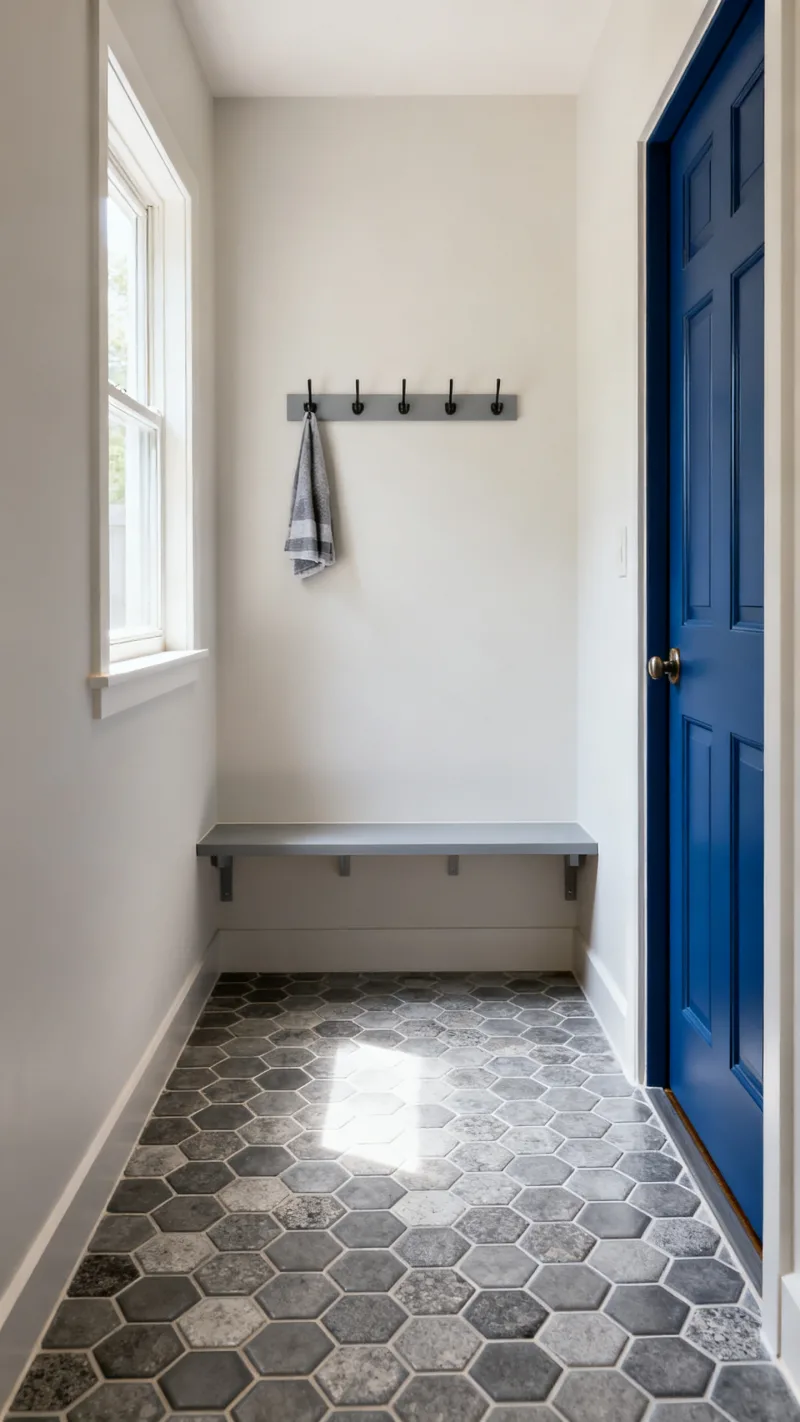
A few close shades of pebble gray make this little back entry feel settled without flattening the hexagon pattern. Pick a soft gray grout that still lets you see the six-sided outline. I’d set a few tiles on the floor and shuffle the shades until the variation feels even from the door to the opposite wall.
Keep the floor open under a raised shoe rack so its legs don’t hide the pattern. A blue door adds a clear note of color, and a towel on a hook is handy on muddy days. Side daylight brings out the darker hexagons near the threshold.
12. A Cream Grid With One Blue Stripe
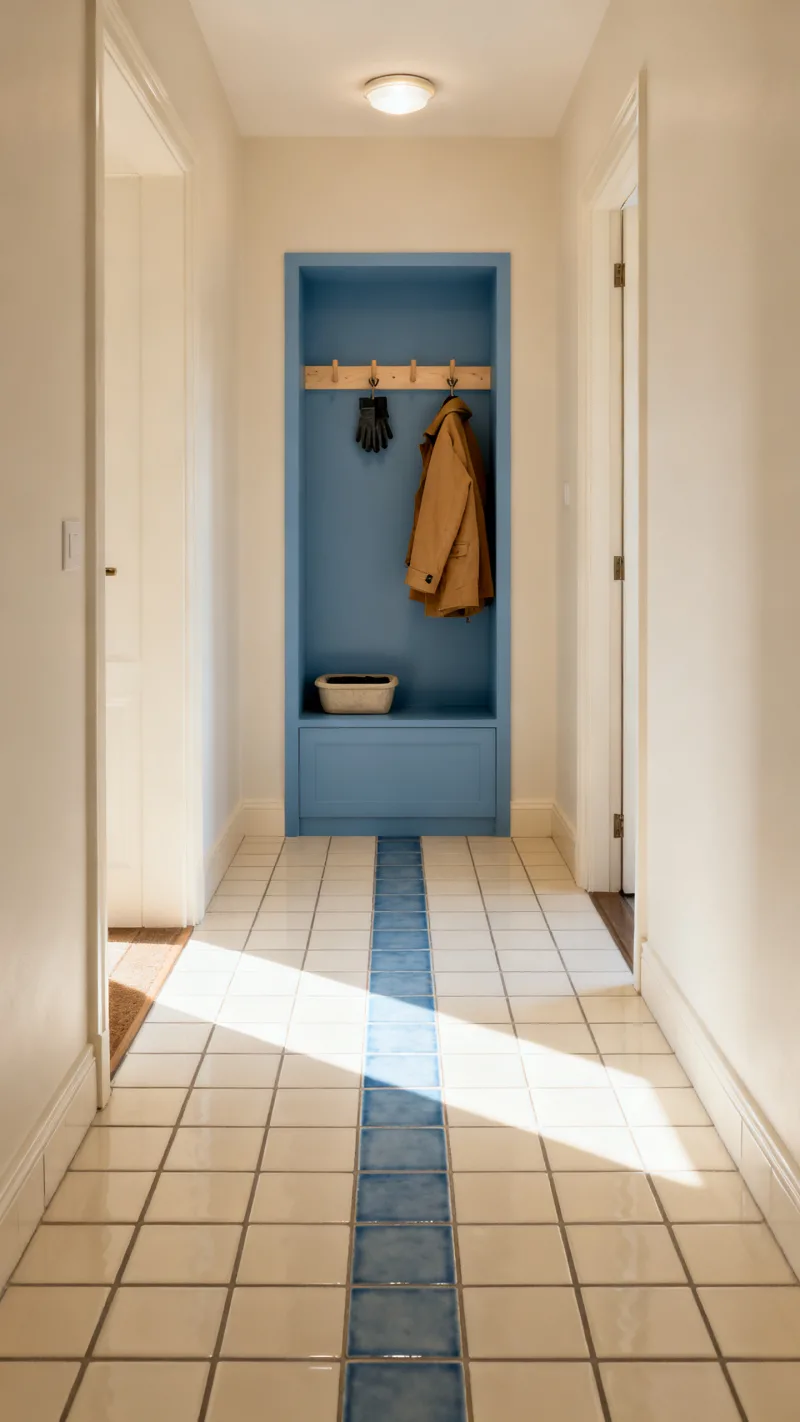
A single stripe of dusty blue squares gives a cream grid a line to follow through a narrow entry. Run it lengthwise toward the coat nook so you can see where the path leads from the doorway. Check the stripe against the center of the hall before fixing the cream border cuts.
Pick up the same blue on the back of the nook and hang a pale wood peg rail across it. A small bin for gloves fits beneath the rail, out of the walkway. When the sidelight hits the cream tiles, the stripe still reads clearly all the way to the nook.
13. Chocolate Octagons With Pale Insets
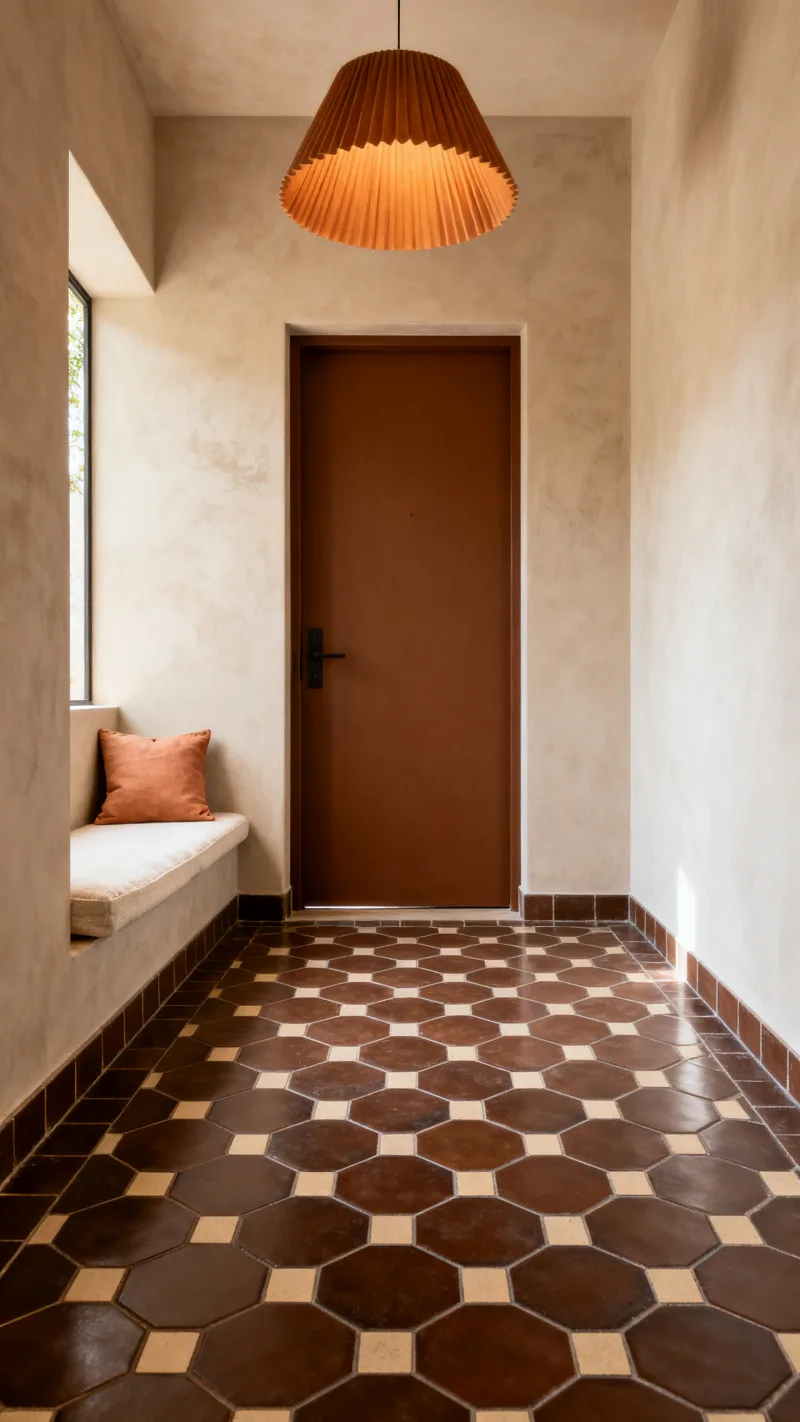
Chocolate octagons give this compact entry a deep, warm floor, and the little oatmeal squares bring light to each clipped corner. A matte finish keeps the pattern quiet as it repeats from the threshold to the closed door. Set a few pieces beside the door paint before you decide how dark to take the rest of the entry.
A pleated pendant gives the brown tiles a soft glow, and a pale seat cushion brightens the side alcove. Tuck a shallow seat there so you can still see most of the floor from the approach. The pale insets give your eye an easy line to follow even when the door is shut.
Final Thoughts
Of these Small Entryway Floor Tile Ideas, start with the one that suits the way you come through the door. Bring home a few samples and look at them with the door open and again after dark. You’ll see how much the tile and grout shift under different light.
Once you’ve found a floor you like, give yourself time to choose what goes around it. A hook, a spot for keys or a narrow seat might be all you need at first. Leave some of the tile in view so you get to enjoy it every time you come home.