A green minimalist bedroom can feel restful without looking bare. I love how leafy shades bring color into a room while simple shapes give your eyes somewhere to rest. You can make it feel personal through the fabrics, finishes, and light you choose.
These ideas give green a real place in the room, from soft walls to generous rugs and curtains. Each takes a different approach, so you can choose what suits your space rather than squeeze everything into one bedroom. Start with the feature you love most and let the rest stay simple.
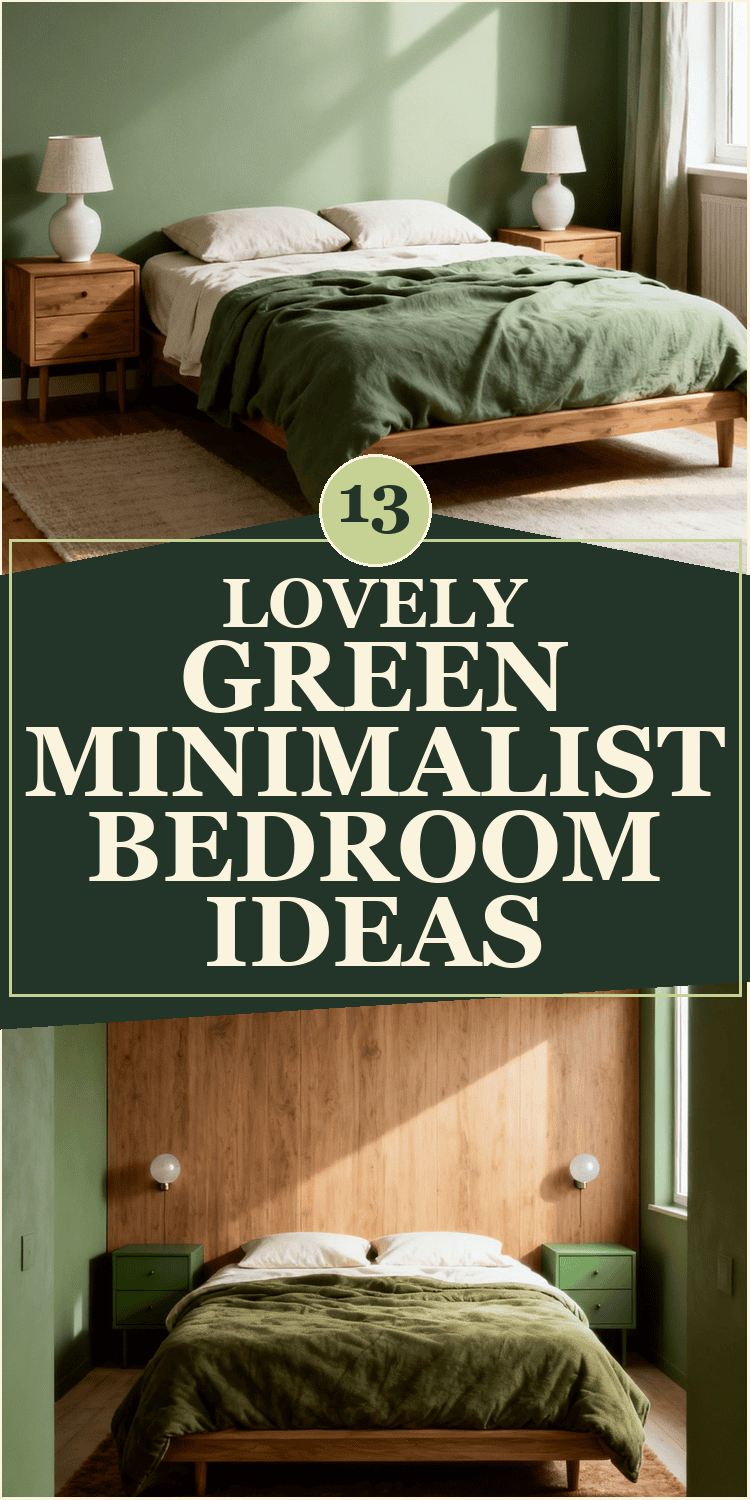
1. Wrap the Room in Soft Sage
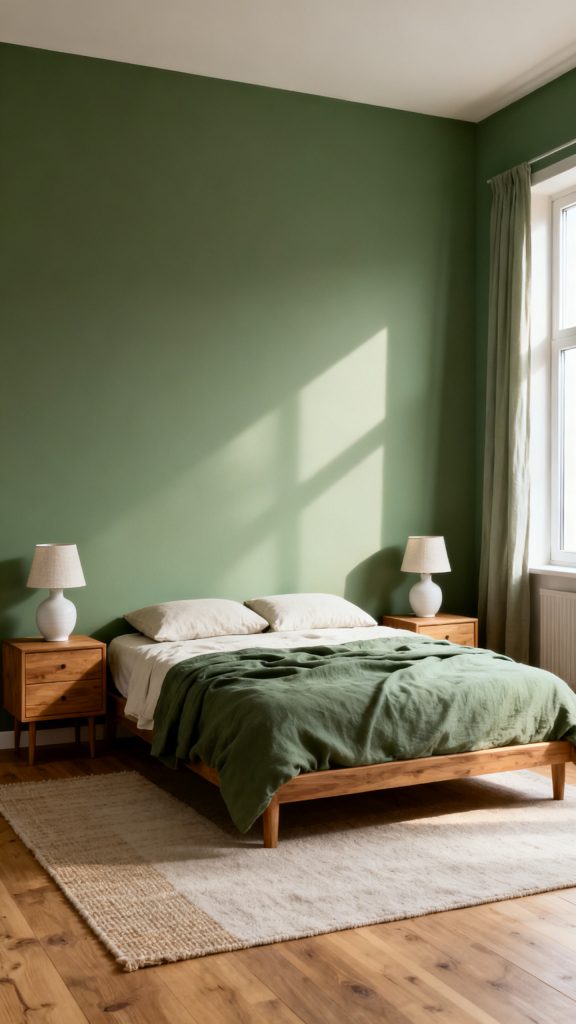
Soft sage walls are my favorite starting point when you want the whole bedroom to feel settled. Carry the shade around the room, then place a low oak bed against the longest wall. A deeper sage duvet and chalk-colored sheets keep the green from feeling flat.
Choose small oak bedside drawers and simple white ceramic lamps to give the bed a quiet frame. A pale wool rug adds softness over wood flooring, while plain cotton curtains filter side-window light. Try your paint on two walls first so you can see how it changes through the day.
2. Make an Olive Linen Bed the Main Feature
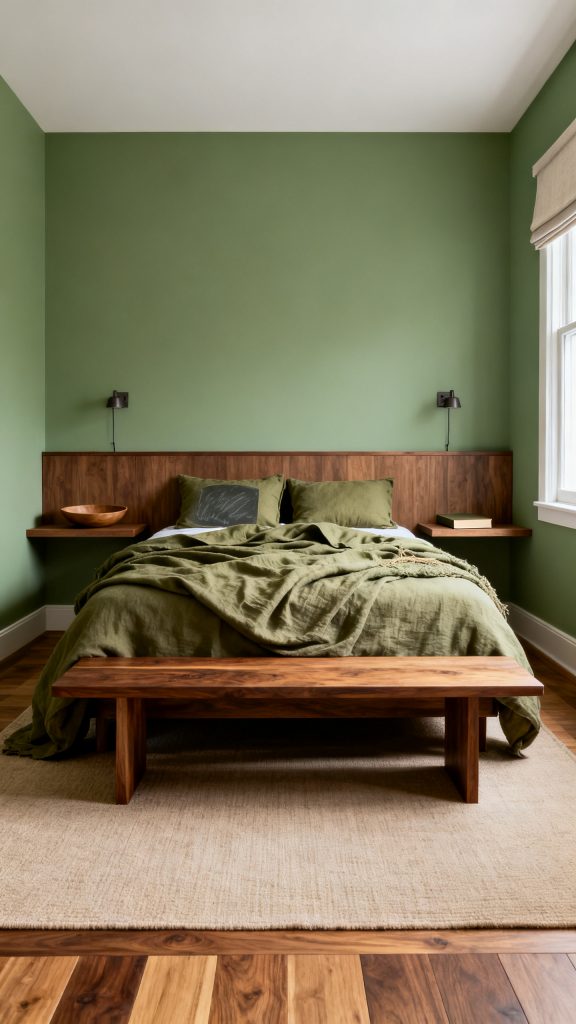
An olive linen duvet can do most of the decorating in a room with pale green walls. I’d pair it with a simple walnut bed and matching pillowcases instead of a pile of throw pillows. The deeper wood gives the soft, rumpled fabric a clear outline.
Let a narrow walnut bench sit at the foot, with enough space to walk around it. Put a shallow wooden dish on one bedside shelf and use compact metal reading lights above both sides. Leave the duvet loosely folded back so its texture, rather than extra accessories, catches your eye.
3. Frame the Window with Full-Length Green Curtains
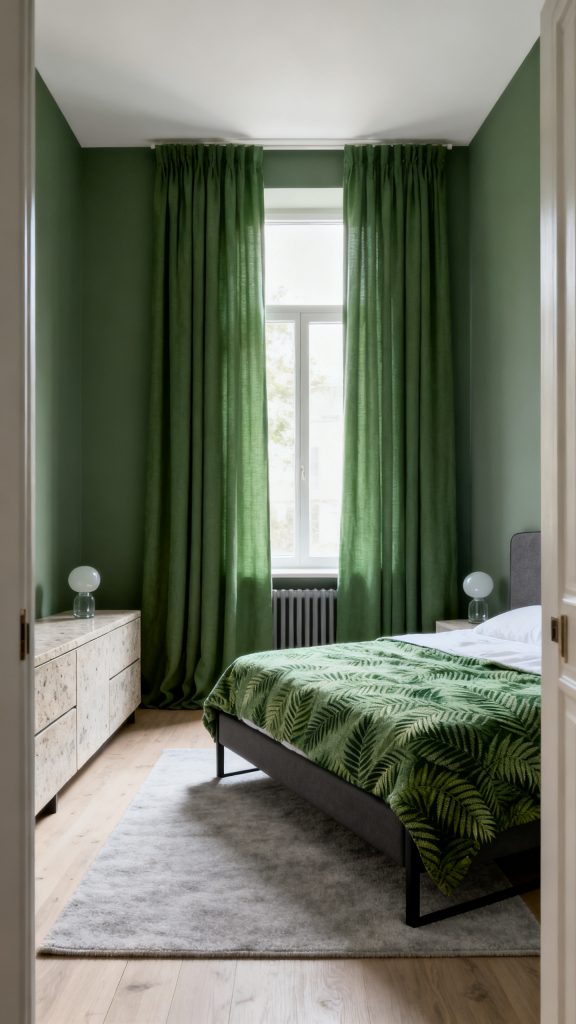
If your bedroom has a broad window, make soft fern-green curtains its main feature. Hang them close to the ceiling and wide enough to clear the glass when open. I like the way that tall sweep of fabric balances a plain upholstered bed.
Repeat the green in a woven coverlet and keep the walls a light gray-green. A charcoal bed frame, pale stone bedside tops, and a flat wool rug give the soft fabric some contrast. Choose panels that just meet the floor, and keep them away from heaters or vents.
4. Ground the Bed with a Moss Wool Rug
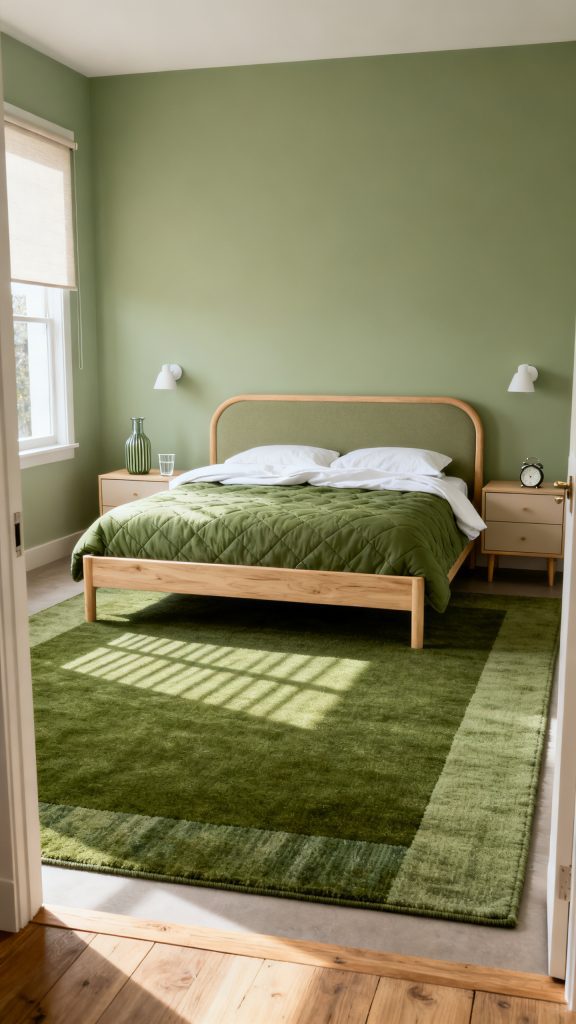
A large moss-green wool area rug gives a green minimalist bedroom a soft landing without adding busy pattern. Slide it under the lower part of the bed so a generous border shows on both sides and at the foot. Pale eucalyptus walls and a matching quilt help the color belong to the whole room.
I’d use a light ash bed with rounded corners and small white wall lights here. Keep the bedside drawers simple, with a ribbed glass carafe on one and an alarm clock on the other. Measure the rug border before buying so your feet reach wool rather than a narrow strip of bare floor.
5. Give the Bed a Wide Green Upholstered Headboard
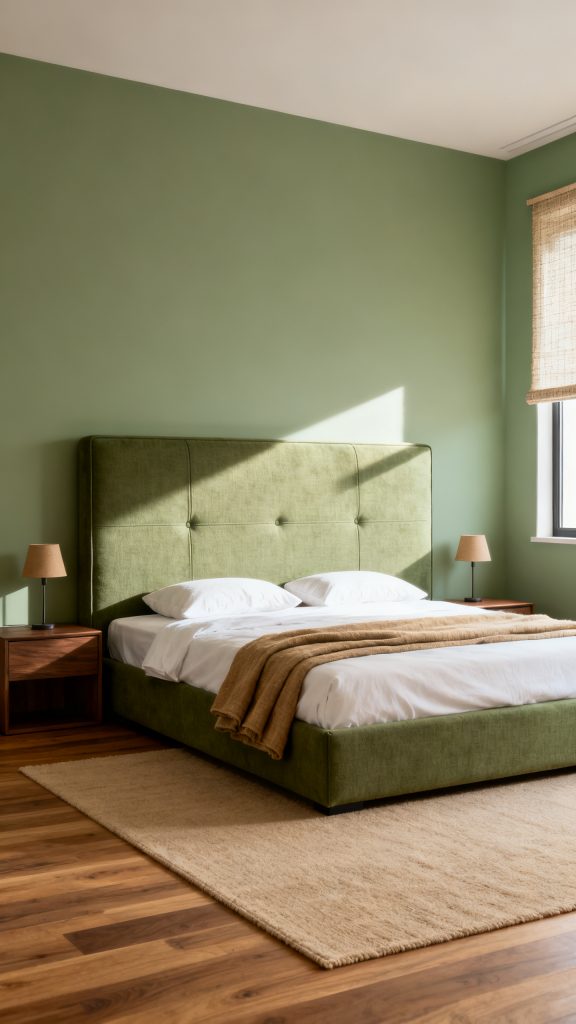
A wide headboard in muted pine-green fabric makes a gentle focal point without needing art above it. Choose a plain rectangular shape that extends a little beyond the bed on each side. I think a tightly woven fabric looks especially good with pale green walls and warm white sheets.
Low walnut bedside units can sit within the width of the headboard, with small shaded lamps for evening reading. Add a pine-green blanket across the bottom of the bed and a sand-colored rug underneath. Keep the headboard height modest so it feels comforting rather than towering.
6. Build a Quiet Reading Corner in Deep Green
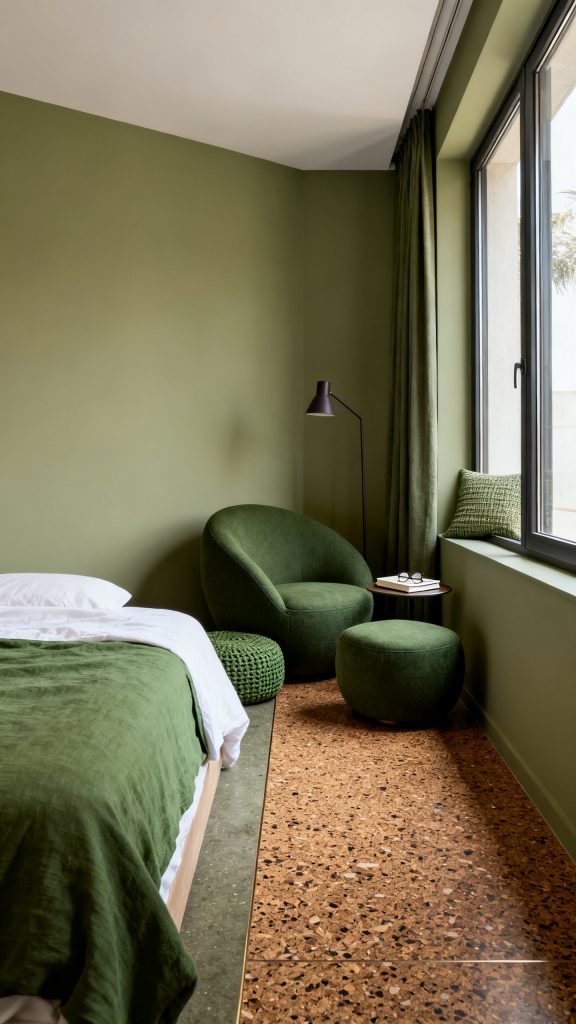
You can give a bedroom a second place to unwind with a deep green reading chair beside the window. Place a rounded chair and matching footstool at an angle to the bed, leaving the route between them open. Light olive walls and a green bedspread tie this corner to the sleeping area.
A slim floor lamp should reach over the chair without blocking the curtain. I’d add a small round side table for a book and glasses, then keep the nearby wall free of extra art. A woven seat cushion and dark cork flooring bring texture without lots of loose decor.
7. Try a Deep Forest Bed Alcove
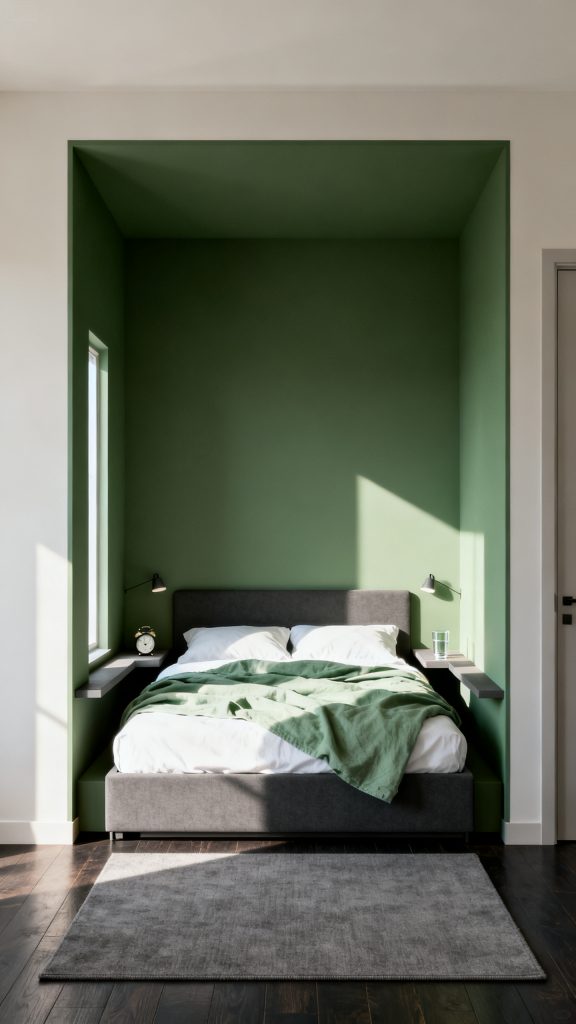
A shallow bed alcove feels snug when its back and side walls share a deep forest-green shade. Let the rest of the bedroom stay pale green so the darker area feels connected. A low charcoal bed and lighter green cotton bedding make the shape easy to read.
Use small wall-mounted reading lights inside the alcove and keep their switches within reach. Narrow bedside ledges hold the essentials without crowding the mattress, while a muted gray rug softens the open floor beyond. I’d skip overhead shelves here so the area above your pillow stays calm.
8. Keep a Compact Room Calm with Hidden Storage
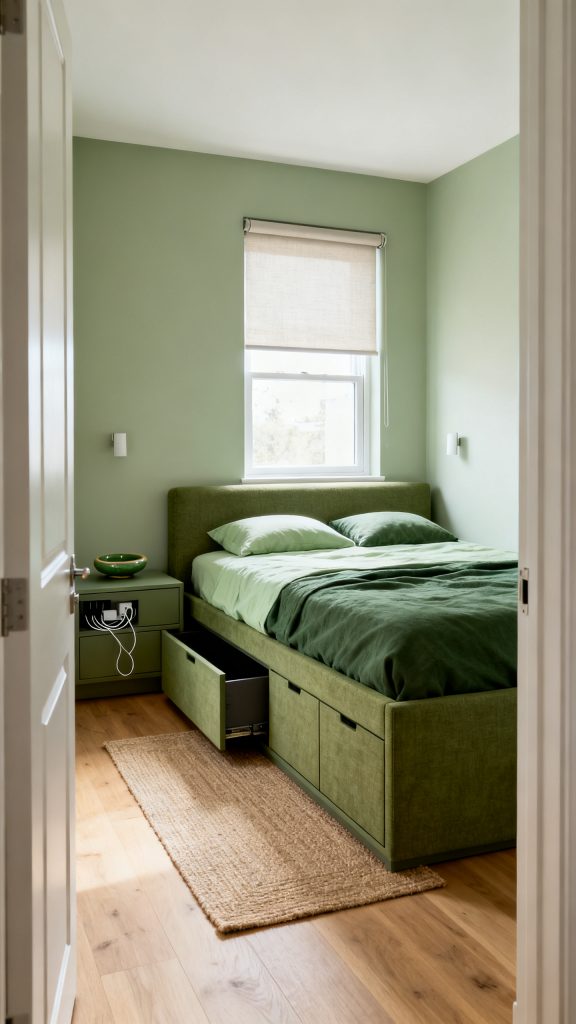
In a small bedroom, a moss-green storage bed can carry both the color and the practical work. Pair it with pale sage walls and plain bedding in two nearby green shades. I like drawers that close flush because their simple fronts keep the bed from looking bulky.
Place the bed where its drawers can open fully, then use slim wall lights instead of large lamps. A narrow bedside drawer holds charging cables, while a small green ceramic dish gives your rings a home. A flat natural-fiber rug and a plain roller shade finish the room without taking up much space.
9. Choose One Large Green Abstract Artwork
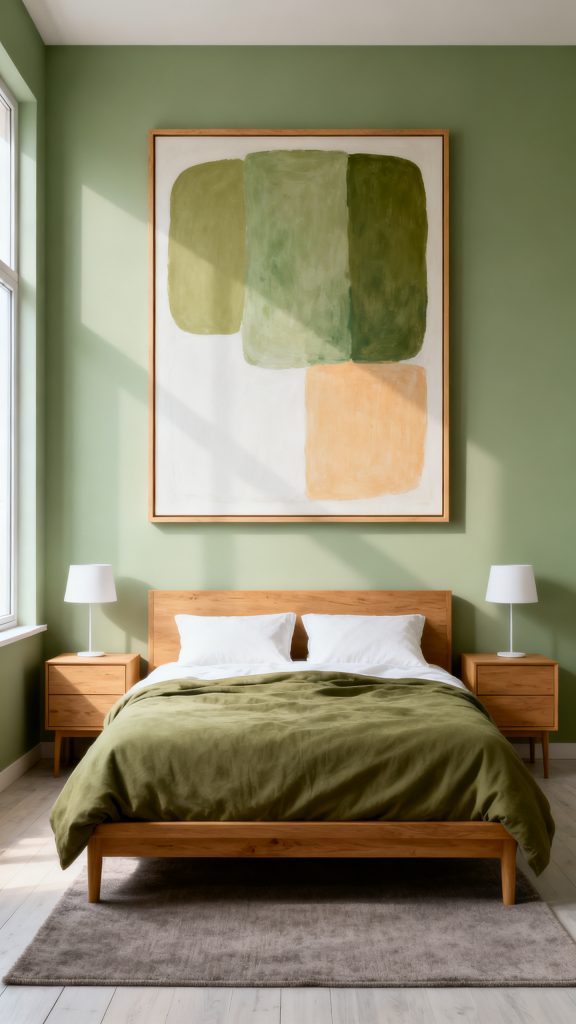
One broad abstract artwork can give a bedroom personality without filling every wall. Look for soft blocks of olive, eucalyptus, and warm white in a narrow wood frame. Hang it above a plain bed with enough space between the frame and headboard for each shape to stand out.
Repeat the artwork’s olive shade in the duvet and use pale eucalyptus on the walls. I’d add white bedside lamps and a low honey-colored wood bed to keep the edges clear and simple. Choose the picture size with paper taped to the wall before committing to a frame.
10. Warm Up Green with a Natural Wood Bed Wall
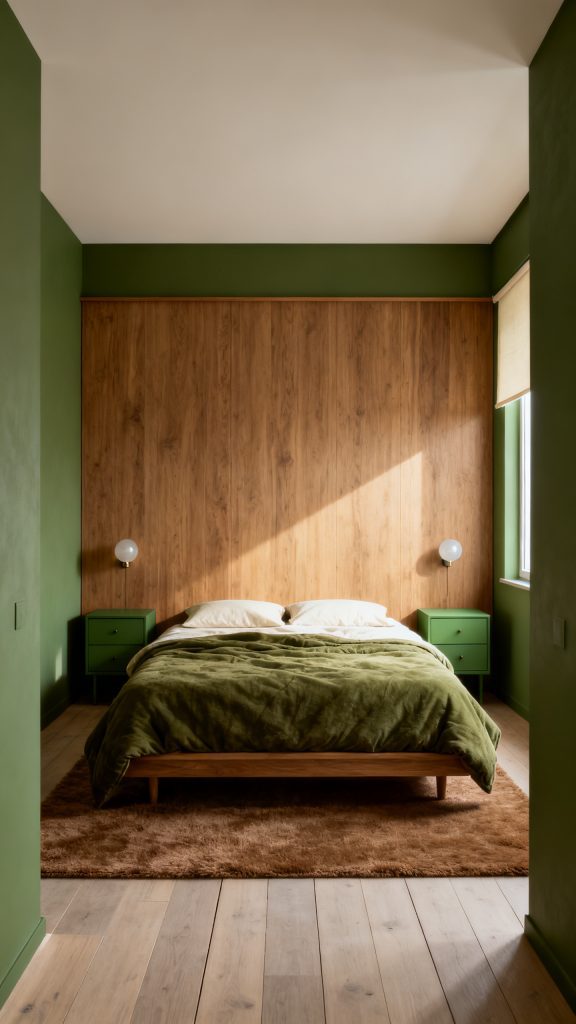
A broad, smooth wood panel behind the bed adds warmth when you love green but want a change from painted walls. Use a medium-toned wood with quiet grain, paired with moss-green side walls and a generous green quilt. Keep the panel flat rather than adding a busy pattern of narrow strips.
Small green bedside drawers can sit against the wood, with simple globe wall lights above. A soft brown wool rug and plain ivory sheets let the wood and green stay in charge. I’d stop the panel at a clear, deliberate height and leave room above it so it doesn’t overwhelm the bed.
11. Soften an Attic Bedroom with Pale Celadon
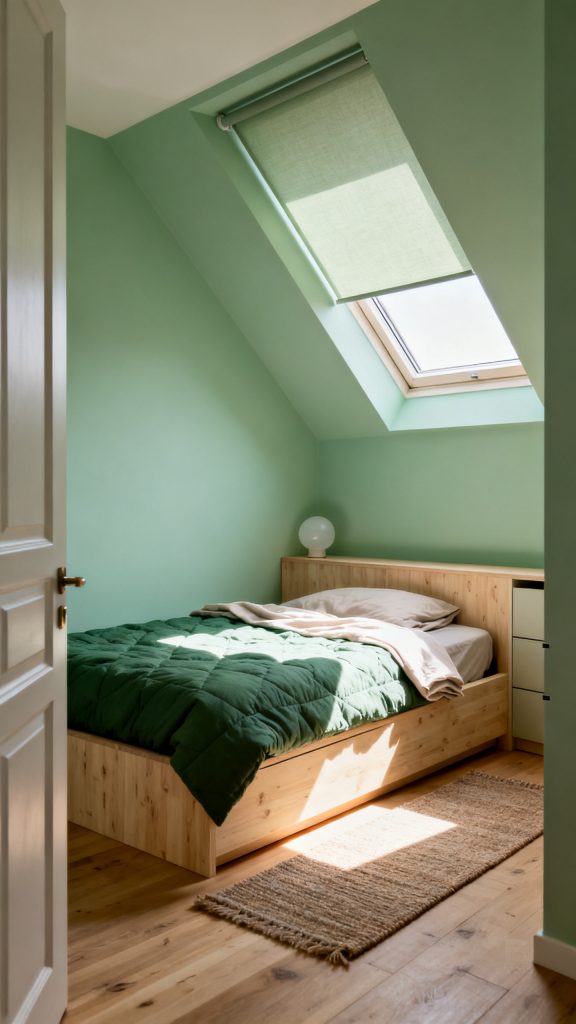
Sloped ceilings can feel gentle rather than awkward when the walls and slopes share a pale celadon green. Put the bed beneath a slope only where you can sit up comfortably, and keep the taller side of the room open for walking. A simple birch frame and deeper green quilt give the pale room some shape.
Let a roof-window shade soften the daylight without adding hanging fabric near the bed. Low drawers tucked along the knee wall keep storage below the slope, and a woven wool runner warms the exposed boards. I love a small frosted bedside lamp here because its rounded shape breaks up all those angles.
12. Let Sculptural Greenery Anchor a Bright Corner
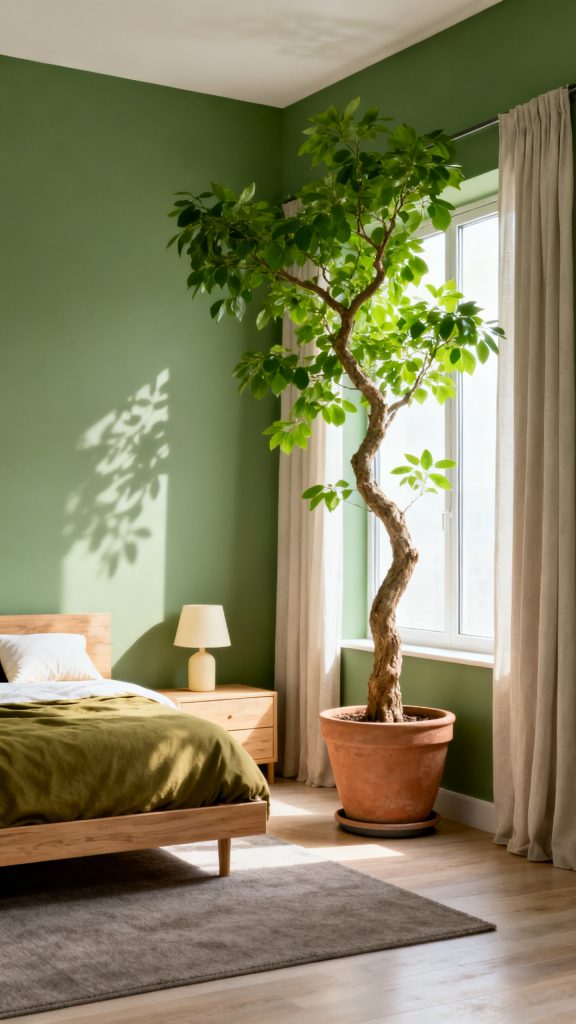
A single tall indoor tree can be the main decoration in a bright bedroom corner. Choose a plant suited to your actual window light, then set its plain clay pot where leaves won’t brush the curtains. Sage walls and a broad olive bedcover make sure the room still feels green beyond the plant.
Keep the bed on the neighboring wall so you can enjoy the shape of the leaves without crowding the window. A light wood frame, warm gray rug, and simple cream bedside lamp give the corner a quiet setting. I’d use a waterproof saucer inside the planter and leave a clear route for watering.
13. Use Gentle Bedside Light in a Dark Green Room
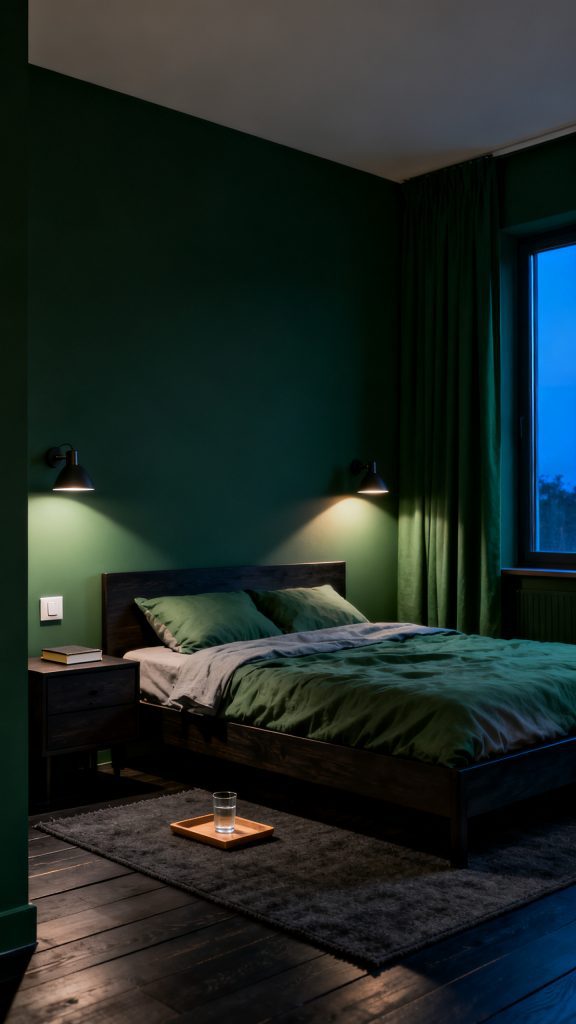
Deep green walls can make a bedroom feel restful in the evening when the light comes from smaller sources. Place shaded wall lights beside a simple dark wood bed, with their glow aimed down toward the bedside surfaces. A muted green duvet and pale gray sheets keep the bed easy to see.
Choose shades that hide the bulb from your pillow, and use dimmable fixtures made for your chosen bulbs. A charcoal rug and plain green curtains soften the room while a small wooden tray holds bedtime essentials. My favorite part of this idea is the gentle contrast between the lit bedding and the darker corners.
Final Thoughts
You don’t need to bring all thirteen ideas into your green minimalist bedroom. Choose the green shade and main feature that make you feel most at ease, then build around them with useful pieces and textures you enjoy.
Take your time with the smaller choices, from a lamp shade to the way your bedding falls. I think a restful room feels better when it grows slowly and leaves space for daily life. Let yours feel like you, and enjoy making it a little more welcoming along the way.