A bedroom can feel calm without feeling bare. I like cozy minimalist bedroom ideas that give you soft places to land, useful storage, and enough breathing room to enjoy it all. The trick is choosing fewer things with more warmth and texture.
You don’t need a matching set or a room full of pale furniture to get there. Try a soft headboard, a deep rug, or a quiet corner that makes bedtime feel more inviting. These ideas give you different starting points, so you can work with the bedroom you already have.
1. Make the Bed Feel Soft With a Fabric Headboard
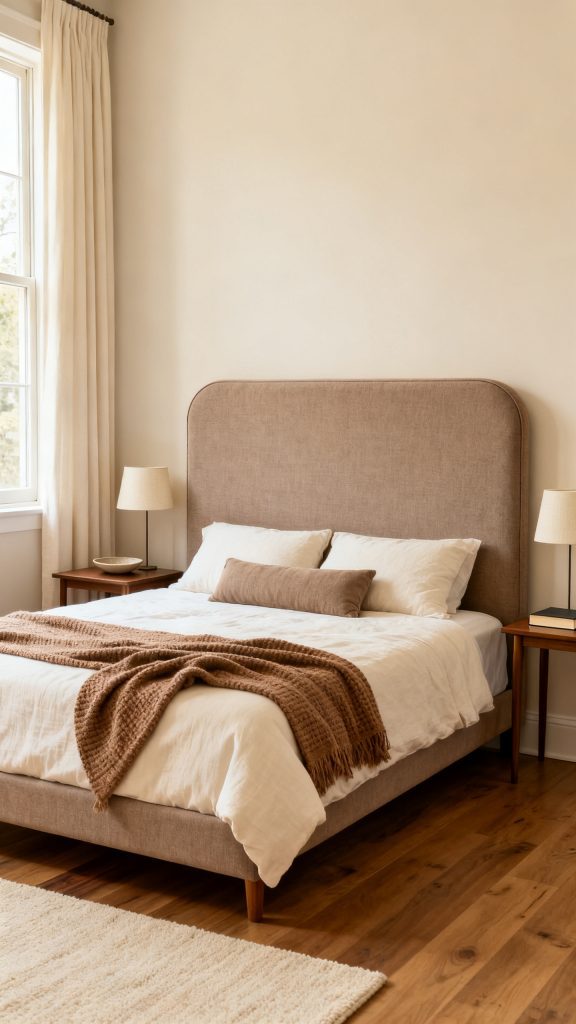
A broad fabric headboard gives a simple bed a soft place to lean. I’d choose warm taupe with a gentle curve, then add ivory cotton bedding and a cocoa throw across the foot. Those big, quiet shapes make the room feel cozy without needing lots of little decorations.
Keep slim walnut nightstands on either side and leave a clear path around the bed. Cream fabric lamps and a small bedside dish give you useful finishing touches. If the headboard has plenty of texture, you can skip artwork above it and let daylight from the side window show off the weave.
2. Give Your Feet a Generous Wool Rug
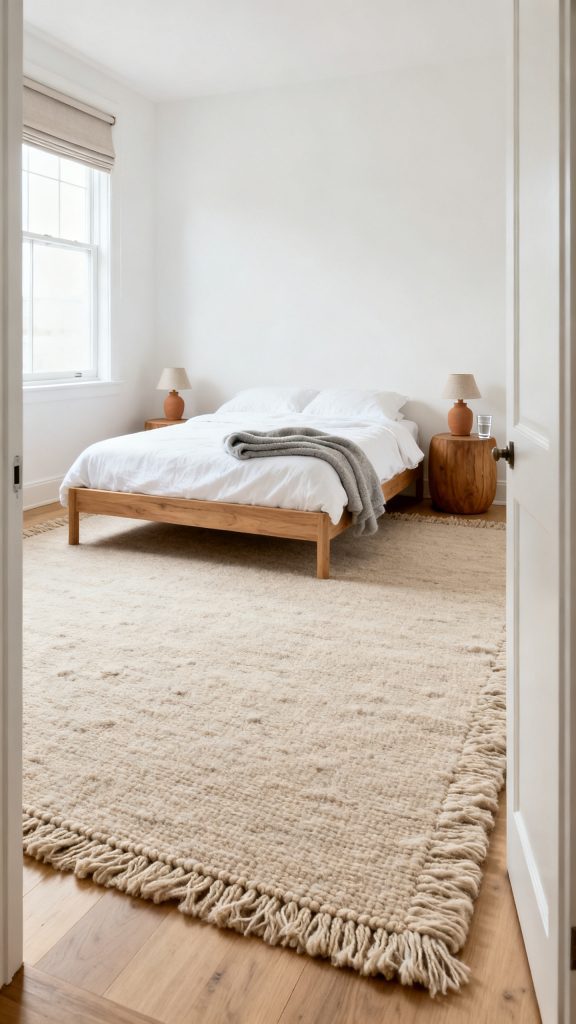
Cold floors can make even a lovely bedroom feel a little unwelcoming. A large oatmeal wool area rug under a simple ash bed adds softness right where you step out in the morning. I love a low, uneven loop texture against smooth wood and plain white bedding.
Let the rug reach beyond both sides and the foot of the bed instead of hiding most of it underneath. A soft gray blanket, rounded bedside stools, and matte clay lamps keep the rest of the room quiet. Check that the bedroom door clears the rug, and let the window light bring out its gentle texture.
3. Frame the Window With Soft Curtain Layers
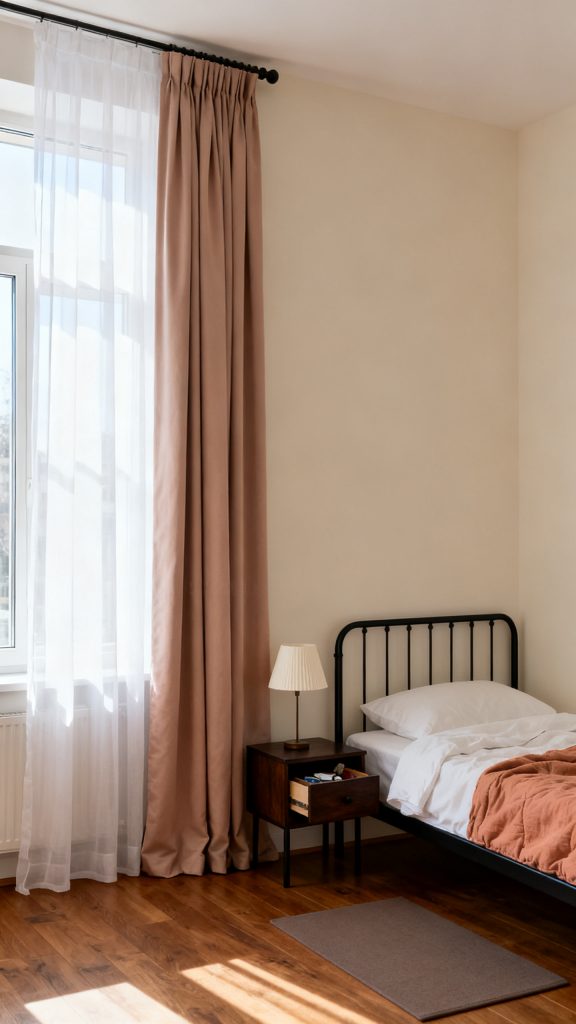
Tall curtain panels can be the main feature in a bedroom that doesn’t need more furniture. Try white sheers behind mushroom blackout curtains, with both layers ending just above the floor. You get soft daytime light and a more tucked-in feeling when the outer panels close.
I’d pair that window with a narrow black metal bed, warm white sheets, and a faded clay quilt. Keep the curtain stack clear of the bedside drawer so both are easy to use. A paper-shaded lamp and a small dark wood nightstand add enough shape without competing with the folds.
4. Build a Quiet Pool of Bedside Light
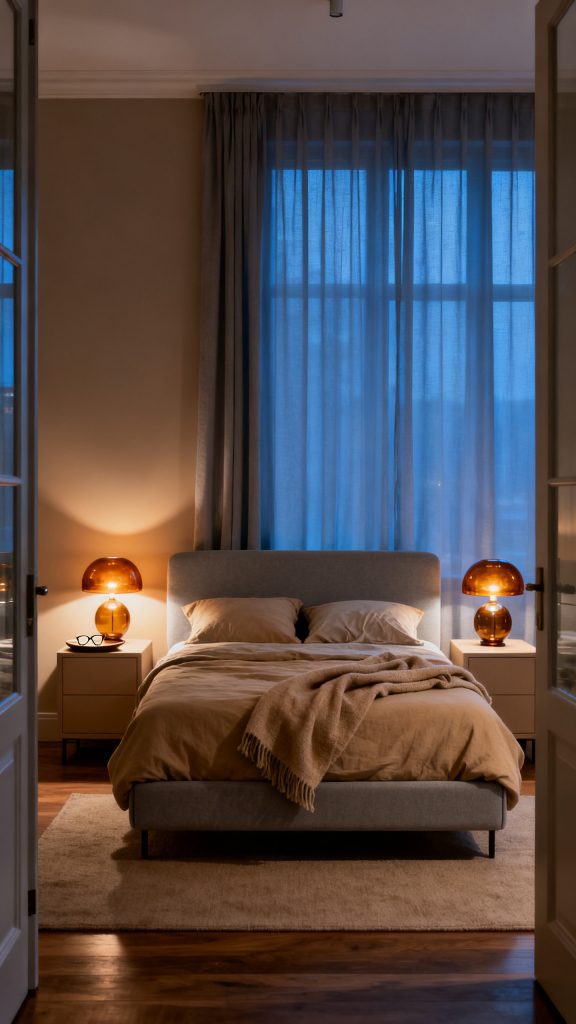
For a bedroom that feels gentler after dark, let the lighting do the decorating. Two dimmable amber glass bedside lamps can cast small pools of warm light against putty walls. Keep a pale gray upholstered bed and sand-colored bedding nearby so the glow has soft surfaces to fall across.
My favorite part of this idea is how little else it asks for. A folded wool blanket and a shallow tray for your glasses make the bedside feel ready for the evening. Choose shaded bulbs that stay out of your direct line of sight, and keep the ceiling light off when you want the room to wind down.
5. Let One Large Artwork Set the Mood
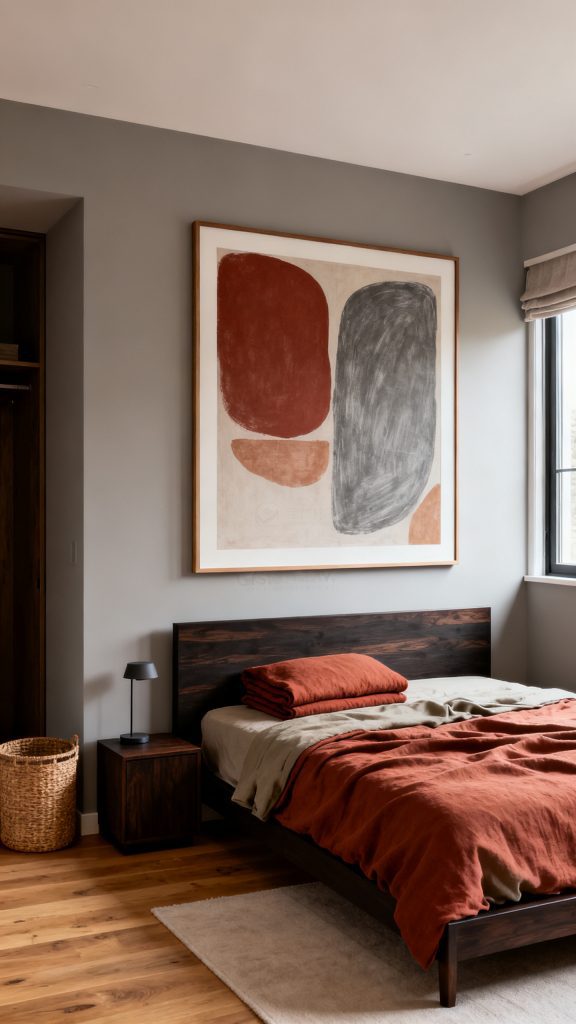
One generous framed abstract print can give a bedroom a clear focal point without a busy gallery wall. Look for broad shapes in muted rust, chalk, and warm gray, then repeat the rust in a folded bed cover. I like the balance of soft artwork above a straight, dark wood headboard.
Choose a lightweight frame sized comfortably inside the width of the bed, and secure it properly. Stone-colored sheets, a small reading light, and a low woven hamper can handle the rest of the room. Keep the bedside tops useful rather than filling them with smaller art that pulls your eye away.
6. Tuck a Reading Seat Beside the Window
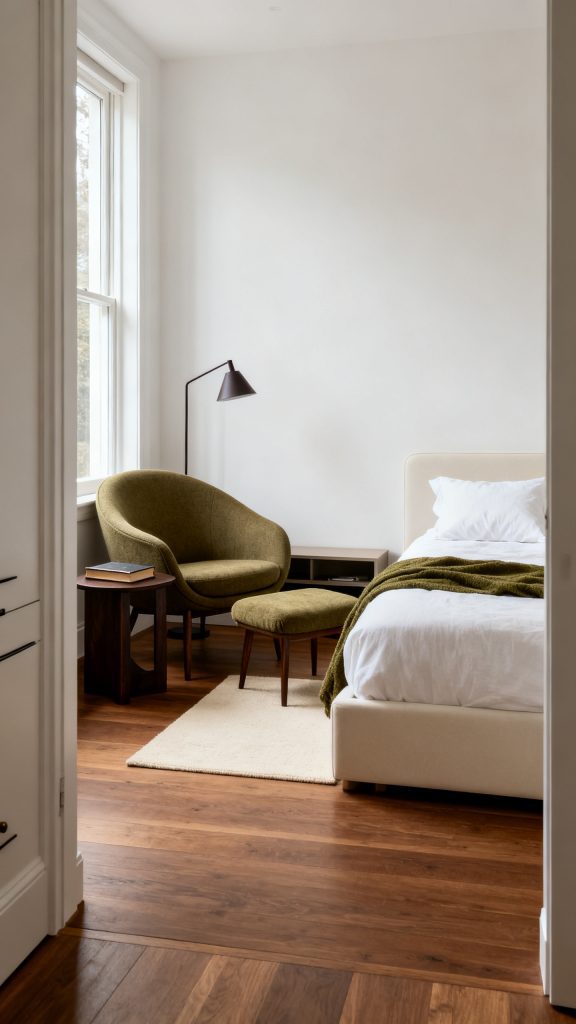
A bedroom reading corner can feel cozy with one comfortable chair and room to stretch your legs. Place a rounded olive fabric chair beside the window, angled toward a small matching footstool. An ivory bed with a moss-colored blanket connects the corner to the sleeping area.
You can add a slim floor lamp and a dark wood side table just big enough for a closed book. Keep the route from the bed to the closet open, even if that means choosing a smaller chair. I’d leave the nearby wall plain so the chair’s soft shape and daylight can carry the corner.
7. Calm a Small Bedroom With Hidden Storage
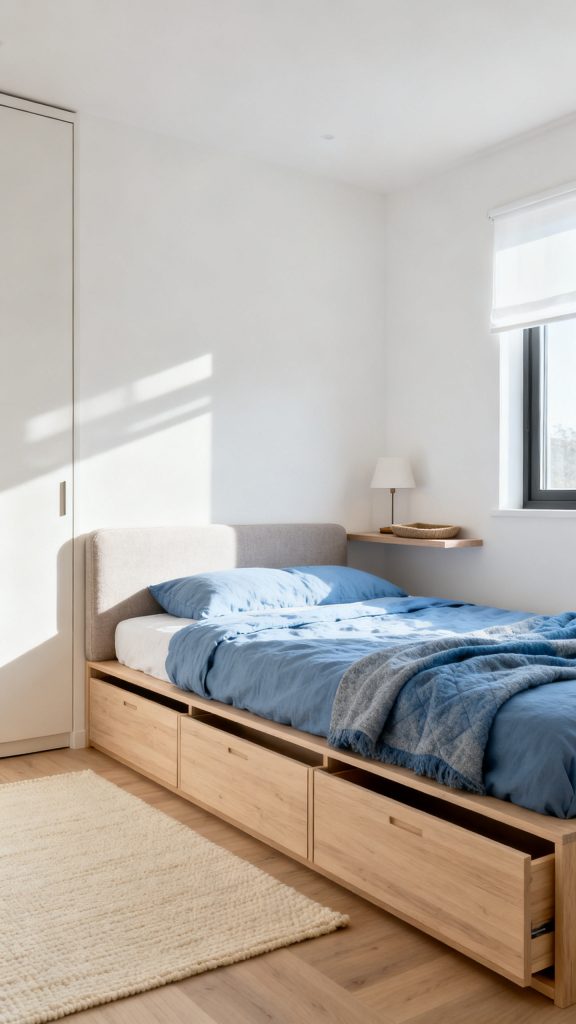
When your bedroom is small, a bed with closed drawers can make the whole room feel quieter. Try a pale wood frame with plain drawer fronts, a short upholstered headboard, and soft blue bedding. A blue-gray quilt gives the simple room a little depth without a pile of extra pillows.
Leave enough space beside each drawer to pull it all the way out. I would use a narrow wall shelf for a bedside lamp and a small felt tray, then keep clothes behind a plain closet door. A flat woven rug and gentle window light finish the room without crowding the floor.
8. Warm Up a Dark Bedroom With Layered Bedding
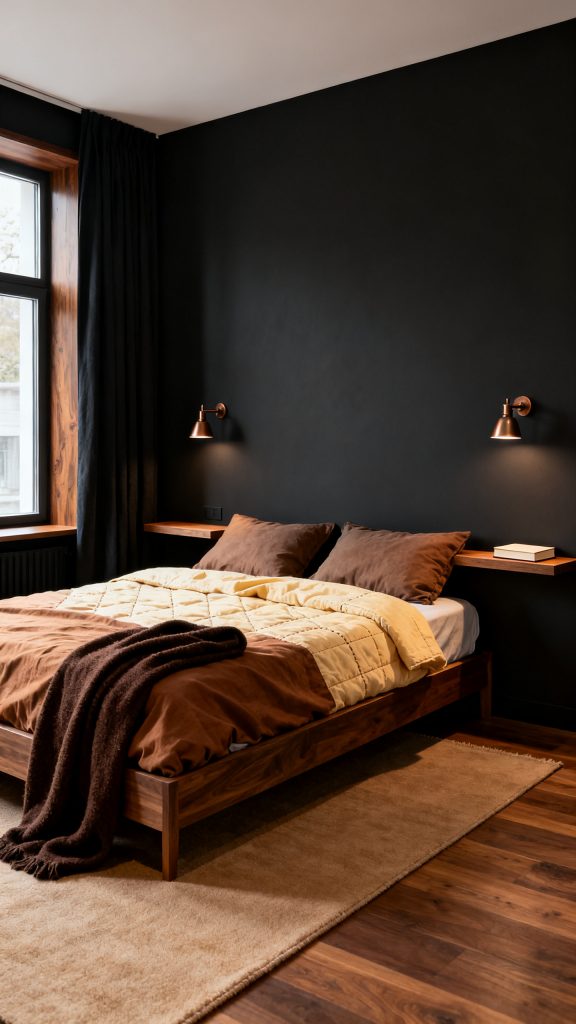
Cozy minimalism can be dark, too. Charcoal walls behind a low walnut bed make tobacco linen sheets and a warm cream quilt feel especially inviting. I like keeping the bedding plain so the contrast comes from color and touch rather than a busy pattern.
Repeat the charcoal in the curtains and soften the floor with a flat sand-colored rug. A pair of small bronze reading lights gives you light where you need it, while daylight keeps the wood grain visible. Fold a dark brown wool throw across the quilt instead of adding several decorative cushions.
9. Stretch a Wood Headboard Across the Bed Wall
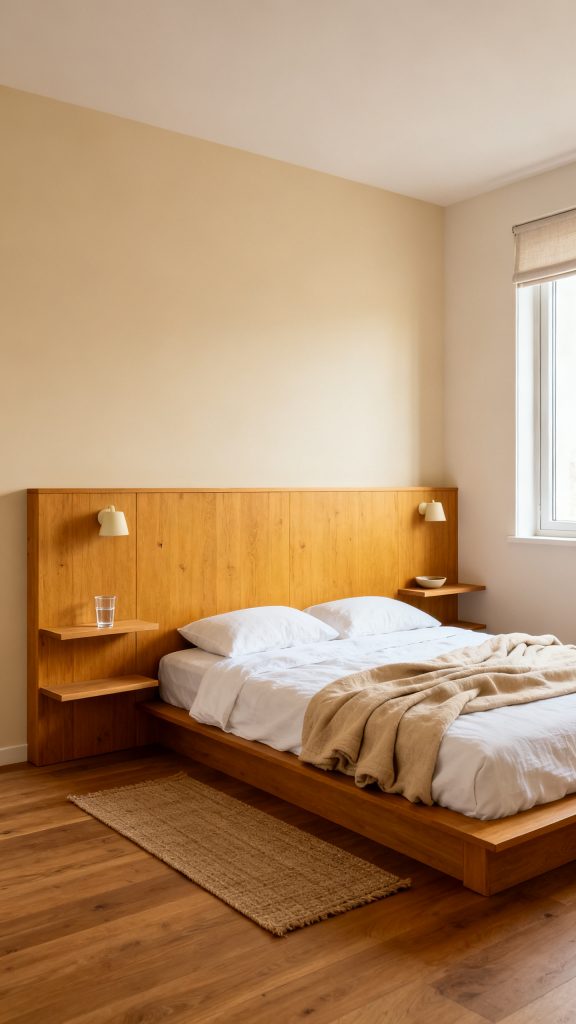
A long wood headboard can join the bed and bedside surfaces into one calm arrangement. Choose a smooth honey-colored wood panel that extends just past two simple floating bedside shelves. White bedding, a biscuit quilt, and soft cream walls keep the wood from feeling heavy.
I’d use small wall lights above the shelves so you still have space for a water glass and a catchall. A narrow woven runner along the accessible side of the bed adds a softer landing. Keep the panel low enough that the wall above has breathing room, and let side light reveal the grain.
10. Use a Bedroom Mirror to Share the Daylight
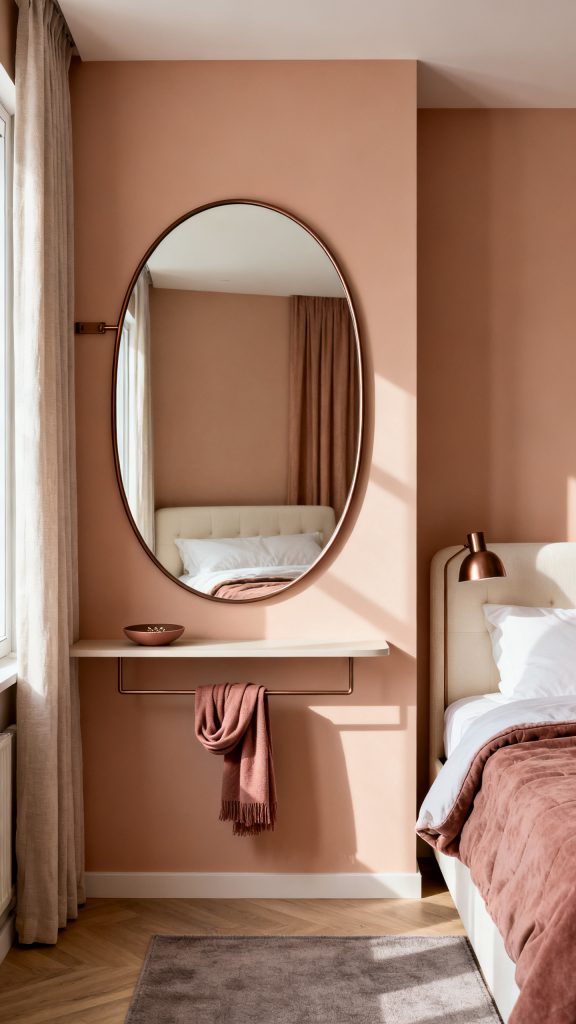
A large oval wall mirror can brighten the dressing side of a bedroom without adding another color. Hang it beside the window so it reflects the bed and a patch of soft curtain rather than a cluttered doorway. A thin bronze frame looks warm beside peach-beige walls and a simple cream upholstered bed.
Place a shallow wall shelf below the mirror for a small jewelry dish and a folded scarf. I’d carry the bronze into a bedside lamp and keep the bedding a quiet mix of warm white and dusty rose. Mount the mirror securely, and leave enough standing space below it to make this a useful dressing spot.
11. Give the Foot of the Bed a Soft Landing
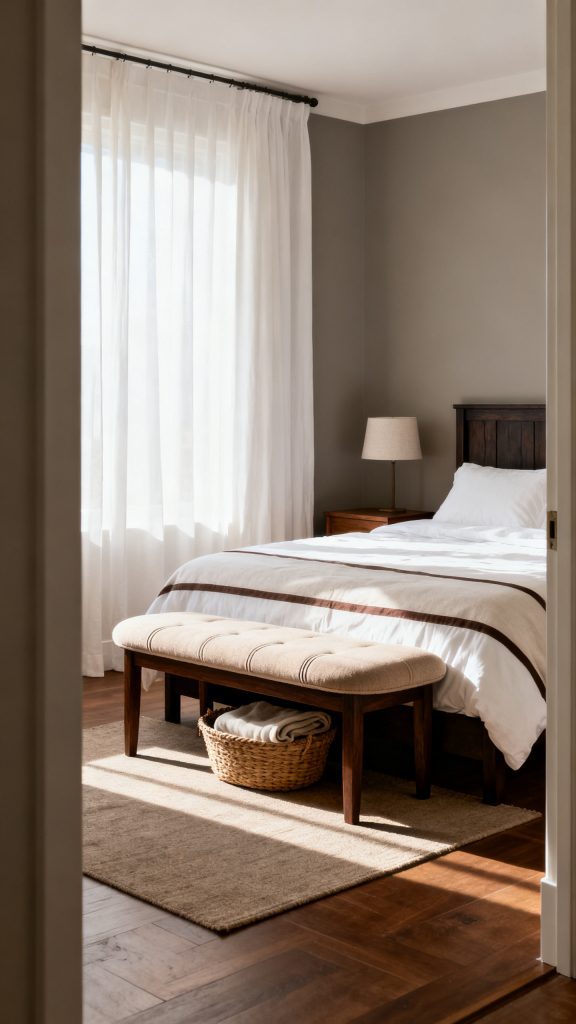
A low upholstered bench can finish a bedroom without needing more wall decor. Place a rounded oatmeal bench at the foot of a simple dark wood bed, with a clear walking path beyond it. I love how the soft shape balances a crisp white duvet and a narrow chocolate stripe on the bed throw.
Keep the seat available for getting dressed instead of using it as a permanent display. A small basket for the throw can sit beneath an open bench if it fits easily. Add warm white curtains and a low shaded bedside lamp so the whole room feels gentle rather than crowded.
12. Make an Under-Eaves Bed Feel Tucked In
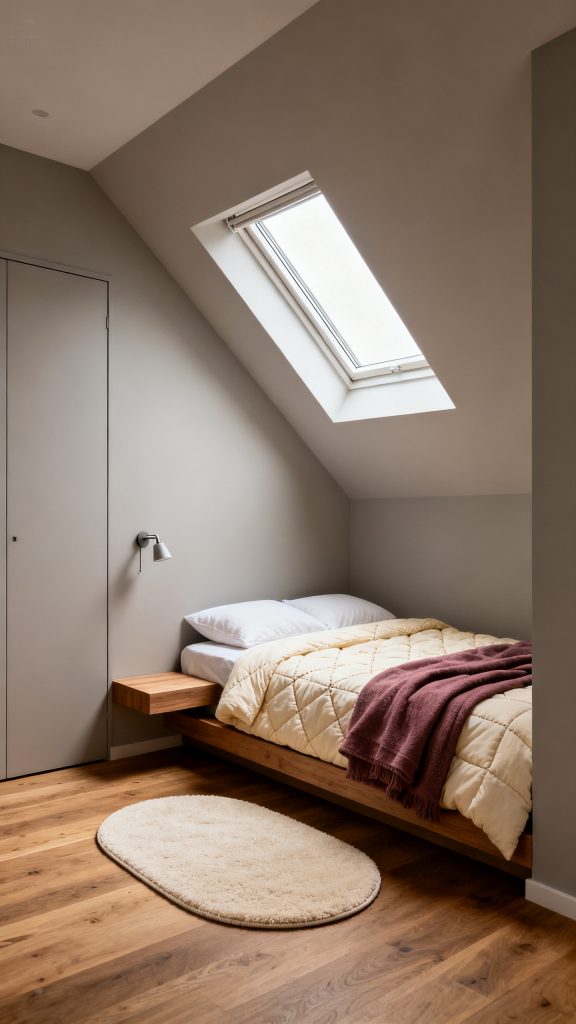
A sloped ceiling can make a small bedroom feel like its own little shelter. Put a low bed under the lowest part, with enough headroom where you sit up and stand. Pale warm gray walls, a cream quilt, and a muted plum blanket give the snug layout some softness and depth.
A low bedside ledge works better here than a tall chest squeezed under the slope. Use a compact reading light, then place a soft oval rug where your feet meet the floor. I’d keep the taller side of the room open for walking and let a roof window light the bedding during the day.
13. Bring in Pattern With One Quiet Bed Cover
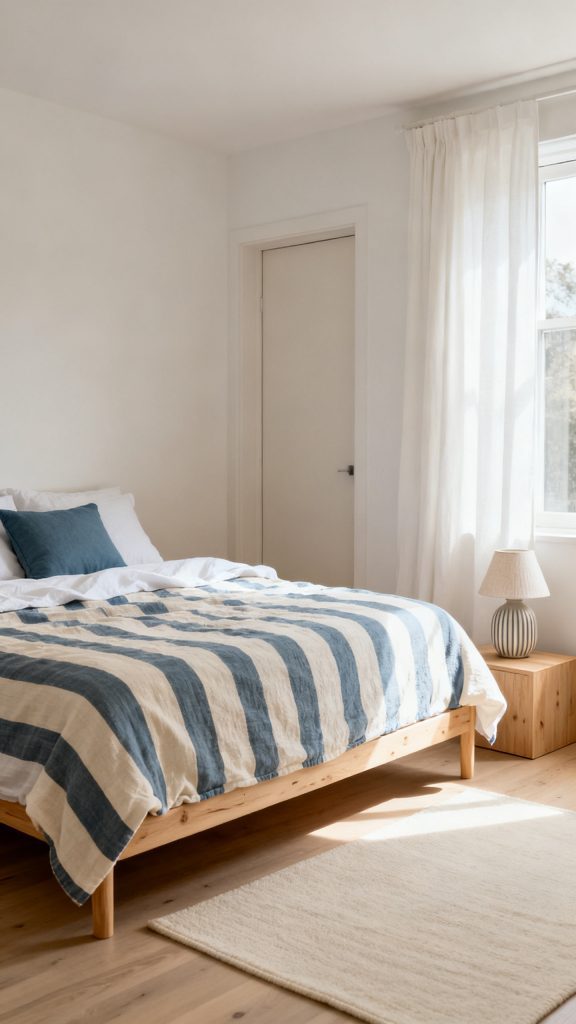
If plain bedding feels a little flat, try a broad striped bed cover as your main decoration. Soft cream and dusty blue stripes bring a gentle rhythm to a simple birch bed against warm white walls. You can repeat the blue in a solid pillow without adding another pattern.
Let a small ribbed ceramic lamp and a smooth birch nightstand echo that mix of texture and clean lines. I’d keep the curtains plain and choose a flat cream rug so the bed cover stays in charge. Turn the top edge back to show white sheets, and leave enough relaxed folds for the bed to feel inviting.
Final Thoughts
The best cozy minimalist bedroom ideas leave room for both comfort and everyday life. Pick the detail you miss most, whether that’s softer light, warmer floors, or a place to put away your things. I’d begin there before adding anything else.
Take your time with the rest, and enjoy seeing the room come together. You can keep what feels good, move what feels awkward, and leave a wall alone when it already feels right. A cozy bedroom should feel like yours, even while you’re still figuring it out.