When two beds need to fit into one little bedroom, the floor can disappear fast. I love how a thoughtfully chosen bunk gives you some of that space back without making the room feel like a storage puzzle. These small bedroom bunk bed ideas pair practical layouts with colors and textures that make bedtime feel cozy.
Start by checking the bed’s full footprint, ladder access, ceiling clearance, and the maker’s mattress and age guidance. Keep the upper bunk for children old enough to use it safely, and leave windows, doors, and walking paths clear. Then you can have fun with the part I like best: making each sleeping spot feel like its own little corner.
1. Keep a White Bunk Along One Wall
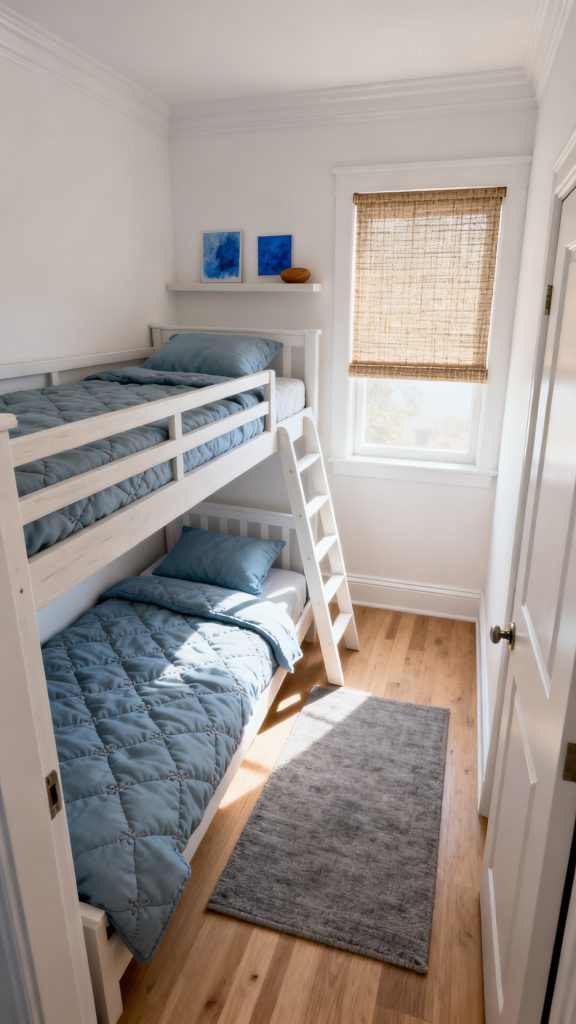
A simple white twin-over-twin bunk can keep a narrow bedroom from feeling chopped into pieces. Set it lengthwise against the longest blank wall, with its fixed end ladder away from the door swing. I like warm white walls, dusty blue quilts, and a soft gray flatweave rug here.
Let daylight through a cordless woven shade on the opposite wall, and keep the middle of the room open. A shallow picture ledge away from the ladder can hold two small prints and a wooden keepsake. Repeat the same blue on both beds so the long frame feels calm rather than busy.
2. Choose a Low Bunk With a Playful Color Block
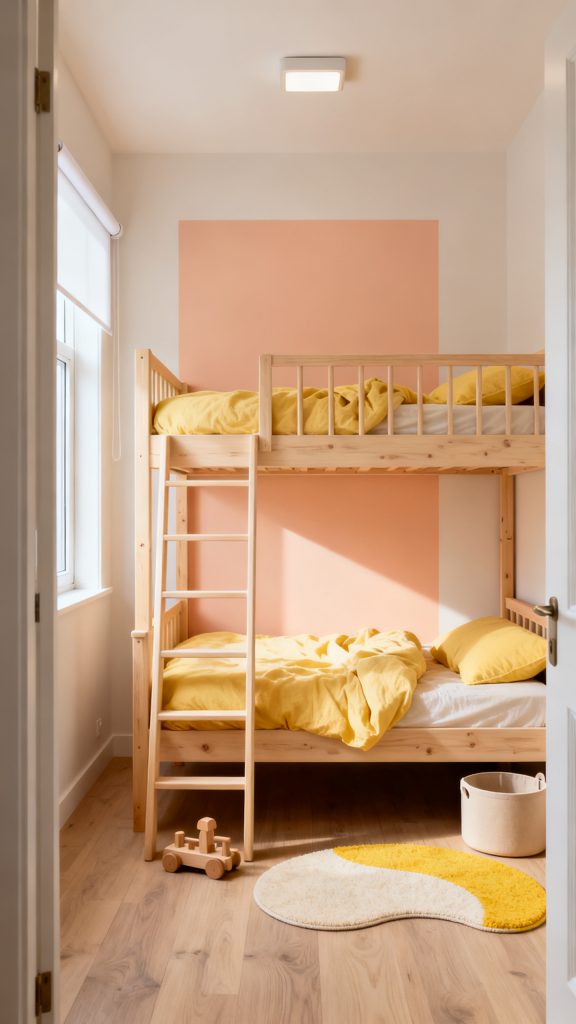
A low bunk feels less bulky in a small room with an ordinary ceiling. I would pair a pale birch frame with a broad peach rectangle painted on the wall behind it, keeping the upper guardrails fully visible. Butter-yellow bedding and a rounded cotton rug give the room a cheerful, soft look.
Place a low toy bin at the foot end without narrowing the ladder approach. A flush ceiling light and a cordless white window shade keep the upper sleeping area free of dangling pieces. Check the bed’s required headroom before buying, even when the frame is called low.
3. Use Drawer Storage Under a Navy Bunk
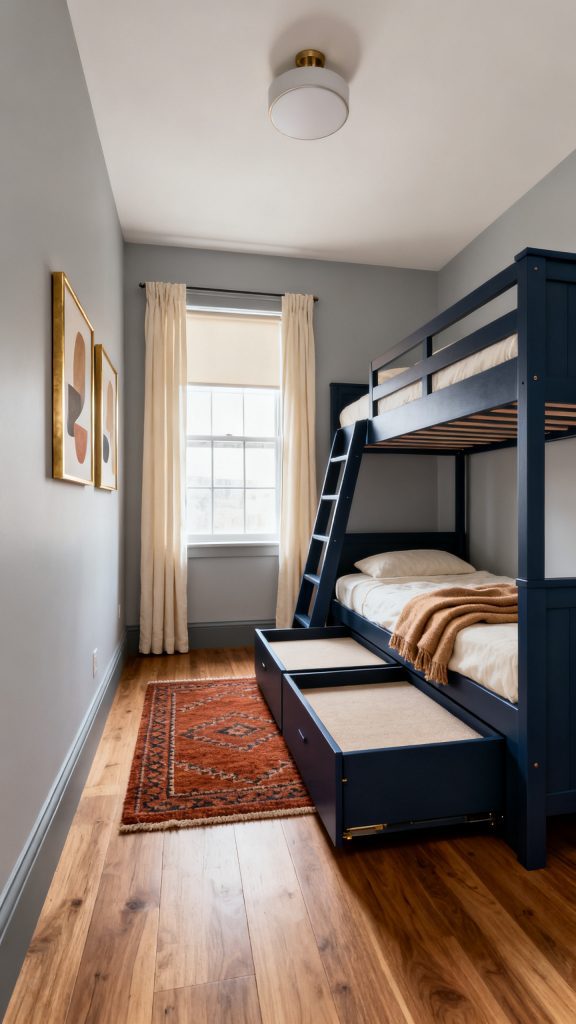
A navy bunk with drawers underneath gives a tiny bedroom a strong focal point and a useful place for folded clothes. Run it along a side wall and leave enough floor space for the drawers to open fully. I love the navy against pale gray walls, camel blankets, and a small rust-patterned wool rug.
Keep the bedding fairly plain so the drawer fronts and warm rug carry the look. A cream blackout curtain at the far window softens the darker frame, with its fabric well away from the bed. Try small brass picture frames on the opposite wall instead of adding another piece of furniture.
4. Tuck Stacked Beds Into a Bedroom Alcove
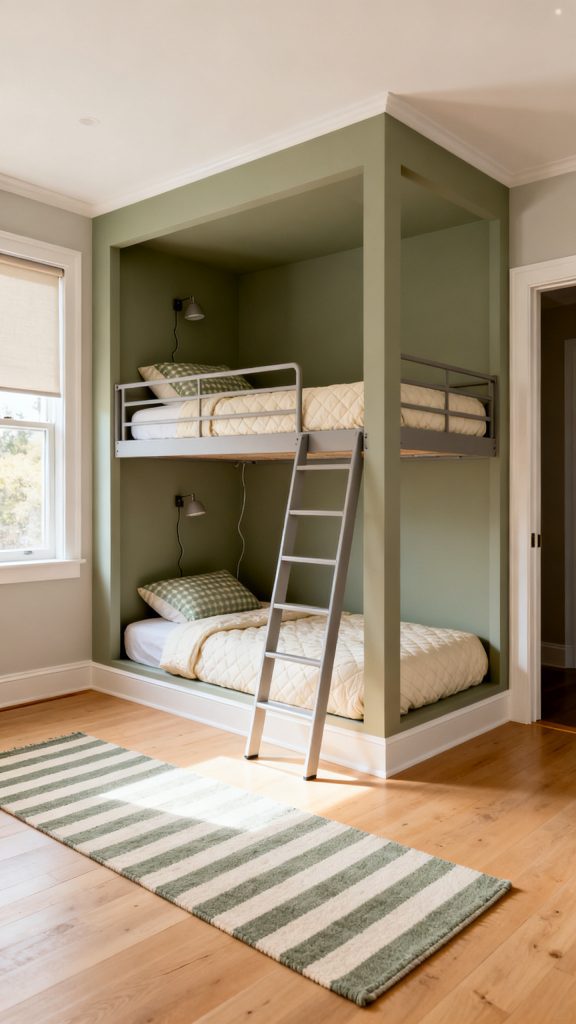
An existing bedroom alcove can make stacked bunks feel like a neat little sleeping nook. Choose a properly fitted bunk system with a fixed ladder at the open end, and use muted sage on the surrounding wall. Cream quilts and tiny checked pillowcases make the enclosed shape feel softer.
I would keep the alcove open rather than adding curtains across the beds. Small enclosed reading lights at the head ends can add warmth without cords hanging into the bunks. Carry sage into a narrow striped rug outside the nook, and keep the route from ladder to doorway clear.
5. Try an Offset L-Shaped Bunk Layout
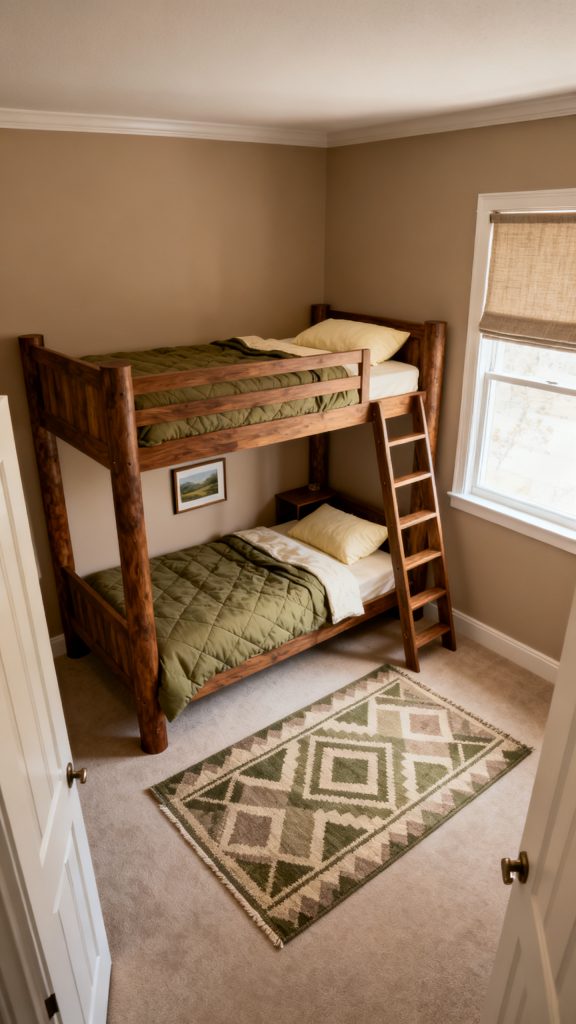
If your small bedroom has a usable corner, an L-shaped bunk can give each sleeper a different outlook. The upper bed runs along one wall while the lower bed turns beneath it along the next, using a purpose-built frame. I like walnut tones with mushroom walls and olive bedding for a quieter look.
The little wall area beside the lower bed can hold a slim framed landscape rather than a bulky nightstand. Fit a muted geometric rug into the open floor and use a cordless linen-look shade at the window. Measure both legs of the layout first, because an L shape needs more floor width than a straight stack.
6. Fit a Bunk Across the Short End of the Room
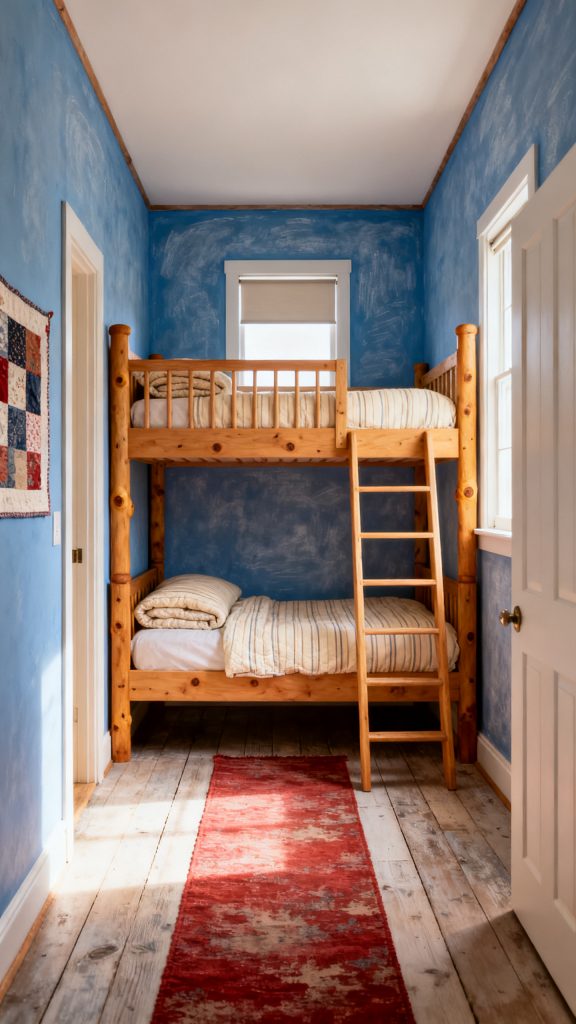
In a long, narrow bedroom, a bunk across the far short wall can leave one clear lane from the doorway. This works only when the room is wide enough for the full bed length and its required clearances. A honey-pine frame, chalky blue back wall, and cream ticking bedding give the end of the room a gentle cottage feel.
Use the bunk’s integrated end ladder rather than a leaning ladder that reaches into the lane. I would add a faded red runner along the open floor and a small wall quilt beside the doorway. Light from a side window brings out the pine grain without putting a bed across the window.
7. Give Each Bunk Its Own Color
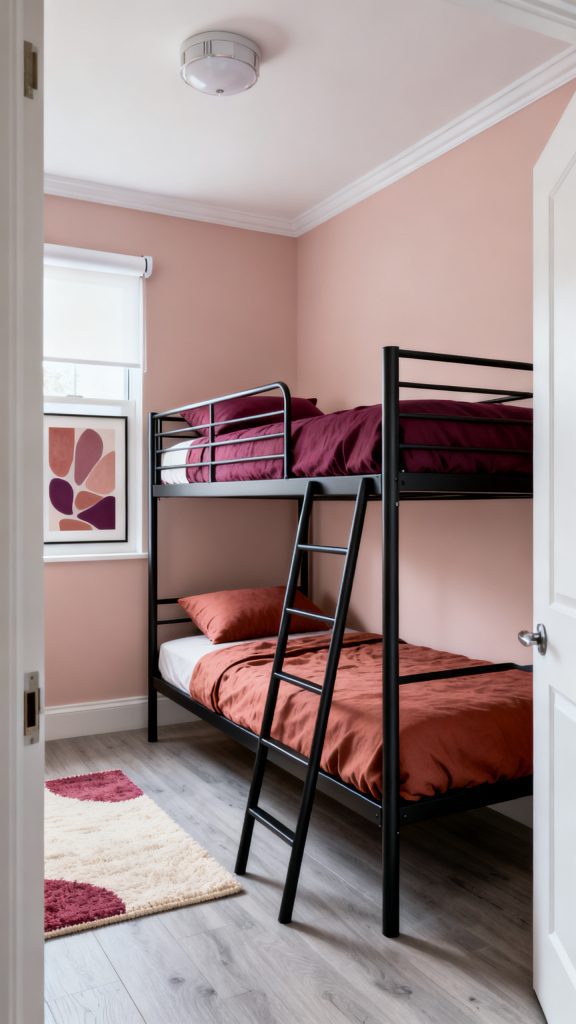
Shared beds don’t have to mean matching bedding. Try a slender black metal bunk against pale blush walls, with terracotta cotton on the lower bed and deep plum on the upper one. I like how the dark frame gives both colors a clear outline in a compact room.
Repeat the two bedding colors in one small abstract print on the wall opposite the beds. A rose-and-cream washable rug ties the sleeping spots together, while a plain cordless roller shade keeps the window simple. Keep extra cushions to a minimum so each mattress still has plenty of room.
8. Bring in Cabin Warmth With Knotty Wood
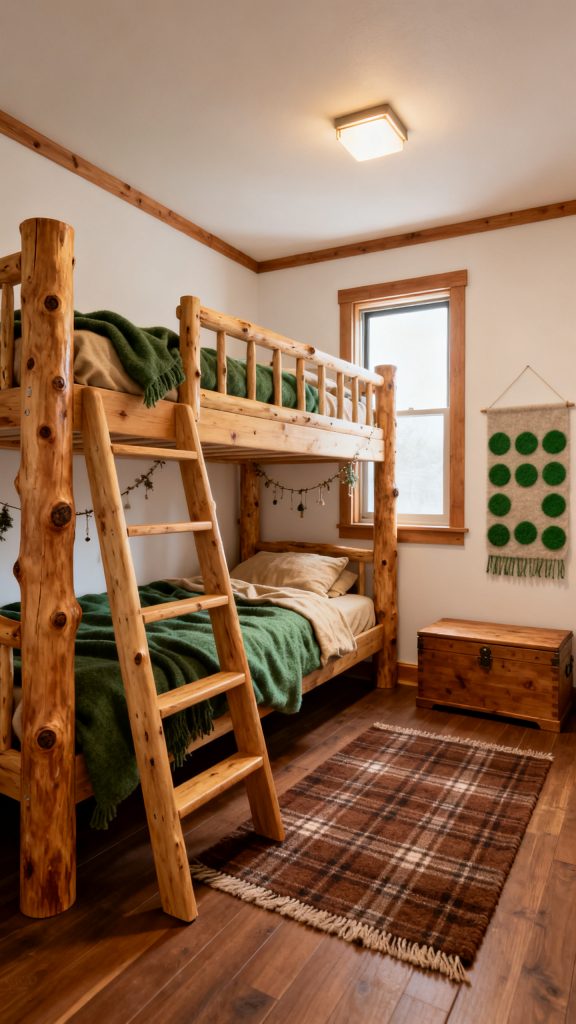
A knotty pine bunk can make a small bedroom feel like a tucked-away cabin. Set the straight stack along a solid wall, then add forest-green blankets, oatmeal sheets, and a brown plaid wool rug beside it. I would leave the wood natural so its grain does most of the decorating.
Choose a compact enclosed ceiling fixture with a warm glow, backed up by daylight from an uncovered upper window pane. A felt wall hanging and a low lidded trunk at the opposite end add texture without crowding the beds. Leave space around the ladder, and skip loose garlands or fabric hanging from the frame.
9. Make a Storage Staircase Part of the Layout
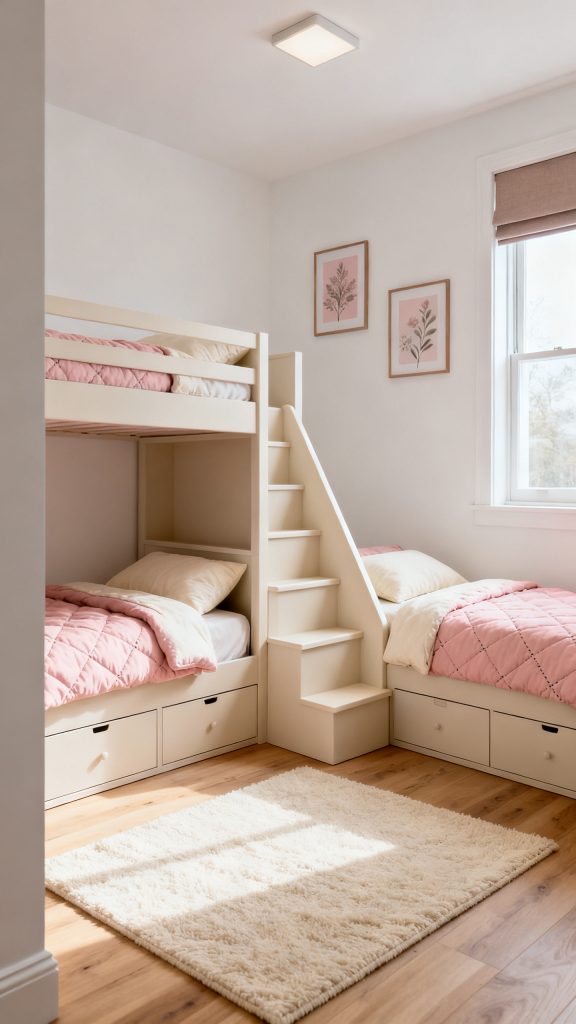
A bunk with storage stairs can work in a small square bedroom when you plan for its full footprint. Place the steps at the foot end along a blank wall, with their drawer fronts facing the open floor. I like a putty-painted frame, warm pink quilts, and a cream wool rug for this softer look.
Keep the wall above the stairs plain so the stair rail stays the main outline. A narrow window dressed in a cordless taupe shade and a pair of small botanical prints across the room add enough detail. Before choosing this option, check that the stairs and open drawers still leave a comfortable path to the door.
10. Pair a Twin Upper Bunk With a Full Lower Bed
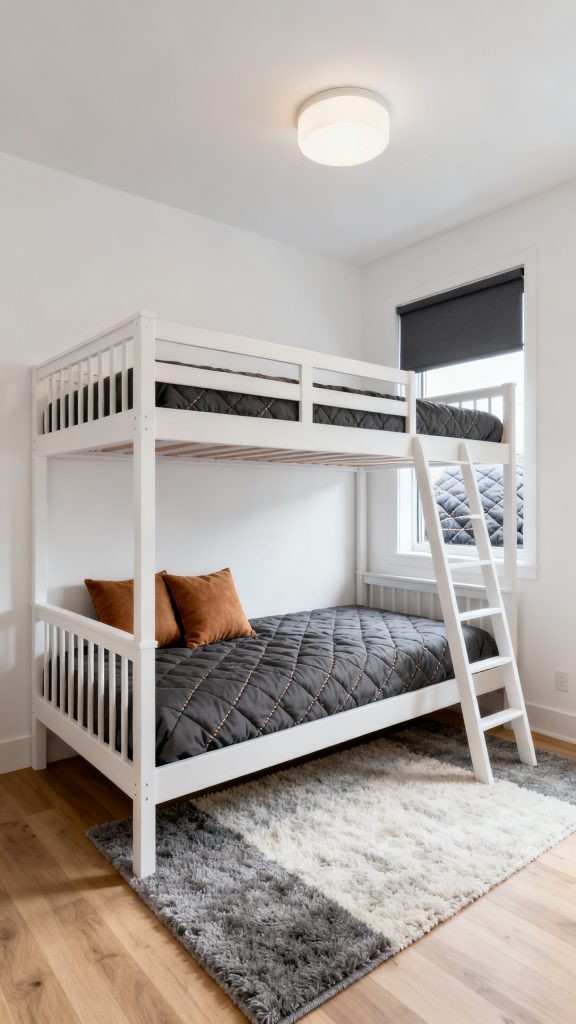
For a small guest bedroom, a twin-over-full bunk can offer a broader lower sleeping spot without adding a second bed across the room. I would use a white frame along the longest wall, charcoal quilts, and caramel cushions on the lower bed. The wider base becomes the focal point, so keep the rest of the furniture spare.
A gray-and-ivory wool rug can reach beyond the lower bed and soften the main standing area. Add an enclosed opal-glass ceiling light and a charcoal cordless shade to keep the palette connected. Measure from the widest part of the lower frame, including the ladder, rather than using the upper mattress as your guide.
11. Build a Quiet Coastal Look With Slatted Ends
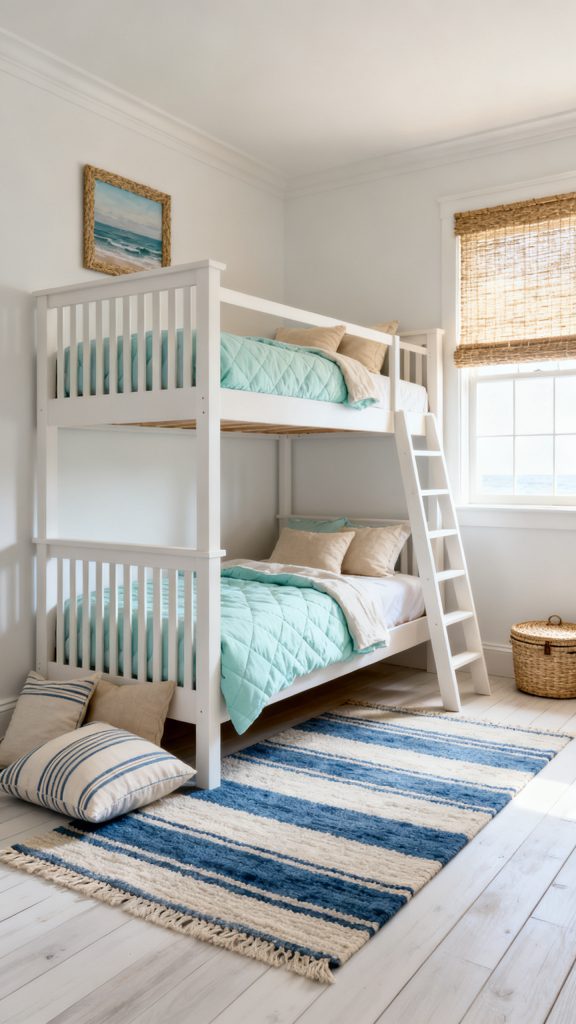
White slatted bunk ends give a little bedroom a breezy coastal feel without needing boat-shaped decor. Place the bunk on a solid wall beside, rather than across, the window. Pale aqua quilts, sand-colored linen pillows, and a blue-and-ivory striped wool rug bring the colors across the room.
I love a small seagrass-framed seascape on the opposite wall and a cordless woven window shade to warm up the white. Tuck a shallow lidded basket into an unused corner instead of leaving storage in the walkway. Keep the bedding stripes fine and the rug stripes wider so the patterns don’t fight each other.
12. Use a Slim Metal Bunk in a Rental
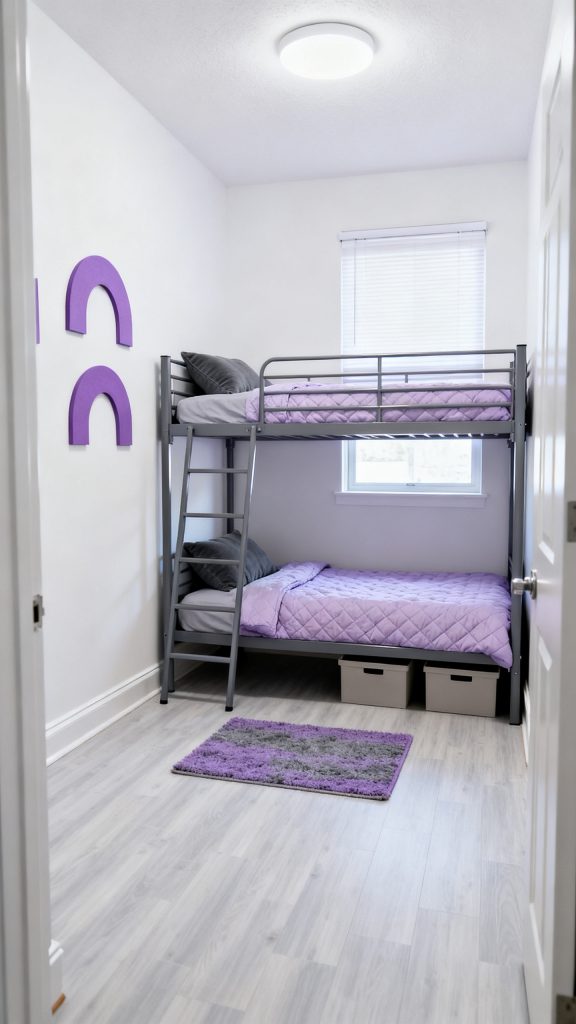
A freestanding gray metal bunk can be a practical starting point when you can’t change the walls. Put it against the longest clear wall and soften its simple lines with lavender quilts and charcoal jersey pillows. A small lavender-and-gray rug makes the open floor feel like part of the room, too.
You can lean into the plain white walls with removable lilac arch decals placed away from the bed frame. Keep the existing ceiling light and add a cordless pleated shade if your rental allows it. I’d spend the decorating budget on washable textiles and use slim underbed boxes that stay inside the bed’s footprint.
13. Turn a Full-Length Bunk Wall Into a Reading Corner
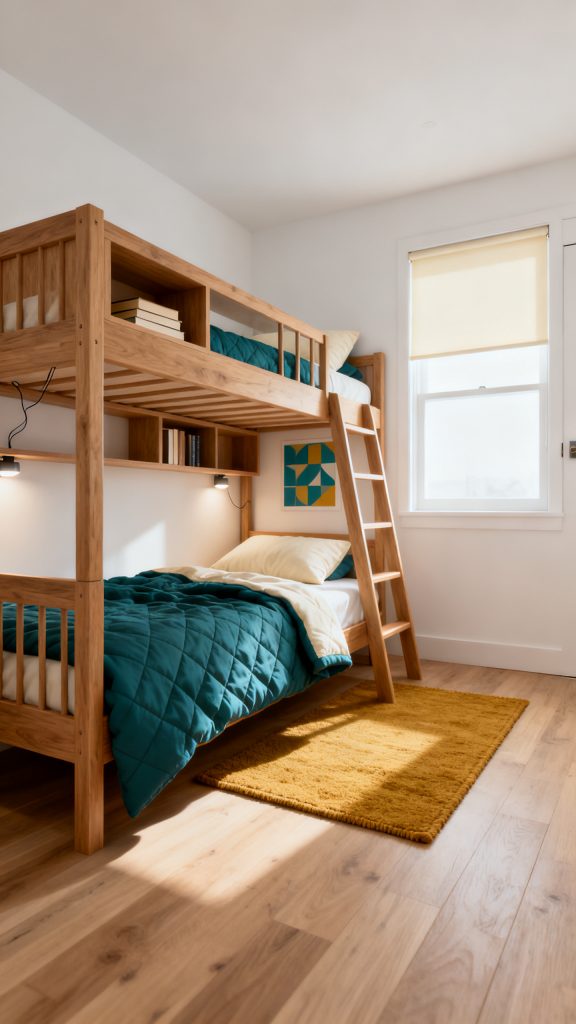
A compact bunk with book storage built into its head end can make a small bedroom feel thoughtful without a separate bookcase. Choose a natural oak frame along one wall, with shallow recessed cubbies outside the sleeping surfaces. Deep teal quilts, warm white walls, and a mustard wool rug make this corner feel cheerful and settled.
Give each sleeper a small enclosed reading light and keep only a few favorite books in the cubbies. I would hang a simple geometric print across the room and use a cream cordless shade to soften the daylight. Leave the upper guardrails bare and the ladder landing open, letting the color and wood carry the cozy feeling.
Final Thoughts
The small bedroom bunk bed ideas worth keeping are the ones that fit how you actually use the room. I would choose the layout first, then add bedding, light, and a rug that make the remaining floor feel inviting. A little breathing room can matter more than another storage piece.
You don’t need to finish every detail in one weekend. Try one color pairing or swap in a softer textile, then see what the room needs next. Take your time and make a shared bedroom that feels like the people who sleep there.