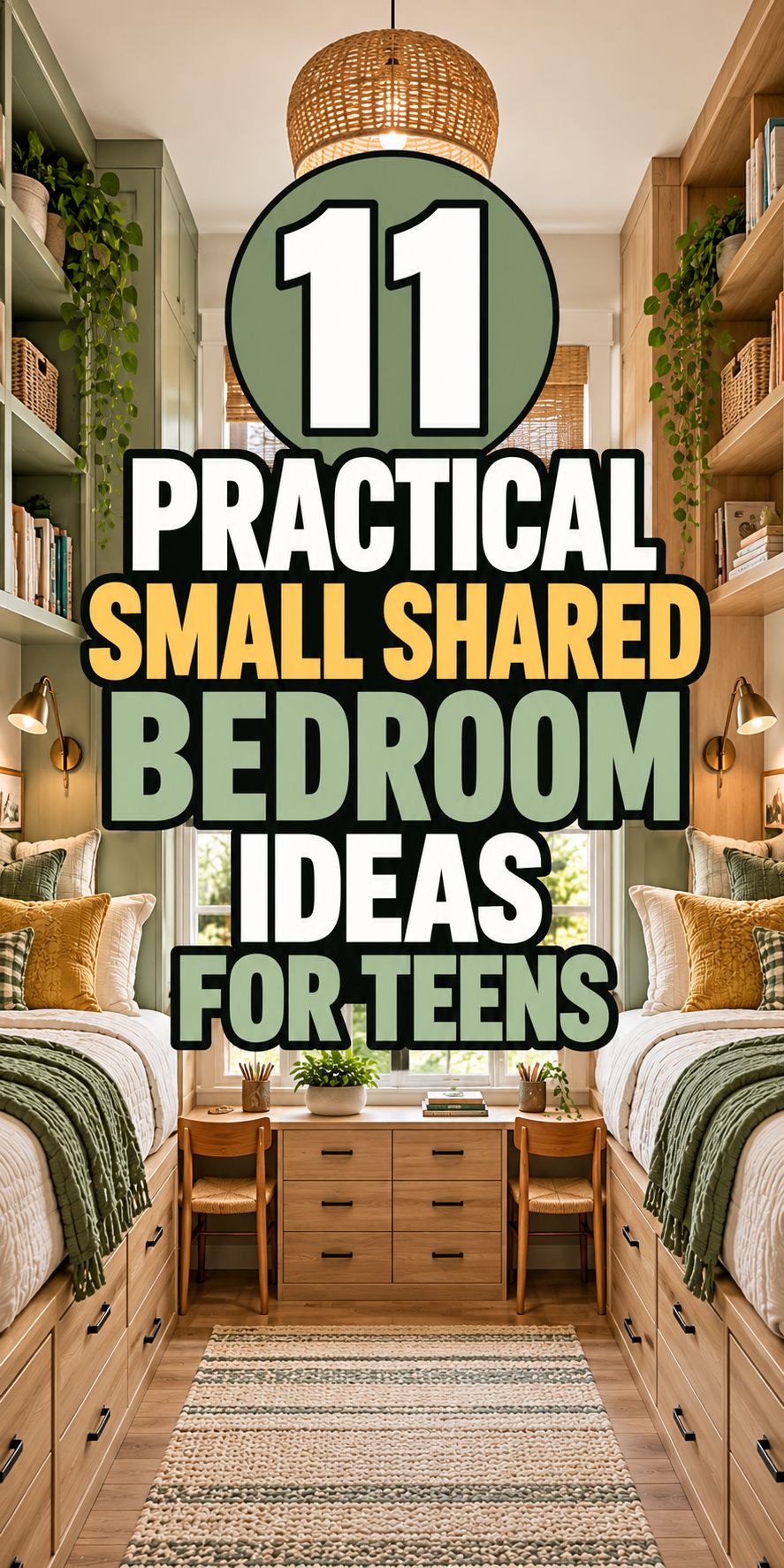
Sharing a small bedroom as a teenager can be challenging, especially when both teens have different personalities, hobbies, and storage needs. The good news is that limited square footage doesn’t mean sacrificing style, comfort, or personal space.
With clever furniture arrangements, creative storage solutions, and thoughtful decorating choices, even a compact bedroom can become a comfortable retreat for two.
These 11 small shared bedroom ideas for teens combine practical layouts with stylish design details to help create a room that feels organized, inviting, and personal. From space-saving bunk beds to clever privacy solutions, there’s something for every shared bedroom.
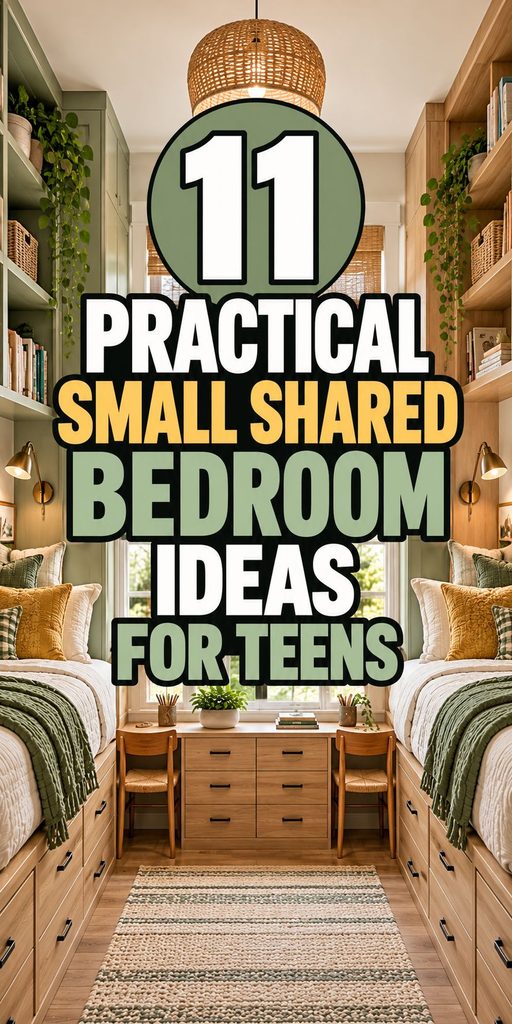
1. Modern Bunk Beds With Built-In Storage
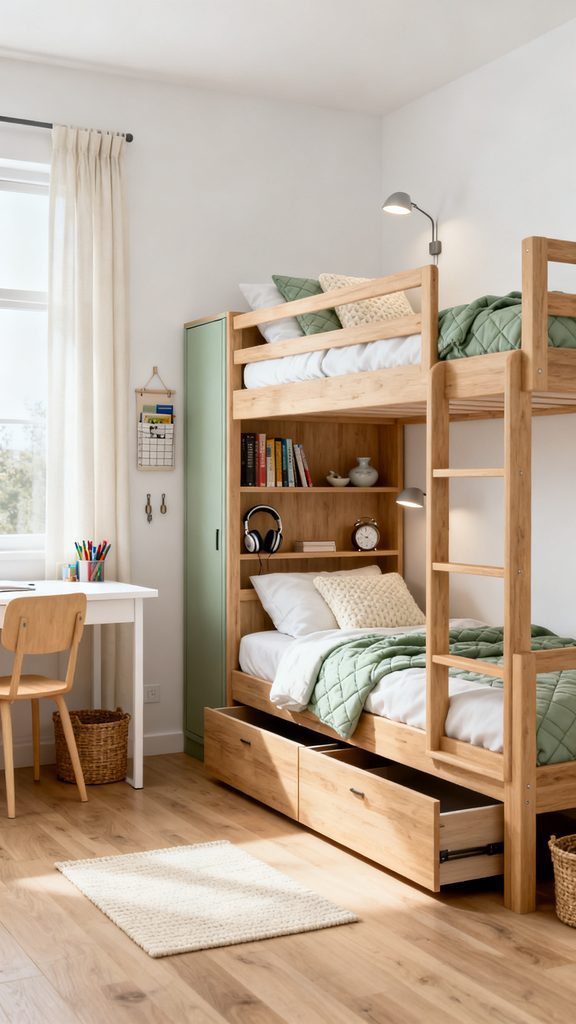
Bunk beds are one of the smartest solutions for small shared bedrooms because they free up valuable floor space. Instead of squeezing two separate beds into a compact room, a vertical sleeping arrangement leaves more room for studying, relaxing, and storing belongings.
Choose a modern bunk bed with built-in drawers beneath the lower mattress or integrated shelving along the side. Light oak finishes, soft white bedding, and muted sage green accents create a fresh, contemporary atmosphere that doesn’t feel childish.
Give each teen a personal reading light and a small shelf for books, headphones, or nighttime essentials. This simple addition makes each bunk feel like an individual retreat.
Design tip: Choose a bunk bed with a slim frame and use matching storage baskets to maintain a clean, uncluttered appearance. Check ceiling clearance and manufacturer safety guidance before installing.
2. Twin Beds With a Shared Nightstand
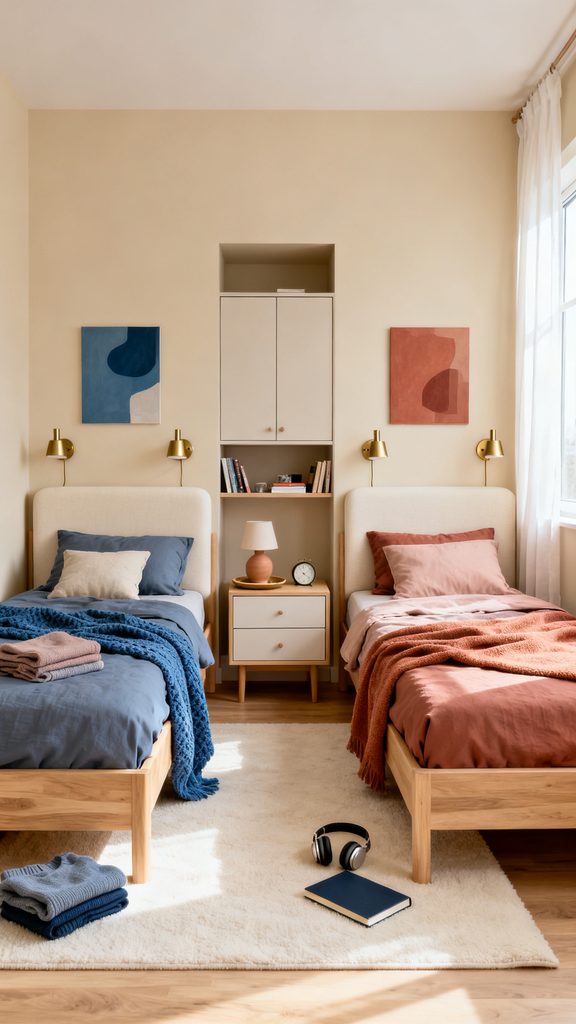
A symmetrical layout creates an instantly organized appearance, even when the bedroom is small. Position two twin beds along the same wall with a narrow nightstand between them to establish a balanced, harmonious arrangement.
This setup works particularly well in rectangular rooms where both teens want equal access to natural light and storage.
Use a coordinated color palette while allowing each teen to choose different bedding colors. For example, one bed might feature dusty blue linens while the other uses muted terracotta or blush pink.
A shared nightstand with two drawers gives each person their own storage space.
Design tip: Mount individual wall sconces above each bed instead of using tabletop lamps. This keeps the shared nightstand free for everyday essentials.
3. L-Shaped Beds for an Open Floor Plan
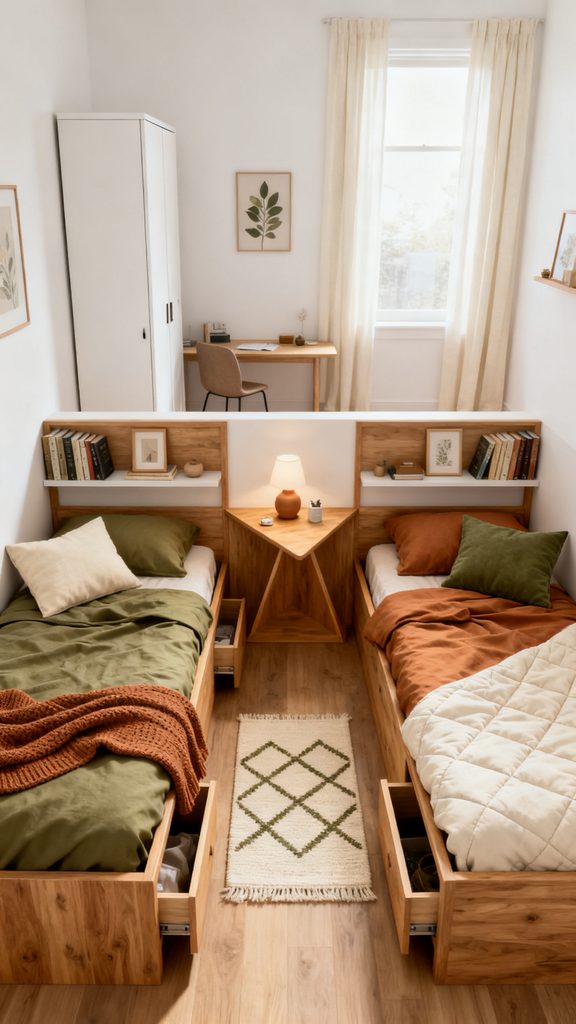
An L-shaped bed arrangement is an excellent way to make a small square bedroom feel more spacious.
Place two twin beds against adjoining walls so they meet near one corner. This configuration opens up the center of the room, creating a practical area for activities, dressing, or relaxing with friends.
To keep the design cohesive, choose matching bed frames in natural wood or painted white. Layer each bed with slightly different accent colors, such as olive green and warm caramel, to give both teens a sense of individuality.
A small corner shelf or triangular table can provide shared storage without overwhelming the layout.
Design tip: Add shallow storage drawers beneath both beds to keep seasonal clothing, spare blankets, and personal belongings out of sight.
4. Shared Bedroom With a Double Study Desk
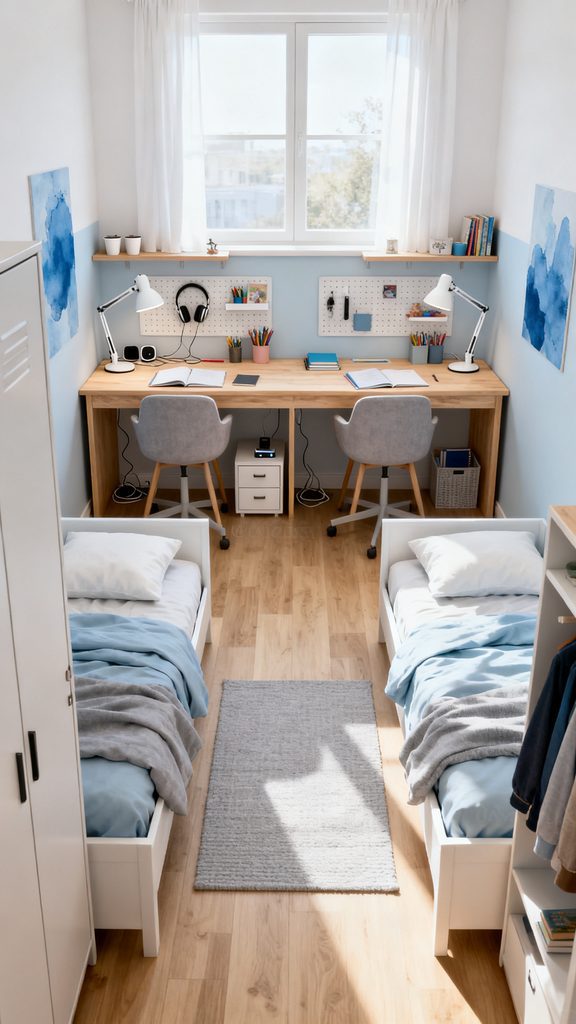
For teenagers who spend significant time studying, a dedicated homework station can be just as important as comfortable sleeping arrangements.
Install a long, narrow desk beneath a window to create two individual workspaces without taking up too much floor space. Position compact beds along opposite walls or use slim bed frames to preserve a clear walkway.
Choose matching desk chairs and install wall-mounted organizers above each study area. Pegboards, narrow shelves, and magnetic boards provide practical storage for school supplies.
A light palette of white, pale blue, and natural wood keeps the room feeling airy and focused.
Design tip: Give each teen a separate desk lamp, charging station, and drawer unit so the shared workspace stays organized and functional.
5. Loft Beds With Personal Spaces Underneath
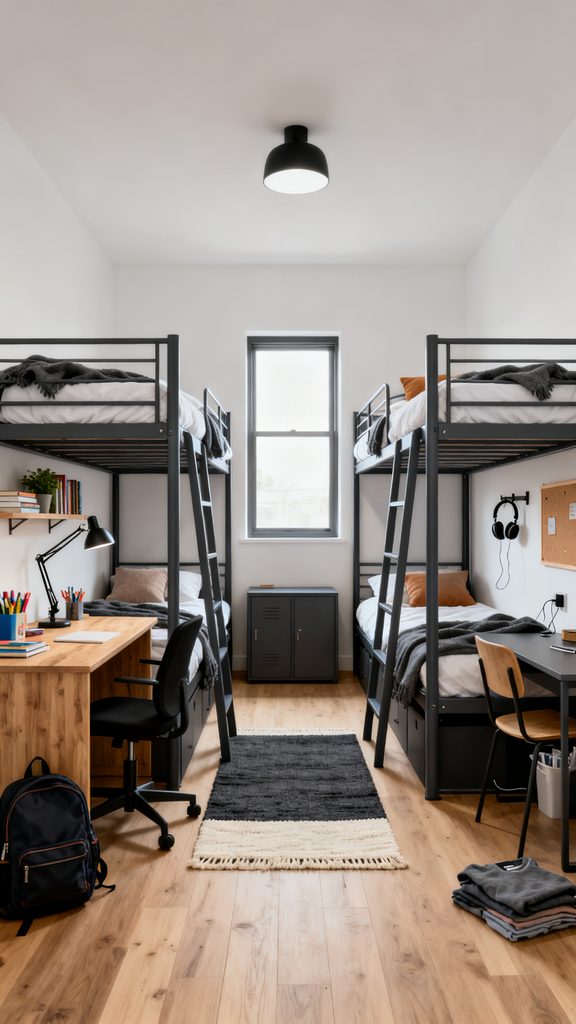
Loft beds take vertical space-saving to another level by creating useful zones beneath the sleeping platforms.
In a small shared bedroom, two loft beds can provide individual spaces for studying, gaming, reading, or storing clothing. This arrangement is especially useful when both teens want some independence without needing separate rooms.
Choose slim metal or wood loft frames that complement the room’s architecture. A modern industrial palette of charcoal gray, warm wood, and off-white works particularly well for older teens.
Under each bed, add a compact desk, a comfortable chair, and wall-mounted shelves. Personalized lighting and decor help distinguish the two areas.
Design tip: Use vertical organizers and wall-mounted storage to maximize the area beneath each loft bed. Ensure adequate ceiling height and safe access to both beds.
6. Create Privacy With a Stylish Room Divider
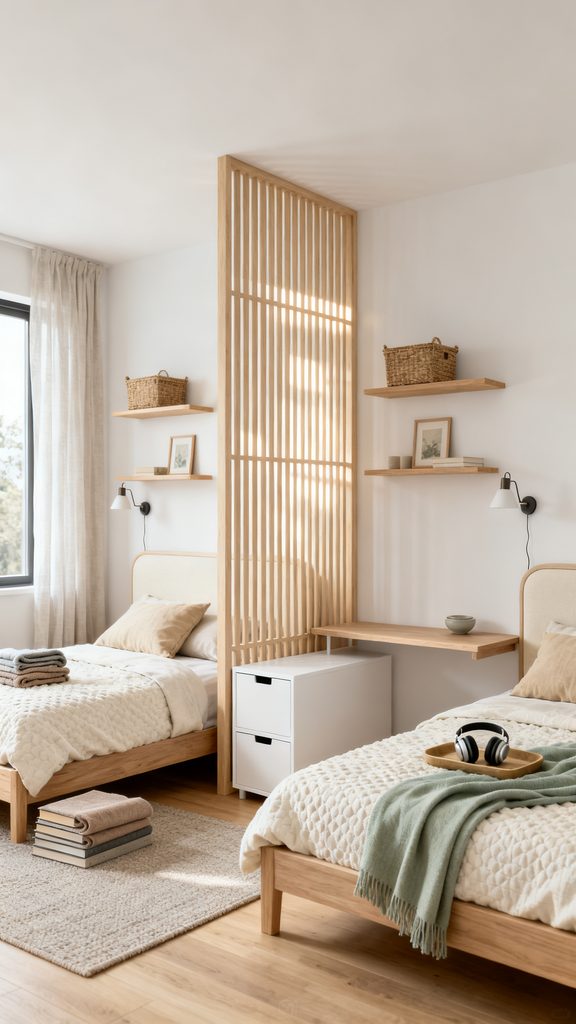
Privacy can be one of the biggest challenges when teenagers share a bedroom.
A lightweight room divider offers a practical way to create personal zones without constructing a permanent wall. Open wooden slats, a narrow open-backed bookshelf, or a ceiling-mounted curtain can provide separation while keeping the room visually connected.
Position the divider between two beds or use it to separate sleeping and study areas.
Soft neutral colors, warm wood finishes, and textured bedding create a peaceful Scandinavian-inspired atmosphere.
Design tip: Choose a divider that allows light to pass through, and securely anchor tall shelving or partitions to prevent tipping. Avoid blocking doors, windows, or exit paths.
7. Cozy Boho Shared Bedroom With Floor-Level Beds
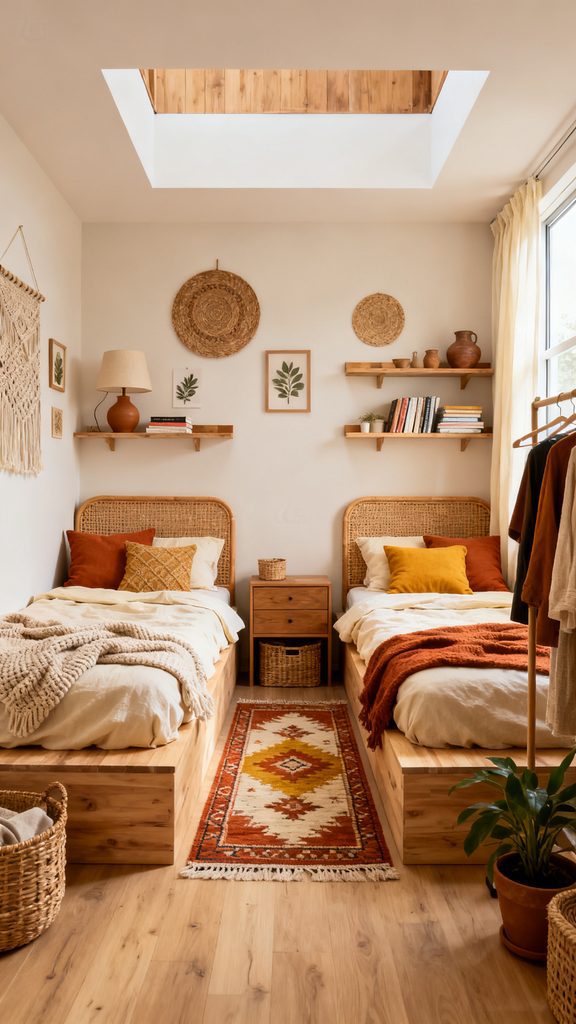
A bohemian-inspired bedroom brings warmth, personality, and a relaxed atmosphere to a shared space.
Low-profile platform beds help make the ceiling appear higher, which is especially beneficial in compact bedrooms. Arrange the beds along opposite walls to maintain an open walkway.
Use layered cotton bedding, textured cushions, and warm earthy colors such as terracotta, mustard, cream, and muted brown.
Rattan headboards, woven wall hangings, and a soft patterned rug introduce visual interest without requiring bulky furniture.
Give each teen a small floating bedside shelf and a personal display area for artwork or photographs.
Design tip: Keep decorative accessories concentrated on the walls and beds rather than filling the floor with baskets and furniture.
8. Built-In Beds With a Cozy Window Nook
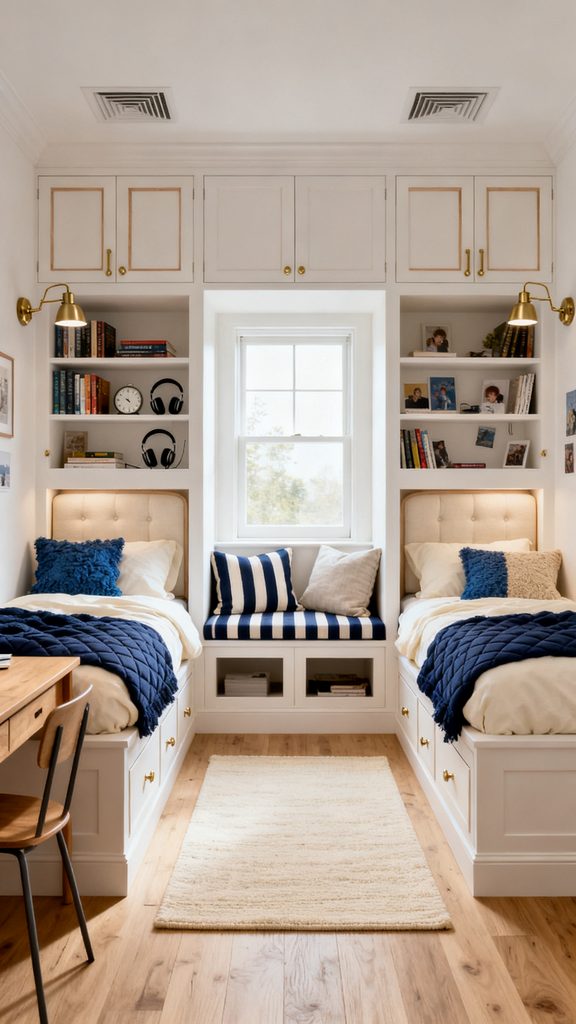
Built-in beds can turn an awkwardly shaped bedroom into a highly functional space.
Consider creating two sleeping alcoves along one wall, with a window seat or compact storage bench positioned between them. This arrangement gives each teen a defined sleeping area while using wall space efficiently.
Integrated drawers beneath the beds eliminate the need for large dressers, while recessed shelves offer convenient places for books and personal accessories.
A combination of warm white cabinetry, soft navy accents, and natural wood details creates a timeless look suitable for teenagers.
Design tip: Add upholstered headboards and individual reading lights inside each sleeping alcove to make the spaces comfortable and personal. Keep windows accessible and ventilation unobstructed.
9. Minimalist Shared Bedroom With Hidden Storage
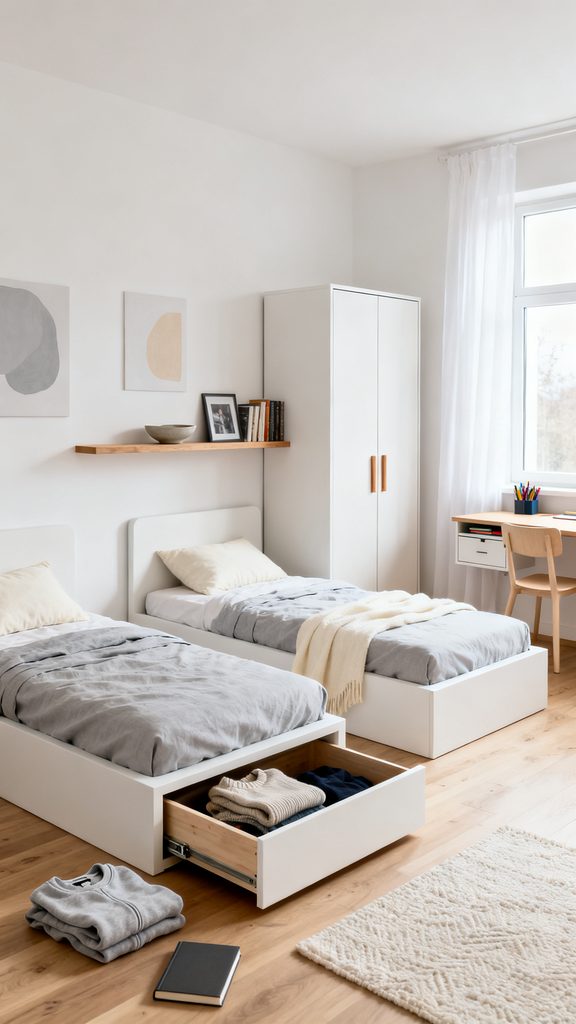
Minimalist design is particularly effective in small shared bedrooms because it reduces visual clutter and creates a calmer atmosphere.
Start with two slim platform beds featuring lift-up storage compartments or integrated drawers. Choose furniture with simple silhouettes and avoid oversized headboards or bulky dressers.
A palette of warm white, light gray, and pale oak creates a bright, spacious appearance.
Use a tall wardrobe with clearly divided storage sections so each teen has a dedicated area for clothing and accessories.
Rather than filling every wall with decorations, select a few meaningful pieces of artwork that reflect both personalities.
Design tip: Use closed storage for everyday clutter and limit open shelves to a small number of favorite items.
10. Color-Blocked Bedroom With Two Personal Zones
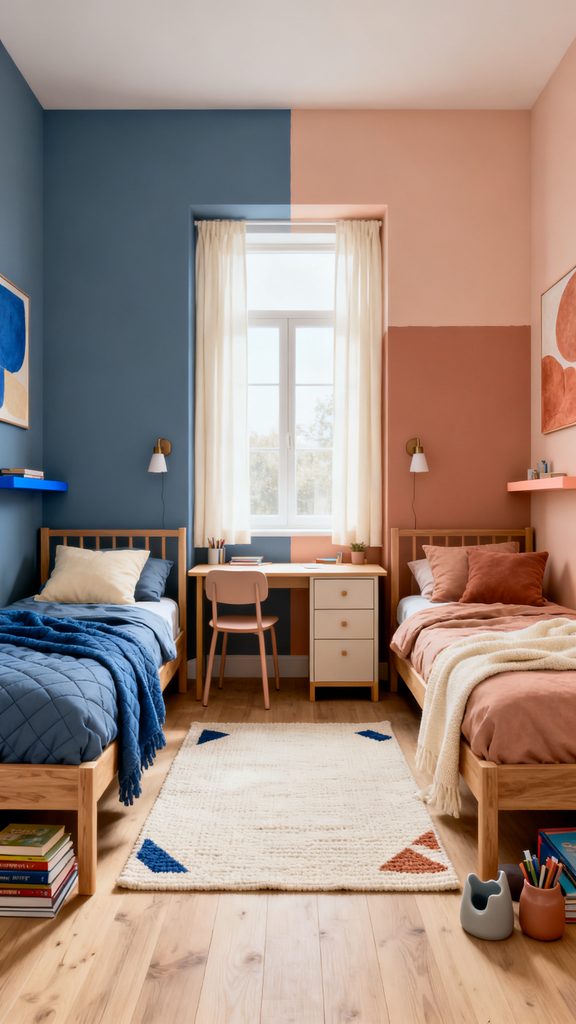
When two teenagers have different tastes, color blocking offers a creative way to celebrate their individuality while maintaining a cohesive room design.
Divide the bedroom visually into two zones using complementary wall colors. One side might feature dusty blue, while the other uses muted peach or warm clay.
Place a twin bed, narrow bedside shelf, and personal artwork within each zone.
To keep the room balanced, repeat a few shared elements, such as matching bed frames, similar lighting fixtures, or consistent flooring.
This creates two distinct personal spaces without making the room feel disconnected.
Design tip: Choose colors with similar softness and saturation so the overall design feels intentional rather than visually overwhelming.
11. Multifunctional Shared Bedroom With Daybeds
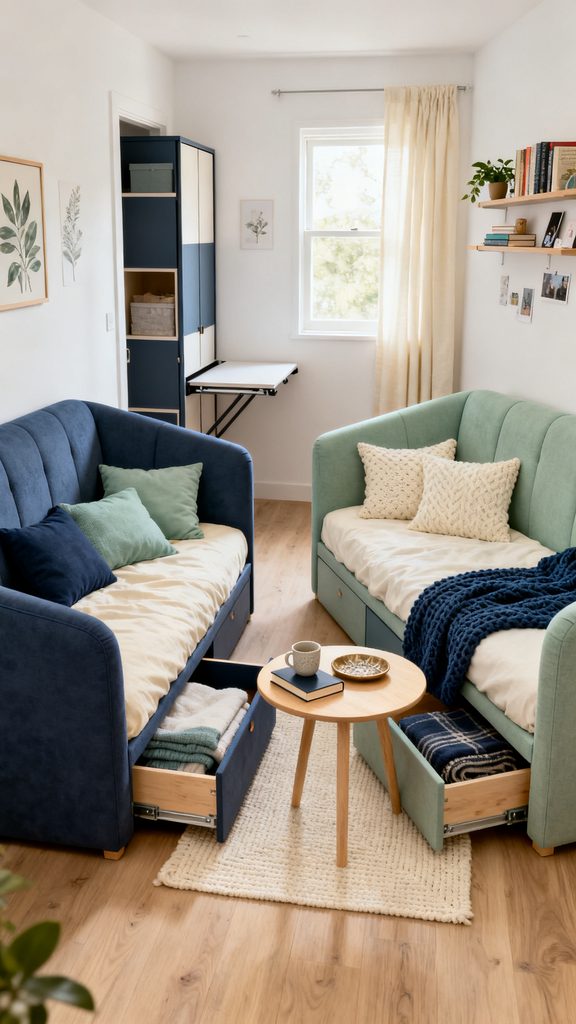
Daybeds are an excellent option for teenagers who want their bedroom to function as both a sleeping space and a comfortable hangout area.
During the day, two daybeds can serve as sofa-style seating for reading, chatting, or spending time with friends. At night, they become comfortable individual beds.
Arrange the daybeds along adjoining walls to create a cozy lounge-style layout, leaving enough space for easy movement.
Choose upholstered frames or simple wooden daybeds with supportive back cushions. A palette of muted navy, sage green, and warm cream creates a mature, welcoming atmosphere.
A small round table between the beds provides a convenient surface for drinks, books, or games.
Design tip: Look for daybeds with built-in drawers to store extra pillows, blankets, and seasonal clothing.
How to Make a Small Shared Teen Bedroom Work Better
Beyond choosing the right furniture layout, a few practical strategies can make a significant difference in how a shared bedroom looks and functions.
- Prioritize vertical storage: Use tall wardrobes, wall shelves, and hanging organizers to reduce clutter on the floor.
- Give each teen personal storage: Separate drawers, shelves, and wardrobe sections help maintain organization.
- Choose multifunctional furniture: Beds with drawers, desks with shelving, and storage benches provide extra functionality.
- Keep pathways clear: Avoid oversized furniture that makes the room difficult to navigate.
- Use coordinated colors: Allow individual expression while repeating a few common colors or materials.
- Include personal lighting: Separate reading lamps and desk lights make shared spaces more convenient.
- Respect individual preferences: Let each teenager participate in choosing bedding, artwork, and accessories.
Final Thoughts
Designing a small shared bedroom for teenagers is all about finding the right balance between personal expression, practical storage, and comfortable living.
From modern bunk beds and multifunctional lofts to cozy bohemian layouts and color-blocked personal zones, these small shared bedroom ideas for teens show that a compact room can still offer plenty of style and individuality.
The most successful shared bedrooms give each teenager a space that feels like their own while maintaining an organized, harmonious overall design.
With thoughtful planning and a few creative furniture choices, even the smallest bedroom can become a welcoming space where two teens can comfortably sleep, study, and relax.