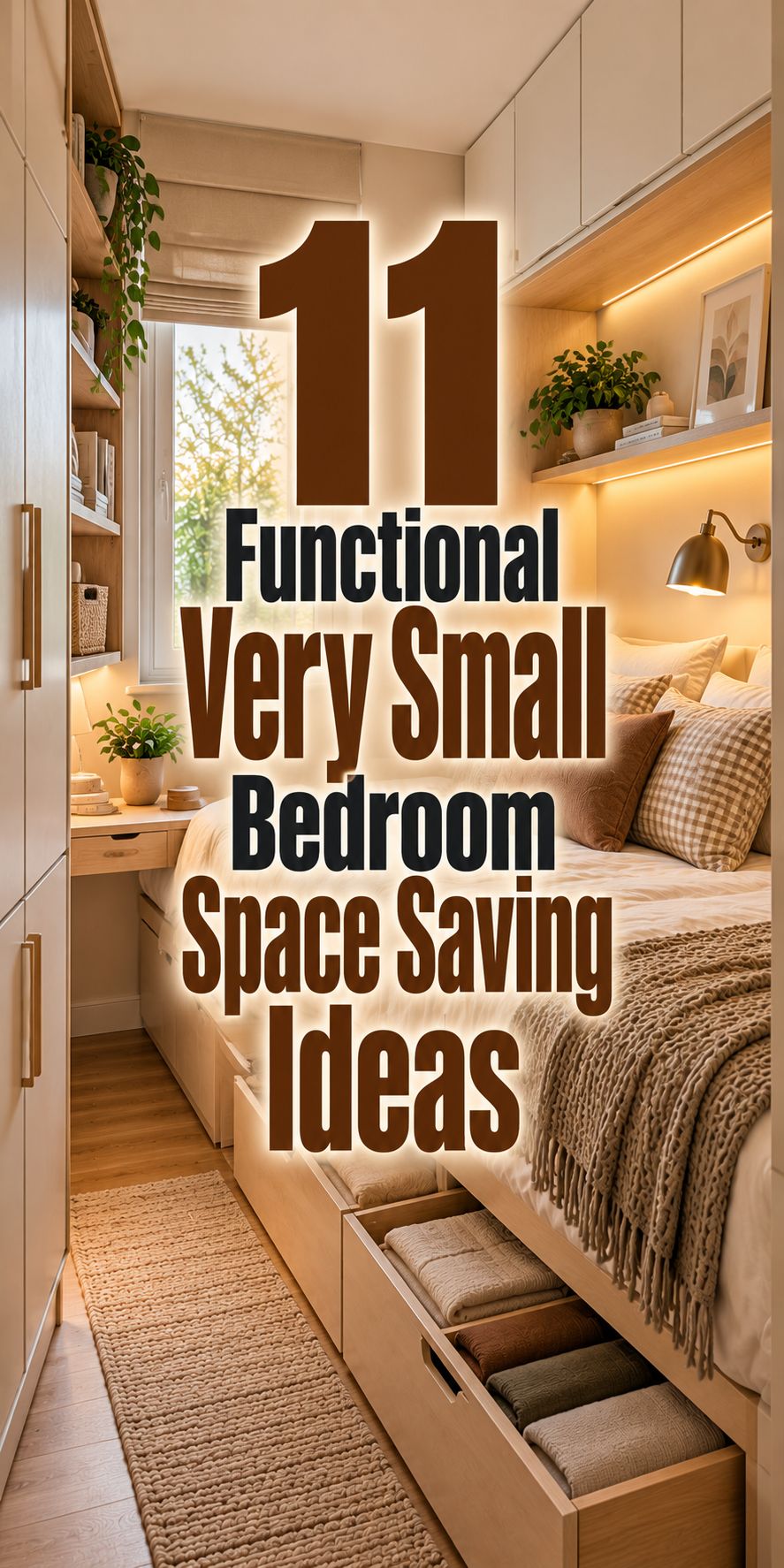
A tiny bedroom can still feel comfortable, organized, and visually appealing when every piece has a clear purpose. The key is choosing furniture and storage that use vertical space, overlooked corners, and areas that would otherwise remain empty.
These Very Small Bedroom Space Saving Ideas focus on realistic solutions that preserve walking room while providing enough storage for everyday life. From under-bed drawers to wall-mounted desks, each concept approaches limited square footage differently.
1. Build Storage Around the Bed
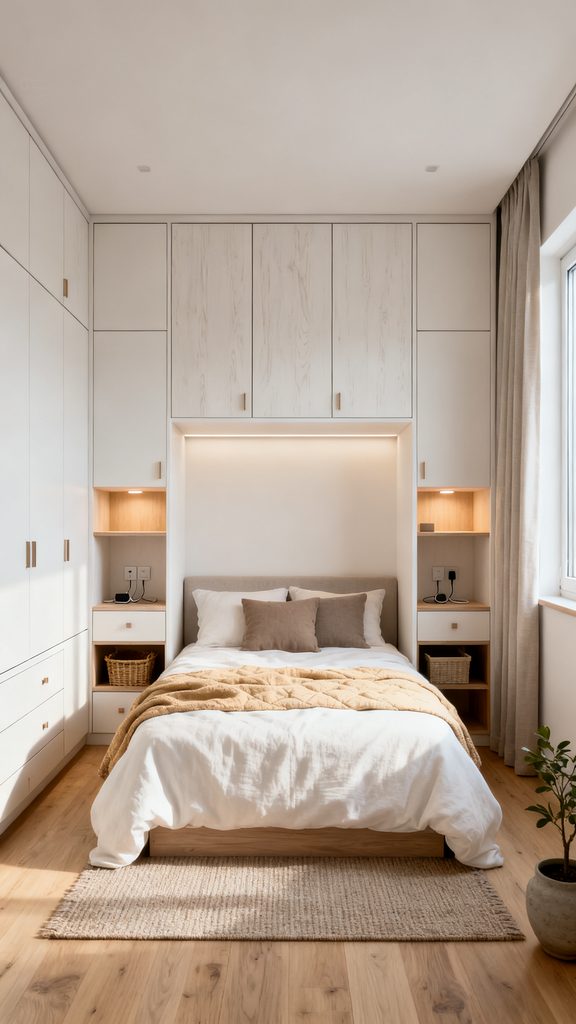
Turn the bed wall into the main storage zone instead of adding several separate pieces of furniture. Place tall wardrobes or cabinets on both sides of the bed and connect them with overhead cupboards.
Keeping the cabinetry in one continuous arrangement makes excellent use of vertical space while leaving the rest of a very small bedroom relatively open.
Choose light wood, warm white, or soft beige cabinet fronts to prevent the large storage unit from feeling visually heavy. Integrated bedside niches with reading lights can replace bulky nightstands.
2. Choose a Storage Bed With Deep Drawers
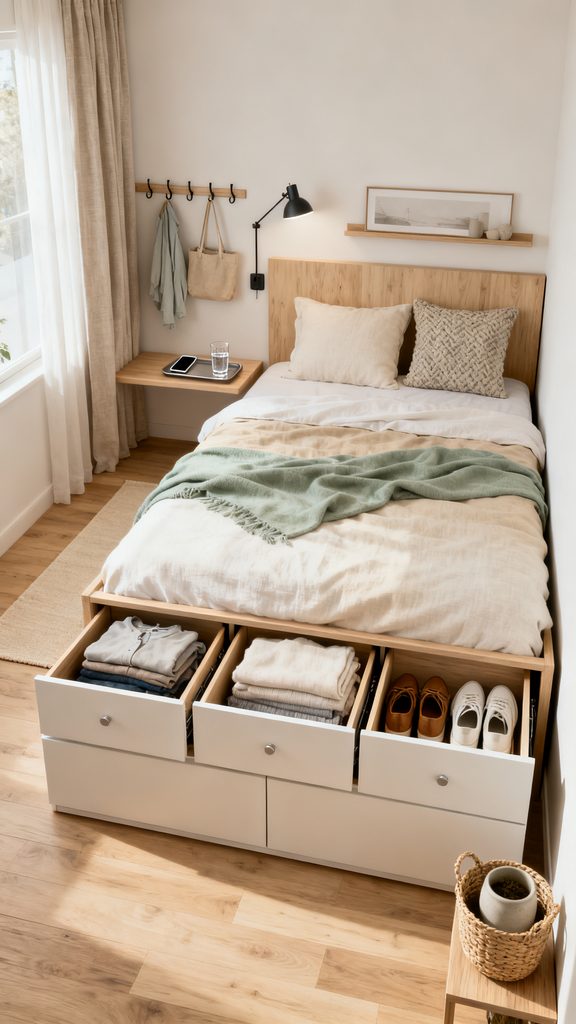
The large area beneath a bed is too valuable to waste in a tiny room. A platform bed with deep built-in drawers provides concealed storage without requiring additional floor space.
Use the drawers for folded clothing, spare bedding, shoes, or seasonal items. This can reduce the need for a separate dresser.
Keep the rest of the arrangement simple with a narrow bedside shelf, wall-mounted reading light, and compact wall hooks. The result is especially useful in bedrooms where there is barely enough space to walk around the bed.
3. Install a Floating Desk Beside the Bed
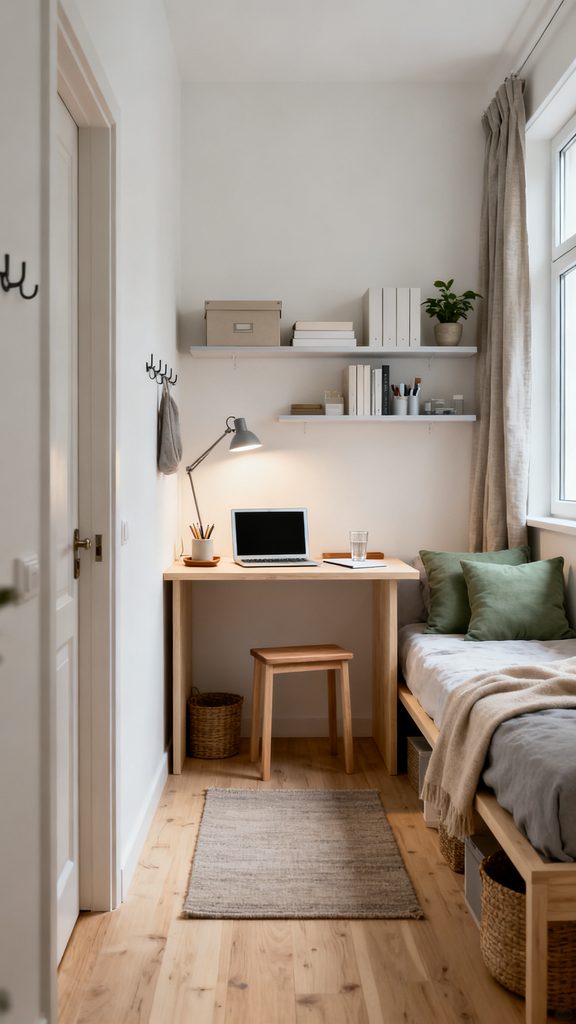
A traditional desk can consume a significant portion of a small bedroom. Instead, mount a shallow floating desk to an unused section of wall.
Positioning it beside the bed allows the surface to function as both a workspace and an oversized bedside shelf. Add one slim chair or stool that slides completely underneath when not in use.
Floating shelves above the desk can hold books, small storage boxes, and everyday supplies. A wall-mounted task lamp keeps the work surface clear.
4. Use the Space Above the Headboard
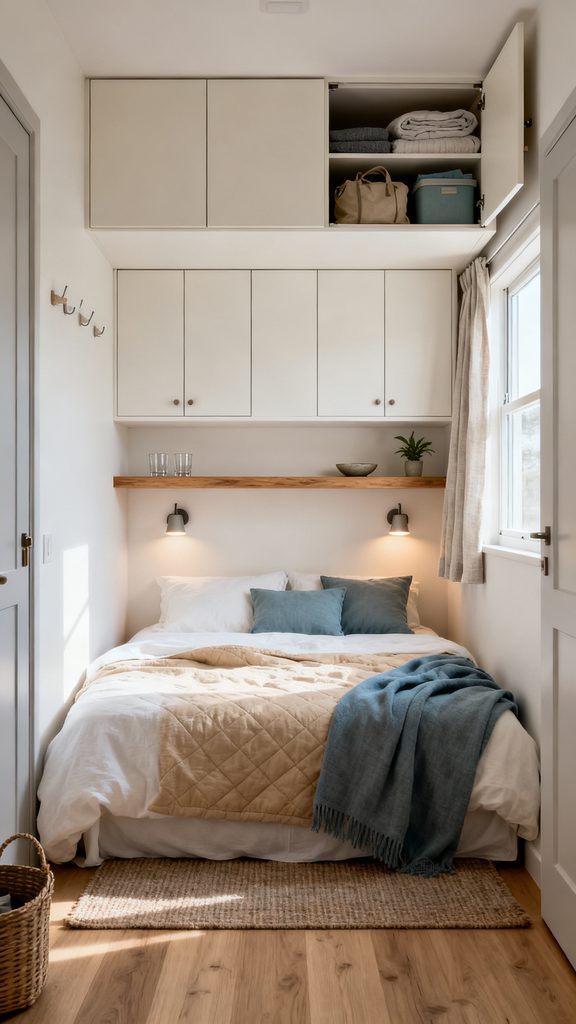
When floor space disappears, move storage upward. Install sturdy floating cabinets or shelves above the headboard for belongings that aren’t needed constantly.
Closed cabinets are particularly useful because they reduce visual clutter. Use them for extra bedding, bags, seasonal clothing, or storage containers.
Below the cabinets, keep the headboard area simple with compact wall sconces and a narrow ledge for a phone, glasses, or a small decorative object.
5. Create a Floor-to-Ceiling Corner Wardrobe
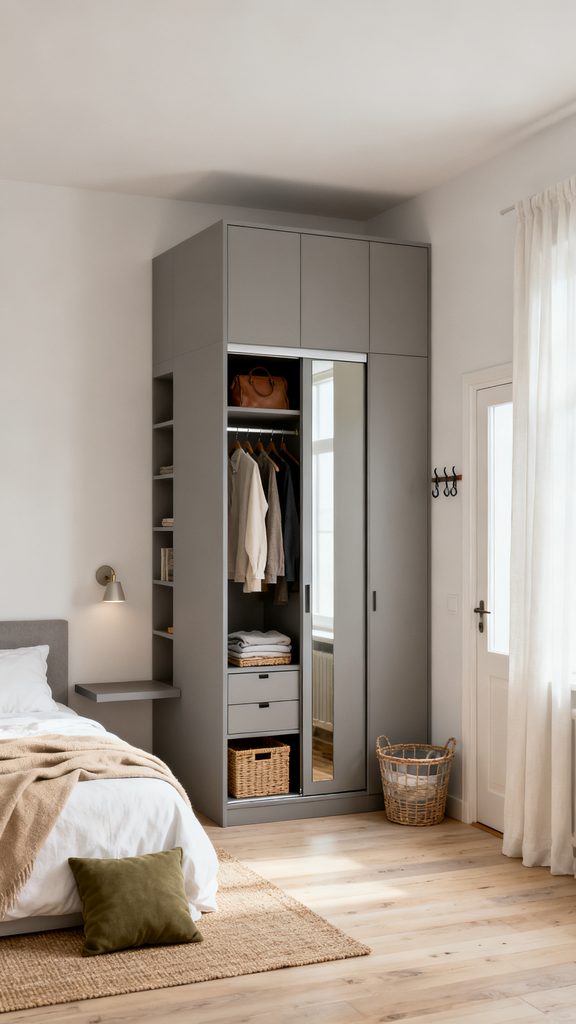
Corners are frequently underused in very small bedrooms. A tall corner wardrobe can turn one of these awkward areas into substantial clothing storage.
Take the unit all the way to the ceiling so rarely used items can be stored on upper shelves. Inside, combine hanging rails, adjustable shelves, baskets, and narrow drawers.
Choose sliding or compact doors when conventional hinged doors would interfere with the bed. Matching the wardrobe color to the walls also helps the large piece visually recede.
6. Replace Nightstands With Wall-Mounted Shelves
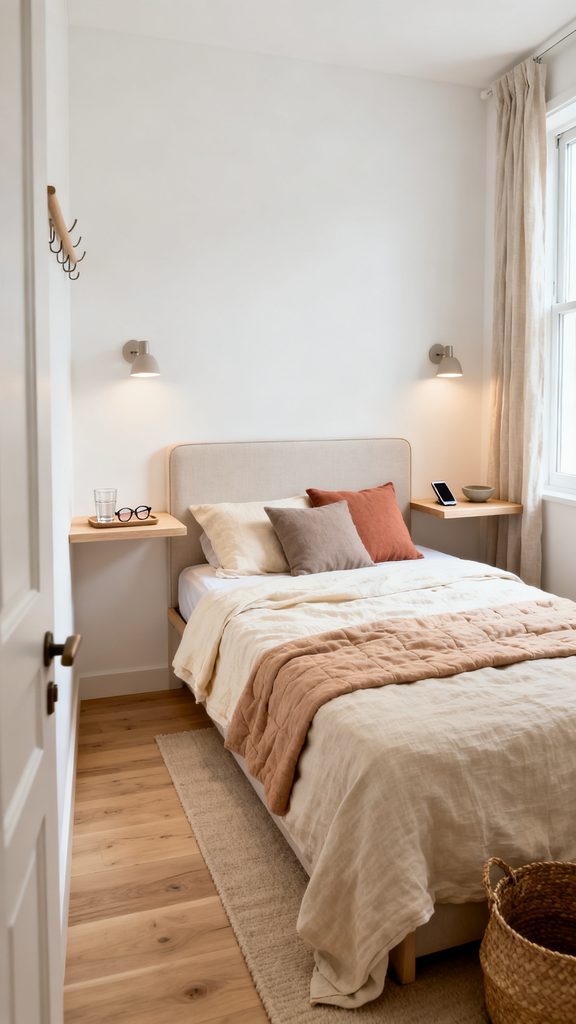
Two conventional nightstands can occupy surprising amounts of valuable floor area. Replace them with small floating shelves mounted at mattress height.
Each shelf only needs enough room for essentials such as a phone, glasses, or a small glass of water. Wall-mounted sconces eliminate the need for table lamps.
With the floor underneath left completely open, the room gains both physical and visual space. This arrangement also makes cleaning around the bed considerably easier.
7. Add a Slim Storage Bench Under the Window
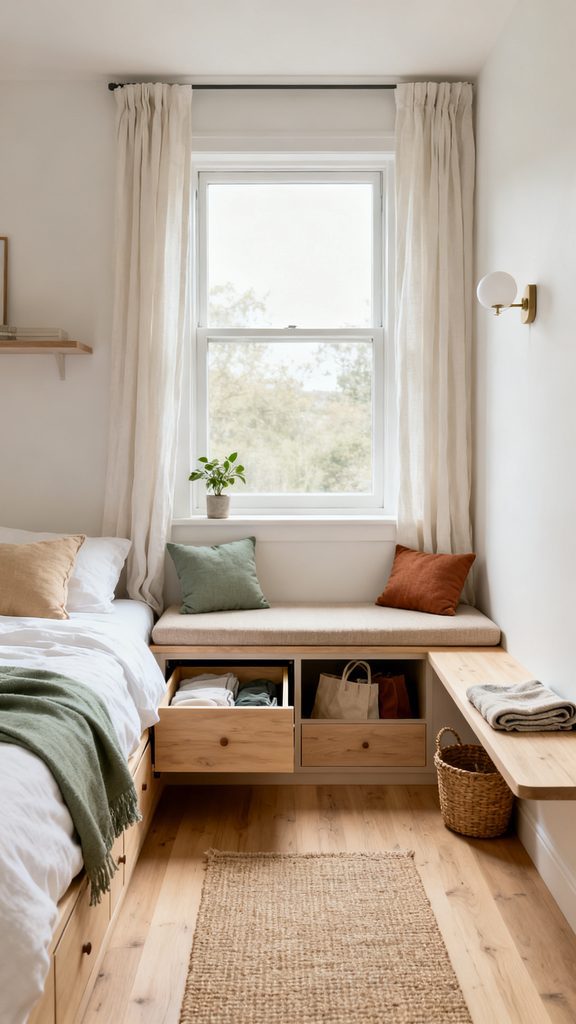
The area beneath a bedroom window can provide useful storage without competing with the bed or wardrobe.
Choose a low, narrow bench with lift-up storage or built-in drawers. Use the interior for linens, shoes, bags, or other items that need an accessible home.
A thin seat cushion and one or two pillows can turn the unit into a compact reading perch. Keeping the bench below the window sill preserves daylight and makes the tiny room feel more open.
8. Use Vertical Shelving Instead of a Wide Dresser
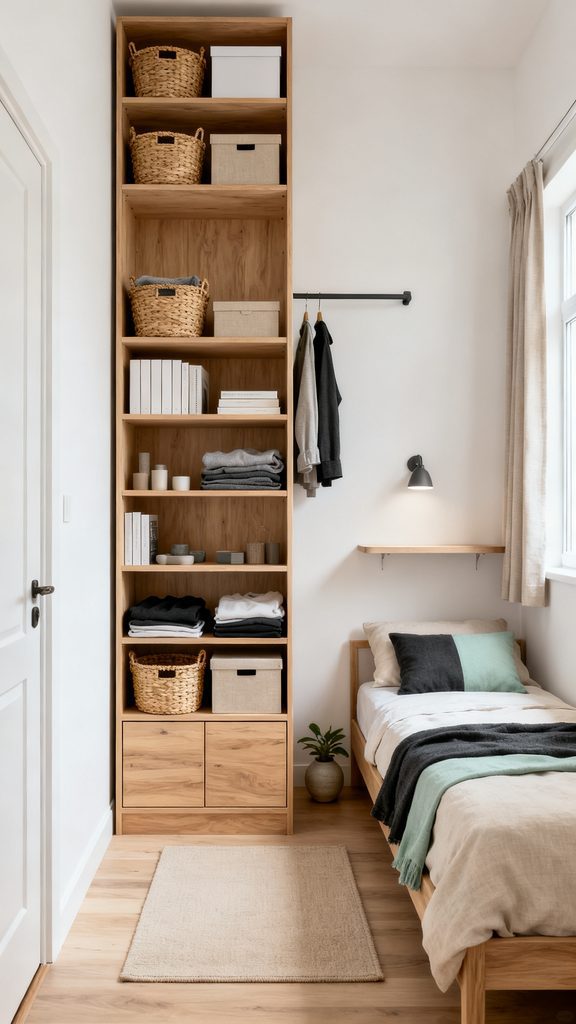
Replace a broad dresser with a tall, narrow shelving unit that occupies much less floor space.
Combine open shelves with baskets, boxes, and a few closed compartments to organize clothing and smaller belongings. Store frequently used items at comfortable reaching height and less-used pieces near the top.
A narrow footprint leaves more room for circulation around the bed while still taking advantage of the full wall height.
9. Create Storage Behind the Bedroom Door
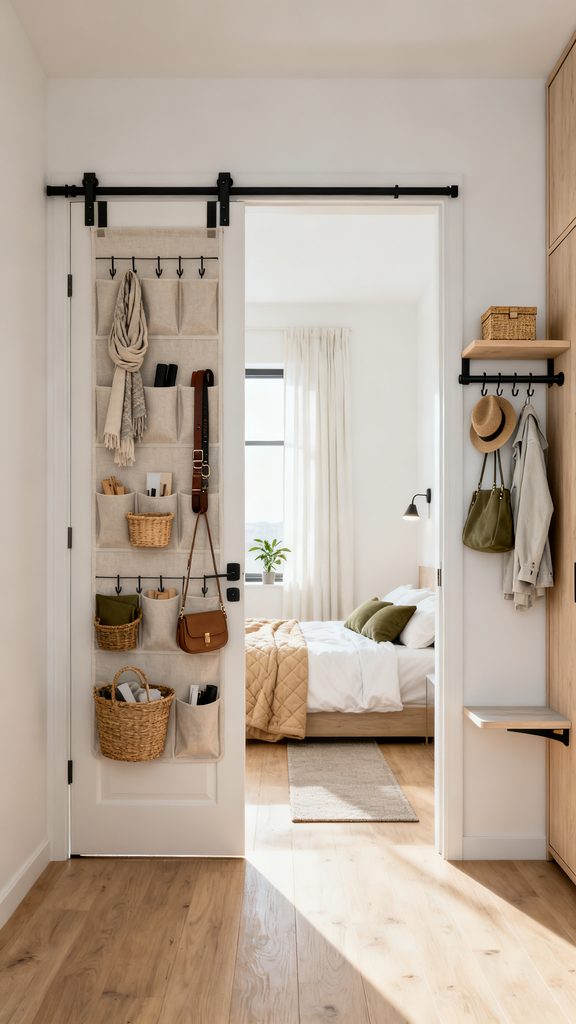
The back of a bedroom door is often completely overlooked. Turn it into a practical organization zone with slim hanging storage.
Use hooks, shallow racks, or an over-door organizer for bags, accessories, scarves, small clothing items, or everyday essentials. Keep the arrangement relatively flat so the door can still open fully.
A narrow wall-mounted rail beside the door can provide additional hanging space without requiring another piece of furniture.
10. Use a Loft Bed to Free the Floor
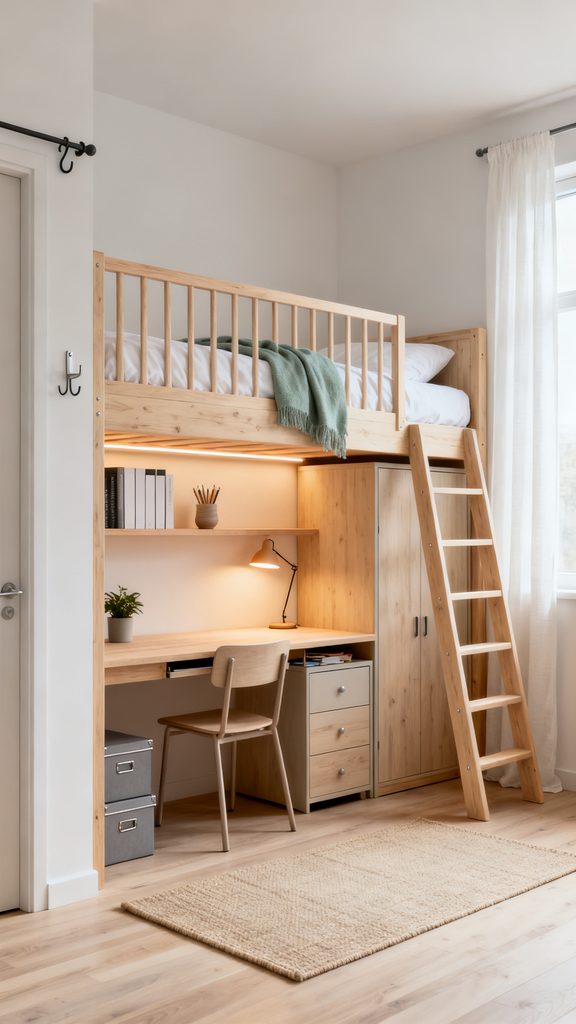
In an exceptionally small bedroom, raising the sleeping area can completely change how the available square footage functions.
A sturdy loft bed creates usable space underneath for a compact desk, small wardrobe, drawers, or even a reading area. This effectively separates sleeping and daytime functions vertically rather than trying to fit everything side by side.
Keep the structure visually light and include secure guardrails and a practical ladder. Pale wood or white finishes can prevent the upper bed from making the room feel excessively enclosed.
11. Design One Multipurpose Storage Wall
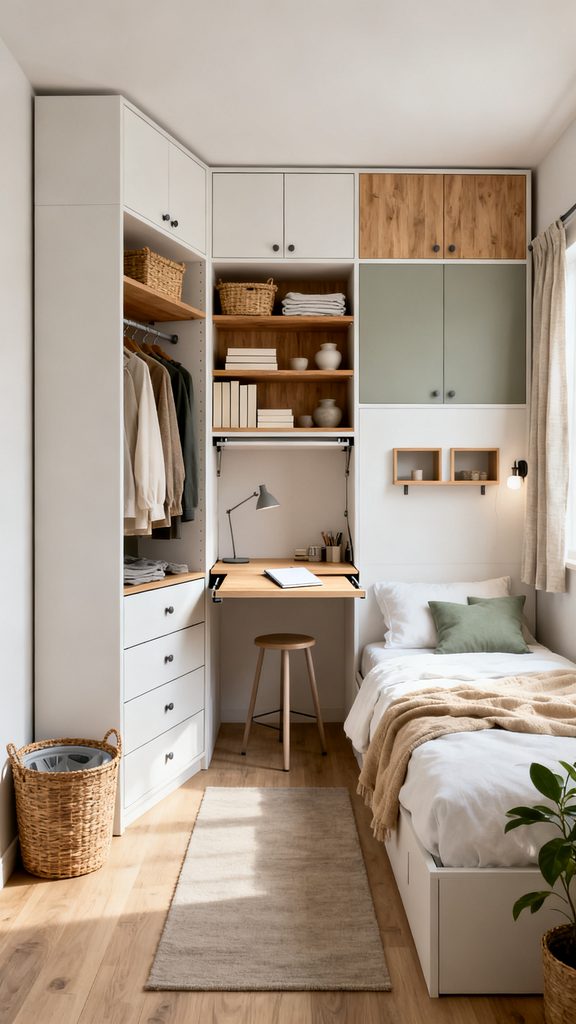
Instead of distributing small pieces of furniture around the bedroom, dedicate one wall to several functions at once.
Combine a narrow wardrobe, drawers, open shelving, a fold-down desk, and small display niches into one coordinated storage system. Closed sections hide clothing and clutter, while open areas keep frequently used belongings accessible.
Keeping these functions together frees the remaining walls and floor around the bed, creating a noticeably calmer layout. For renters, the same principle can be recreated with modular freestanding units rather than permanent built-ins.
Making Very Small Bedrooms Work Harder
The most effective Very Small Bedroom Space Saving Ideas don’t simply add more storage. They reduce the number of separate objects competing for limited floor area.
Start by looking vertically and identifying unused zones above the bed, beneath the mattress, around windows, behind doors, and in corners. Multipurpose furniture can then handle two or more jobs without making the bedroom feel crowded.
A small room benefits from restraint as much as storage. Keep walking paths clear, use appropriately scaled furniture, and conceal visual clutter whenever possible. The result can feel organized and comfortable even when every square foot matters.