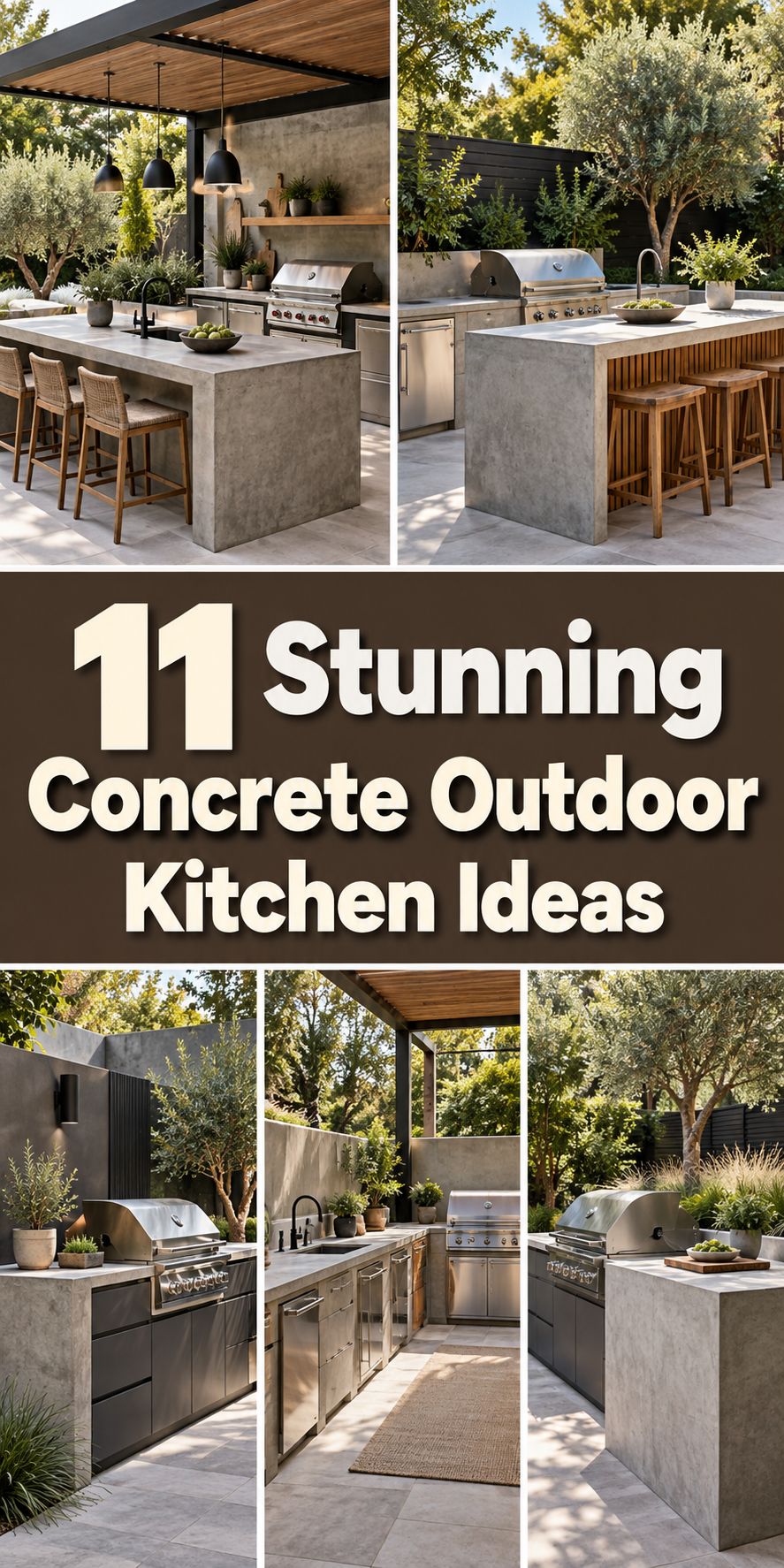
A concrete outdoor kitchen brings durability, texture, and architectural character to a backyard while creating a practical place for cooking and entertaining. From streamlined modern counters to warm Mediterranean-inspired setups, these Concrete Outdoor Kitchen Ideas show how versatile the material can be.
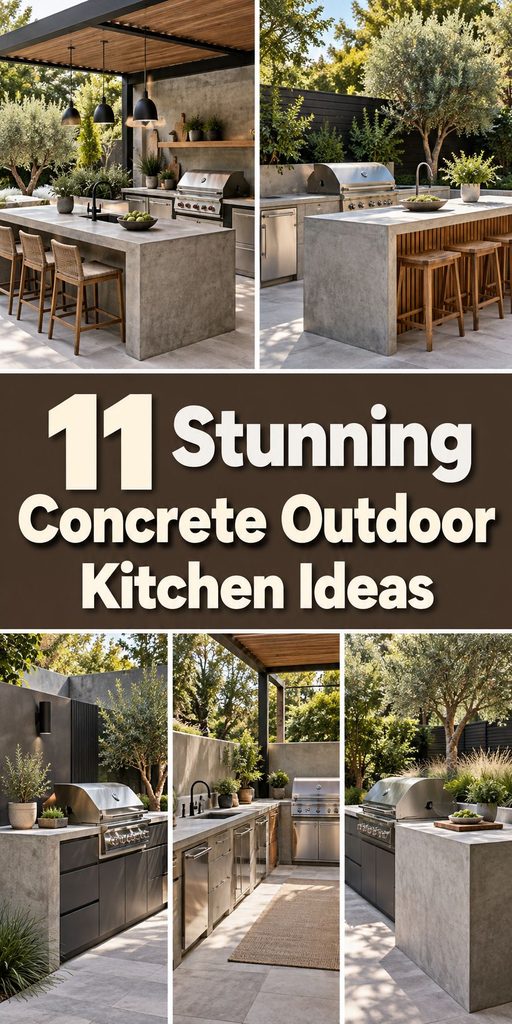
1. Modern Concrete Kitchen With a Waterfall Island
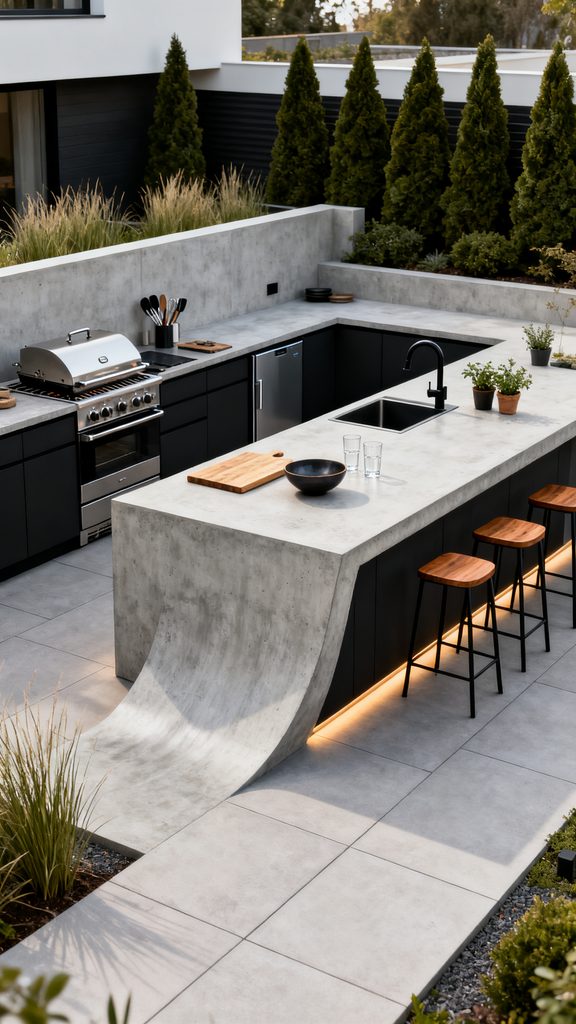
Make a monolithic waterfall island the centerpiece of the outdoor kitchen. Smooth light-gray concrete can wrap continuously across the countertop and down both sides, creating a clean architectural silhouette.
Pair the island with matte-black cabinetry, a built-in grill, and slim bar stools. Large-format patio pavers and restrained landscaping reinforce the modern look, while warm under-counter lighting keeps the concrete from feeling cold after sunset.
2. Rustic Concrete Kitchen With a Timber Pergola
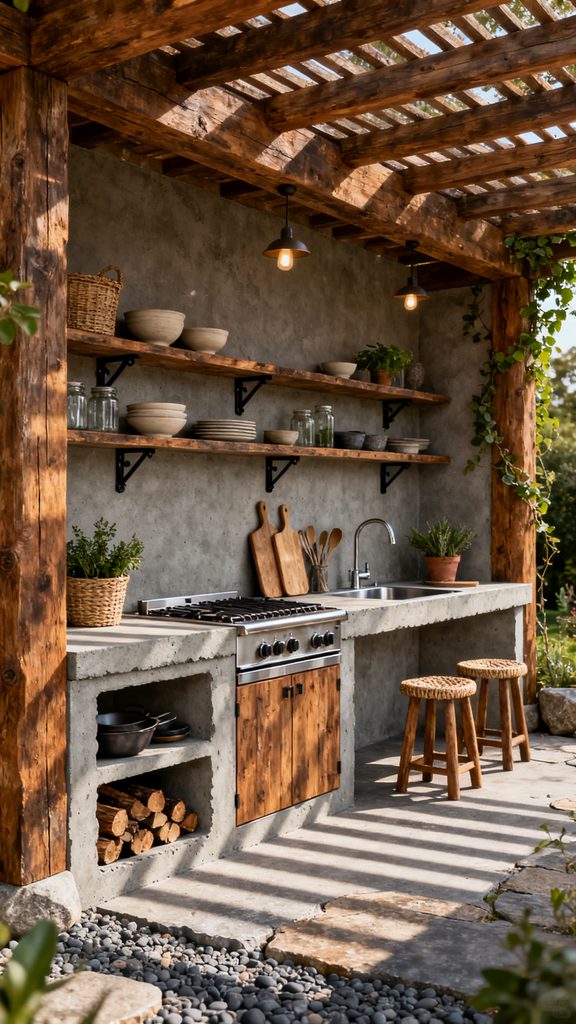
Combine rugged concrete counters with a substantial timber pergola for a warmer, more relaxed cooking area. Slightly textured concrete works particularly well here because small imperfections complement the natural grain of the wood.
Build the cooking station along one side with a grill, storage, and generous prep space. Add warm pendant lights beneath the pergola and use stone or gravel flooring to give this concrete outdoor kitchen a rustic, established character.
3. Minimalist Concrete Kitchen Against a Garden Wall
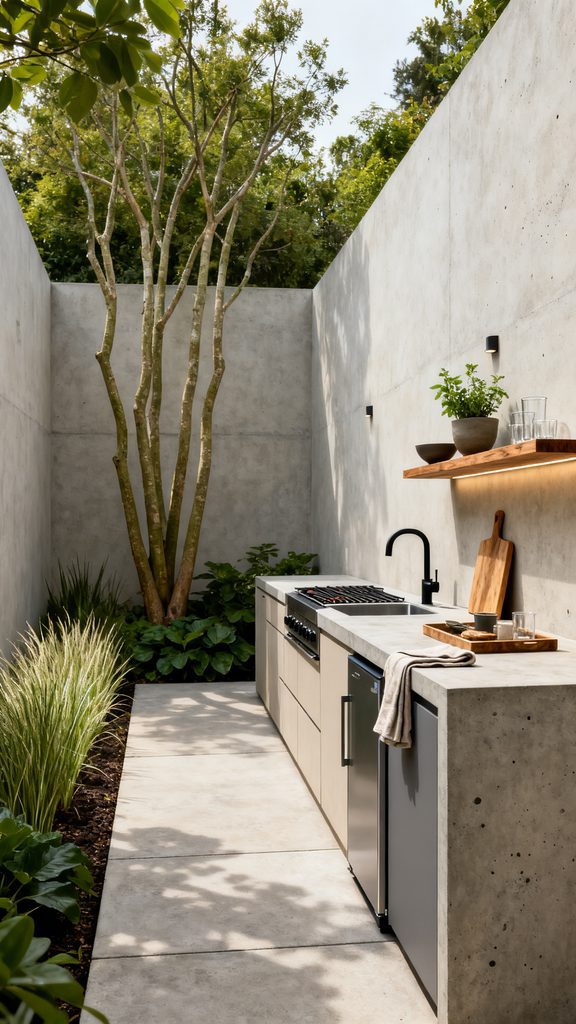
A compact linear layout is ideal when the outdoor kitchen needs to fit along a patio boundary. Use one long concrete counter with integrated storage and keep appliances flush with the cabinetry.
A tall rendered or concrete garden wall can become the visual backdrop. Instead of filling it with decorations, introduce one sculptural tree or a narrow planting bed. The restrained palette allows the proportions, concrete texture, and greenery to become the main features.
4. Concrete Outdoor Kitchen With a Pizza Oven
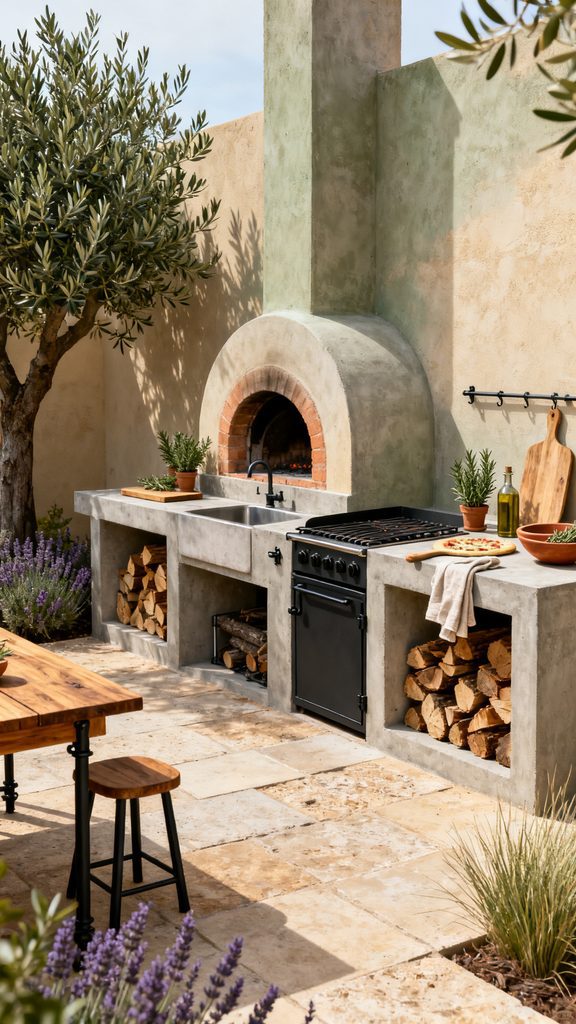
Turn a built-in pizza oven into the dominant focal point. A rounded or arched oven surrounded by concrete creates a strong contrast with the kitchen’s otherwise straight architectural lines.
Extend the concrete counter beside the oven for pizza preparation and serving. Open niches underneath can hold split firewood, adding warm natural color and texture. Terracotta accessories and subtle Mediterranean planting make the setup feel inviting without hiding its concrete construction.
5. Polished Concrete Bar Kitchen
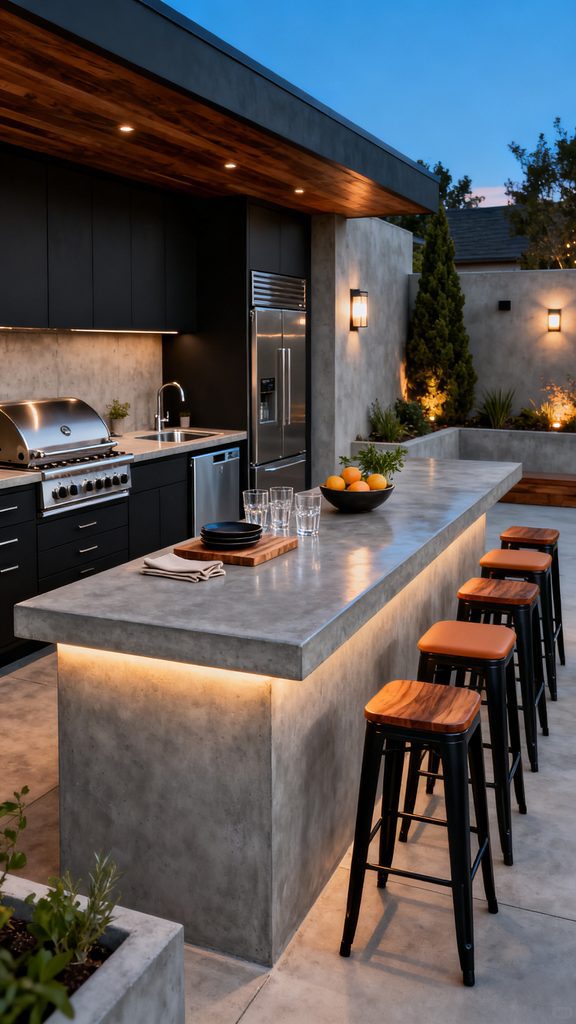
Create an entertaining-focused layout with an extra-long polished concrete bar facing the cooking station. The smooth surface gives the material a more refined appearance while remaining appropriate for an outdoor setting.
Place comfortable stools along the guest side and locate the grill, sink, and refrigerator directly behind the bar. Integrated LED lighting underneath the counter edge can visually lighten the substantial concrete structure and create an atmospheric evening gathering spot.
6. Concrete Kitchen With a Sunken Conversation Area
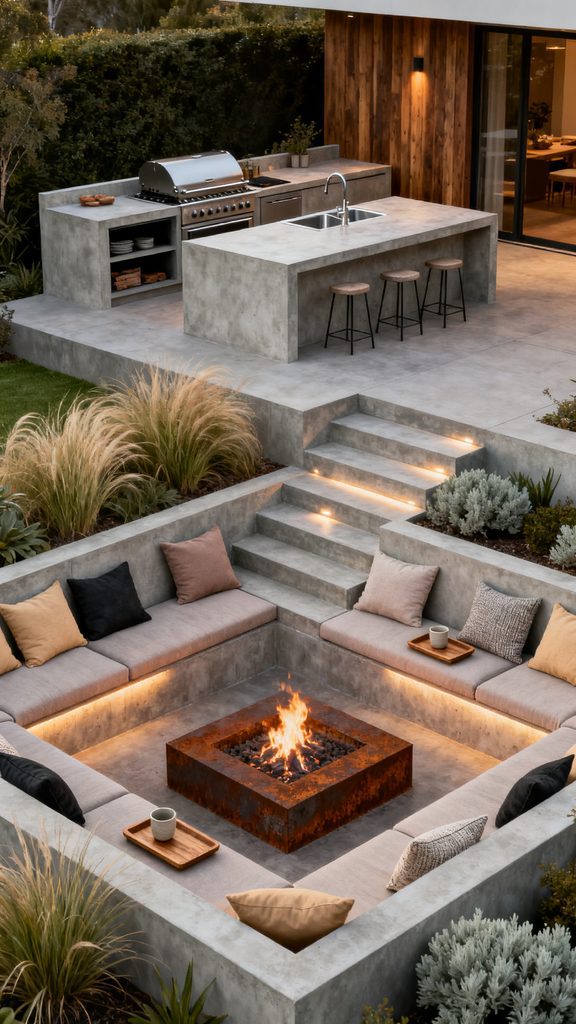
For a larger backyard, connect the kitchen to a sunken lounge rather than treating it as a standalone cooking station. A broad concrete island can overlook built-in seating arranged around a fire feature.
Repeat the same concrete finish across the kitchen, steps, and seating edges to visually connect the zones. Softer outdoor cushions, ornamental grasses, and warm firelight provide contrast against the architectural surfaces.
7. Coastal Concrete Outdoor Kitchen
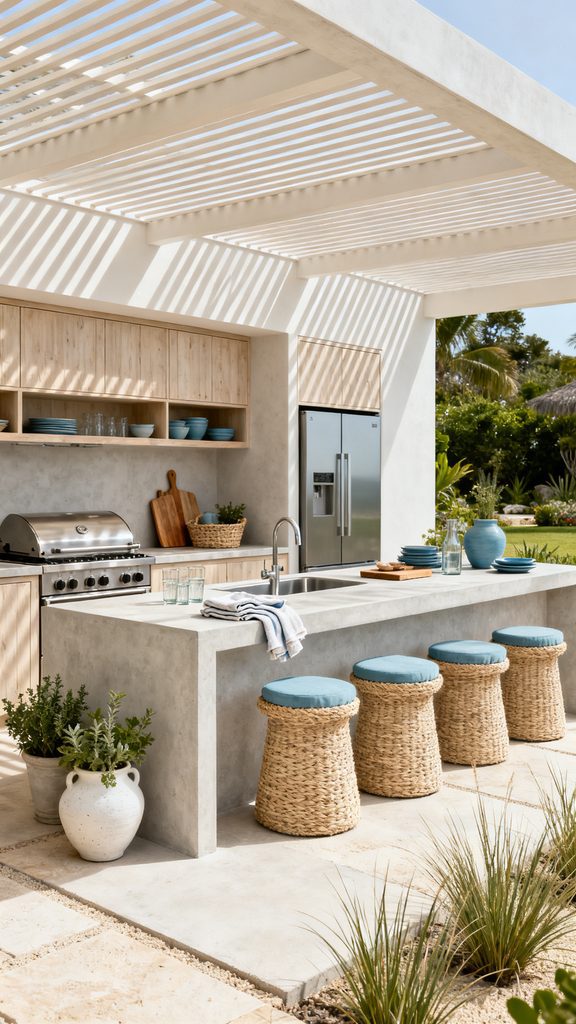
Concrete can also suit a light coastal setting. Choose pale sand-gray or off-white concrete rather than conventional cool gray, then pair it with light timber cabinet fronts and woven counter stools.
Position the kitchen beneath a simple slatted shade structure and keep the layout open to the surrounding garden or view. Linen-toned textiles, soft blue accents, and breezy grasses give this interpretation of Concrete Outdoor Kitchen Ideas a noticeably lighter personality.
8. Industrial Concrete Kitchen With Black Steel
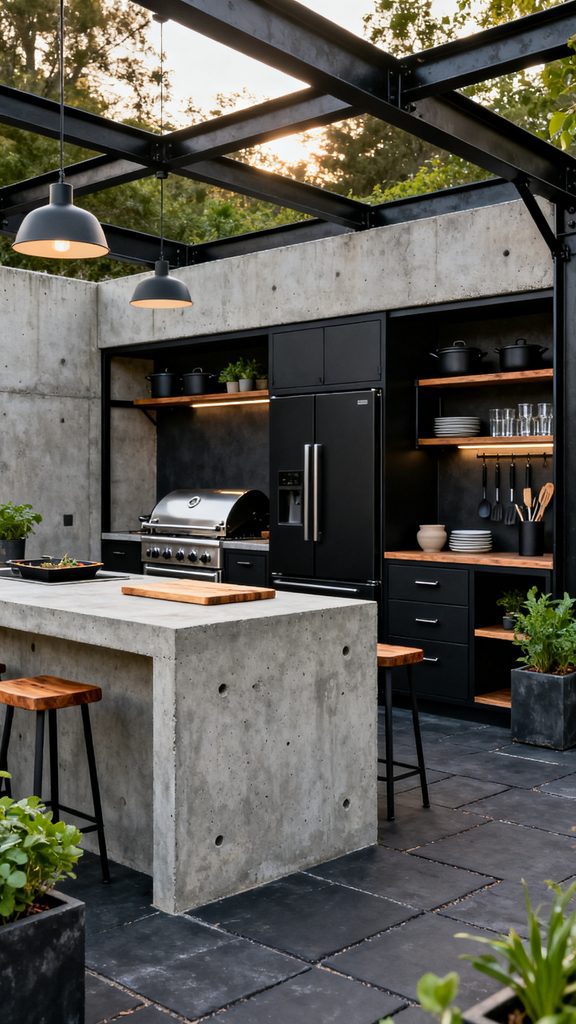
Lean into concrete’s raw character by combining it with blackened steel. A substantial concrete prep island can sit opposite a steel-framed cooking wall containing the grill, refrigerator, and storage.
Exposed structural details, dark metal shelving, and oversized industrial-style lighting reinforce the concept. Keep accessories minimal and introduce timber only in small amounts, such as cutting boards or stool seats, so concrete and steel remain visually dominant.
9. Curved Concrete Outdoor Kitchen
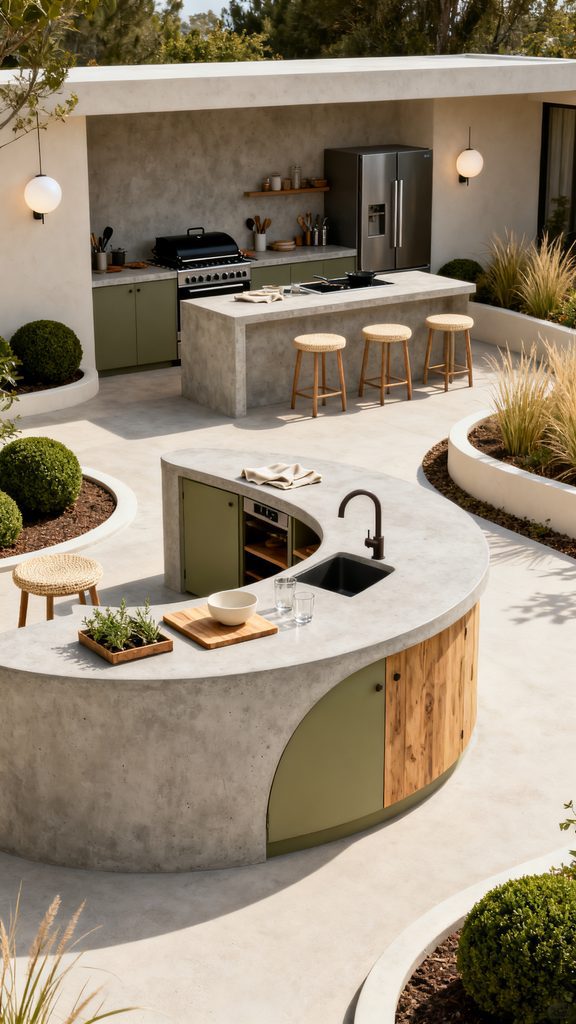
Instead of conventional rectangular cabinetry, use a sweeping curved concrete island to create a softer centerpiece. The rounded form works especially well on patios surrounded by organic landscaping.
Integrate the sink and preparation area into the curve while placing the grill along a separate straight counter behind it. Rounded stools, globe lighting, and flowing planting beds can repeat the shape, creating a cohesive outdoor space without making it overly decorative.
10. Concrete Kitchen With a Living Green Backdrop
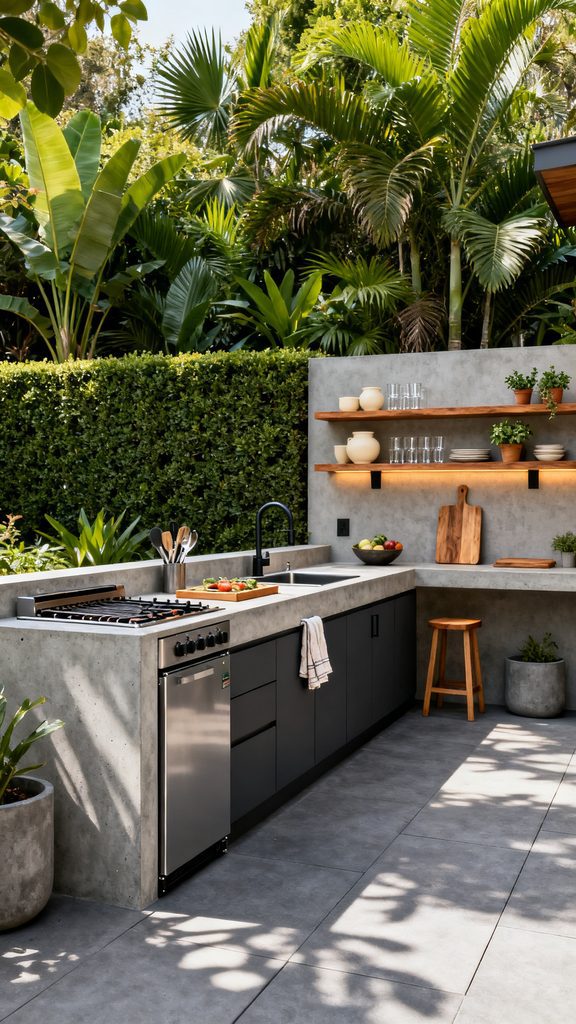
Use lush planting to create dramatic contrast against gray concrete. A long cooking counter positioned in front of a dense green wall, hedge, or layered tropical planting makes the kitchen feel integrated into the landscape.
Keep the cabinetry and appliances understated so foliage becomes the backdrop rather than competing with numerous decorative objects. Warm wood shelving and subtle task lighting can soften the concrete while maintaining a clean contemporary aesthetic.
11. Covered Concrete Kitchen With a Dining Pavilion
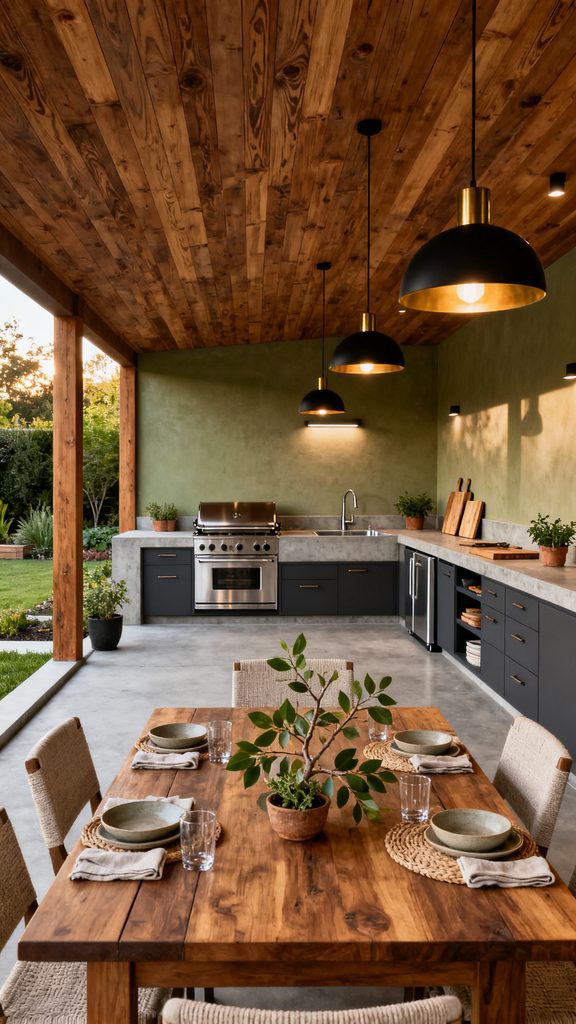
Turn the outdoor kitchen into a complete dining destination by placing it beneath a permanent pavilion. Build a substantial concrete cooking counter along the rear and position a large dining table in the foreground.
A timber-lined ceiling introduces warmth overhead, while concrete flooring visually anchors the kitchen below. Pendant lighting above the table, discreet task lighting around the grill, and comfortable dining chairs make the pavilion practical for both everyday meals and larger gatherings.
These Concrete Outdoor Kitchen Ideas demonstrate how concrete can move from minimalist and industrial to rustic, coastal, or Mediterranean depending on its finish and surrounding materials. The strongest designs allow concrete to provide the architectural foundation while wood, metal, greenery, lighting, and textiles bring warmth and individual character.